
Catalogue Search | MBRL


Are you sure you want to remove the book from the shelf?

{{itemTitle}}
471,544
result(s) for
"Interfaces"
Sort by:


Designing with the mind in mind : simple guide to understanding user interface design guidelines
In this completely updated and revised edition of Designing with the Mind in Mind, Jeff Johnson provides you with just enough background in perceptual and cognitive psychology that user interface (UI) design guidelines make intuitive sense rather than being just a list or rules to follow.Early UI practitioners were trained in cognitive psychology.
eBook
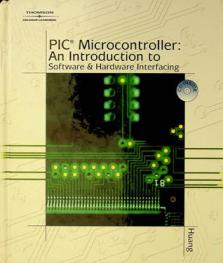
PIC microcontroller : an introduction to software and hardware interfacing
\"This book presents a thorough introduction to the Microchip PIC® microcontroller family, including all of the PIC programming and interfacing for all the peripheral functions.\"--Back cover.
Book

Brave NUI world : designing natural user interfaces for touch and gesture
Touch and gestural devices have been hailed as next evolutionary step in human-computer interaction. As software companies struggle to catch up with one another in terms of developing the next great touch-based interface, designers are charged with the daunting task of keeping up with the advances in new technology and this new aspect to user experience design. Product and interaction designers, developers and managers are already well versed in UI design, but touch-based interfaces have added a new level of complexity. They need quick references and real-world examples in order to make informed decisions when designing for these particular interfaces. Brave NUI World is the first practical book for product and interaction developers and designing touch and gesture interfaces. Written by developers of industry-first, multi-touch, multi-user products, this book gives you the necessary tools and information to integrate touch and gesture practices into your daily work, presenting scenarios, problem solving, metaphors, and techniques intended to avoid making mistakes. *Provides easy-to-apply design guidance for the unique challenge of creating touch- and gesture-based user interfaces *Considers diverse user needs and context, real world successes and failures, and a look into the future of NUI *Presents thirty scenarios, giving practitioners a multitude of considerations for making informed design decisions and helping to ensure that missteps are never made again
eBook


Critiquing the Concept of BCI Illiteracy
Brain–computer interfaces (BCIs) are a form of technology that read a user’s neural signals to perform a task, often with the aim of inferring user intention. They demonstrate potential in a wide range of clinical, commercial, and personal applications. But BCIs are not always simple to operate, and even with training some BCI users do not operate their systems as intended. Many researchers have described this phenomenon as “BCI illiteracy,” and a body of research has emerged aiming to characterize, predict, and solve this perceived problem. However, BCI illiteracy is an inadequate concept for explaining difficulty that users face in operating BCI systems. BCI illiteracy is a methodologically weak concept; furthermore, it relies on the flawed assumption that BCI users possess physiological or functional traits that prevent proficient performance during BCI use. Alternative concepts to BCI illiteracy may offer better outcomes for prospective users and may avoid the conceptual pitfalls that BCI illiteracy brings to the BCI research process.
Journal Article

Oracle mobile application framework developer guide : build multiplatform enterprise mobile apps
\"Master Oracle Mobile Application Framework In Oracle Mobile Application Framework Developer Guide, Oracle ACE Luc Bors explains how to use this powerful tool to create multiplatform mobile apps based on a single code base. Detailed examples and ready-to-use code are provided throughout the book. A complete, step-by-step sample application highlights the robust functionality of Oracle Mobile Application Framework, including data visualization, UX patterns, geographical maps, push notifications, and more. Take full advantage of the visual and declarative development features of Oracle Mobile Application Framework with help from this Oracle Press resource. Configure your IDE for Android and Apple iOS application development Build AMX pages and task flows for mobile applications Work with the binding layer and data controls Create application features and configure access to them in the springboard and navigation bar Call web services using a data control and create an on-device database Implement device interaction services Debug, test, and secure Oracle Mobile Application Framework applications Build an interactive sample app that maximizes Oracle Mobile Application Framework capabilities\"-- Provided by publisher.
Book


