
Catalogue Search | MBRL


Are you sure you want to remove the book from the shelf?

{{itemTitle}}
1,452
result(s) for
"Interim governments"
Sort by:

India in the Interregnum : Interim Government, September 1946-August 1947
\"India's interim government, in office from 2 September 1946 till August 1947, was a unique coalition of the Indian National Congress, All-India Muslim League, and non-Congress and non-League political figures - all presiding over a British/British-trained state apparatus during a period of political transition. These eleven months were packed as much with the events surrounding the formal exit of the empire as its informal continuance; as much with the anticipation of Partition as its alternatives. Though it stands at a juncture of India as a colony and a dominion, it has been overlooked by colonial and postcolonial historiography of that interval, given its sole identification with Partition/Independence. India in the Interregnum moves beneath and beyond this understanding in order to, first, restore identity to the interim government - and its provincial counterparts - and investigate their work, and, second, recover the legacy of the interim government in the formation of contemporary India\"--Back cover.
Book

Koreans in Iran : missiles, markets and myths
Koreans in Iran: Missiles, Markets, and Myths explores the multifaceted and little known relationship between two seemingly distant nations - Iran and Korea. Written by Shirzad Azad, a respected expert on Iranian-East Asian relations, this book offers a detailed look into the commercial, political, and cultural exchanges that have shaped the relationship between Iran and the two Koreas. Historical Ties and Political Engagement: Koreans have been developing partnerships with Iran since the 1960s during the Pahlavi Dynasty. Despite geographical and cultural differences, Azad explains Korea's active involvement in Iran over the years, navigating through periods of political turmoil and change. Azad names key political figures and shows how the nations have maintained commercial and political ties even during times of heightened tensions. He also offers a behind-the-scenes look at Korea's stance during the presidency of Mahmoud Ahmadinejad and how the relationship shifted through different leadership eras in both countries. Commercial Relations - A Focus on Trade and Industry: One of the most fascinating aspects of Koreans in Iran is its exploration of the commercial relationship between the two nations. Azad cites documented facts and figures to show how industries and products from Korea found significant markets in Iran. Despite sanctions and global restrictions, Korean companies have managed to establish themselves as major players in various sectors of the Iranian economy. These industries include automotive, electronics, and telecommunications, among others. South Korea has emerged as a vital partner in Iran's economic development, while North Korea's involvement has been more elusive yet pivotal, particularly concerning defense and military trade. Cultural Exchanges and Myths: Apart from the political and commercial dimensions,
Koreans in Iran also touches on the cultural exchanges between the two nations. Azad sheds light on how the Korean Wave (Hallyu) has impacted Iranian youth and how cultural products like K-pop and K-dramas have found a fanbase in the region. Conversely, he also explores how Iranian culture has made its mark on Koreans residing in Iran, particularly those working in expatriate communities for multinational corporations. Missiles and Global Tensions: A central theme of the book revolves around the ongoing concerns over missile technology and defense cooperation between North Korea and Iran. Azad doesn't shy away from discussing the controversial aspects of this relationship, analyzing how these military ties have influenced global geopolitics and shaped the foreign policies of major powers like the United States. A Complex Relationship: Koreans in Iran: Missiles, Markets, and Myths offers a comprehensive look at a relationship that spans politics, commerce, and culture. Shirzad Azad presents a nuanced, factual analysis that helps readers understand the complexities behind the headlines. This book is essential reading for those interested in East Asian and Middle Eastern relations, global commerce, and the intricate web of geopolitical alliances. Azad's detailed account will leave you with a deeper understanding of the ties that bind these two nations in a fast-changing world.
eBook
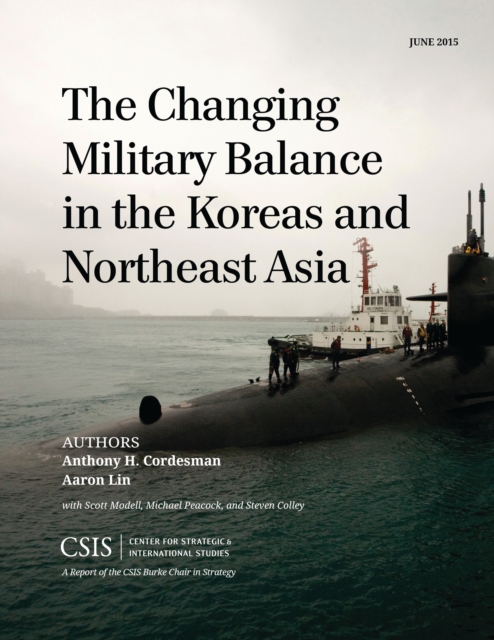
The changing military balance in the Koreas and Northeast Asia
This new volume, up to date through Spring 2015, provides a detailed examination of the military forces in Northeast Asia-North and South Korea, China, Russia, Japan, and the United States-setting those forces in the larger geostrategic context.
eBook
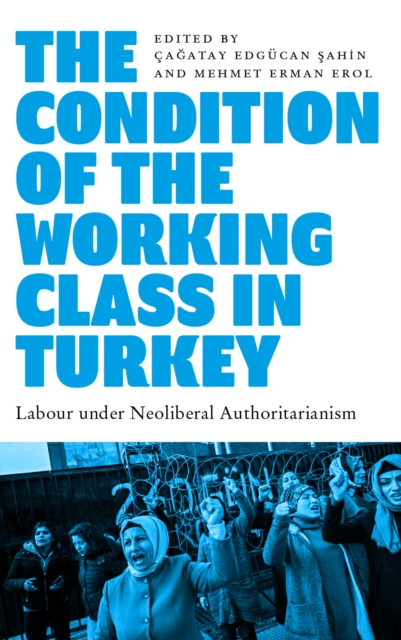
The Condition of the Working Class in Turkey
Decades of neoliberal authoritarianism have propelled Turkey into crisis. Regime change, economic disaster and Erdogan's ambition to impose 'one-man rule' have shaken the foundations of Turkish political life, but what does this mean for workers?
Moving beyond the headlines and personalities, this book uncovers the real condition of the working class in modern Turkey. Combining field research and in-depth interviews, it offers cutting-edge analyses of workplace struggles, trade unionism, the AKP's relationship with neoliberalism, migration, gender, agrarian change and precarity, as well as the Covid-19 pandemic and its impact on workers.
Bringing together Turkish activists and scholars, this book is an inside look at the dynamics and contradictions of working-class resistance against Turkey's neoliberal authoritarian regime; from worker self-management to organised labour and rural struggles.
eBook

Korea 2010
Korea 2010: Politics, Economy and Society contains concise overview articles covering domestic developments and the economy in both South and North Korea as well as inter-Korean relations and foreign relations of the two Koreas in 2009. A detailed chronology complements these articles.
eBook
Korea and East Asia
This book critically addresses the potential of the liberal concept of collective security to provide a solution to conflict in East Asia, with a focus on the Korean peninsula.
eBook

Among Women across Worlds
In Among Women across Worlds, Suzy Kim explores the transnational connections between North Korean women and the global women's movement. Asian women, especially communists, are often depicted as victims of a patriarchal state. Kim challenges this view through extensive archival research, revealing that North Korean women asserted themselves from the late 1940s to 1975, before the Korean War began and up to the UN's International Women's Year. Kim centers on North Korea and the \"East\" to present a new genealogy of the global women's movement. Women of the Korean Democratic Women's Union (KDWU), part of the global left women's movement led by the Women's International Democratic Federation (WIDF), argued that family and domestic issues should be central to both national and international debates. They highlighted the connections between race, nationality, sex, and class in systems of exploitation. Their intersectional program proclaimed \"no peace without justice,\" \"the personal is the political,\" and \"women's rights are human rights,\" long before Western activists adopted these ideas. Among Women across Worlds uncovers movements and ideas foundational to today's era.
eBook

Challenges to building social cohesion in conflict-laden areas: The A’zaz case in the northwest of Syria (2016–2022)
The primary focus of this article is to critically evaluate the feasibility of fostering social cohesion in northwest Syria. This exploration hinges on the nuanced perspectives of local authorities, residents, and civil society organizations (CSOs) actively operating within the region. To comprehensively understand this dynamic, a structured approach was employed, including conducting 25 Key Informant Interviews (KII), organizing three focus group discussions with a total of 30 participants representing the broader community base, and launching a public survey that garnered insights from 516 respondents across diverse community sectors following up with the post-data collection, the research utilized advanced Excel methodologies to rigorously analyze the findings, thereby probing the stated hypotheses. The analytical journey unearthed a myriad of challenges and roadblocks impeding the attainment of social cohesion. The survey underscored an imperative: the need for capacity-building across all regional actors. It also highlighted certain critical areas requiring immediate intervention and overhaul, notably the economic and security sectors.
Journal Article

The Color Revolutions
From late 2003 through mid-2005, a series of peaceful street protests toppled corrupt and undemocratic regimes in Georgia, Ukraine, and Kyrgyzstan and ushered in the election of new presidents in all three nations. These movements-collectively known as the Color Revolutions-were greeted in the West as democratic breakthroughs that might thoroughly reshape the political terrain of the former Soviet Union. But as Lincoln A. Mitchell explains inThe Color Revolutions, it has since become clear that these protests were as much reflections of continuity as they were moments of radical change. Not only did these movements do little to spur democratic change in other post-Soviet states, but their impact on Georgia, Ukraine, and Kyrgyzstan themselves was quite different from what was initially expected. In fact, Mitchell suggests, the Color Revolutions are best understood as phases in each nation's long post-Communist transition: significant events, to be sure, but far short of true revolutions.The Color Revolutionsexplores the causes and consequences of all three Color Revolutions-the Rose Revolution in Georgia, the Orange Revolution in Ukraine, and the Tulip Revolution in Kyrgyzstan-identifying both common themes and national variations. Mitchell's analysis also addresses the role of American democracy promotion programs, the responses of nondemocratic regimes to the Color Revolutions, the impact of these events on U.S.-Russian relations, and the failed \"revolutions\" in Azerbaijan and Belarus in 2005 and 2006. At a time when the Arab Spring has raised hopes for democratic development in the Middle East, Mitchell's account of the Color Revolutions serves as a valuable reminder of the dangers of confusing dramatic moments with lasting democratic breakthroughs.
eBook

Determinants of Democratization
What are the determinants of democratization? Do the factors that move countries toward democracy also help them refrain from backsliding toward autocracy? This book attempts to answer these questions through a combination of a statistical analysis of social, economic, and international determinants of regime change in 165 countries around the world in 1972–2006, and case study work on nine episodes of democratization occurring in Argentina, Bolivia, Hungary, Nepal, Peru, the Philippines, South Africa, Turkey, and Uruguay. The findings suggest that democracy is promoted by long-term structural forces such as economic prosperity, but also by peaceful popular uprisings and the institutional setup of authoritarian regimes. In the short-run, however, elite actors may play a key role, particularly through the importance of intra-regime splits. Jan Teorell argues that these results have important repercussions both for current theories of democratization and for the international community's effort in developing policies for democracy promotion.
eBook