
Catalogue Search | MBRL


Are you sure you want to remove the book from the shelf?

{{itemTitle}}
43
result(s) for
"Interior architecture Pictorial works."
Sort by:


The Color of Loss
The devastation of New Orleans after Hurricane Katrina has been imprinted in our collective visual memory by thousands of images in the media and books of dramatic photographs by Robert Polidori, Larry Towell, Chris Jordan, Debbie Fleming Caffrey, and others. New Orleanians want the world to see and respond to the destruction of their city and the suffering of its people—and yet so many images of so much destruction threaten a visual and emotional overload that would tempt us to avert our eyes and become numb. In The Color of Loss, Dan Burkholder presents a powerful new way of seeing the ravaged homes, churches, schools, and businesses of New Orleans. Using an innovative digital photographic technology called high dynamic range (HDR) imaging, in which multiple exposures are artistically blended to bring out details in the shadows and highlights that would be hidden in conventional photographs, he creates images that are almost like paintings in their richness of color and profusion of detail. Far more intense and poetic than purely documentary photographs, Burkholder's images lure viewers to linger over the artifacts of people's lives—a child's red wagon abandoned in a mud-caked room, a molding picture of Jesus—to fully understand the havoc thrust upon the people of New Orleans. In the deserted, sinisterly beautiful rooms of The Color of Loss, we see how much of the splendor and texture of New Orleans washed away in the flood. This is the hidden truth of Katrina that Dan Burkholder has revealed.
eBook


Italian Interiors
Italienische Innenarchitektur zeichnet sich seit Jahrzehnten durch eine besondere Innovationskraft und Risikobereitschaft aus, nicht nur auf der ästhetischen Ebene, sondern auch bei der Verwendung von neuen Materialien und deren Kombination.
eBook

Grand tour : the worldly projects of Studio Peregalli
\"'Blending nostalgia for the past with curiosity for the present' is the essential design philosophy of Studio Peregalli's work. By infusing their work with deep historical research and an unprecedented level of craft, the designers are able to imbue each project with a unique sense of history and ambience. Grand Tour is a movable visual feast with remarkable photography of grand rooms contrasted with beautiful details and exquisite craftsmanship. Each house presented here is the fullest expression of the Studio Peregalli's design--compelling, spectacular, and unique.\" -- Publisher's website.
Book
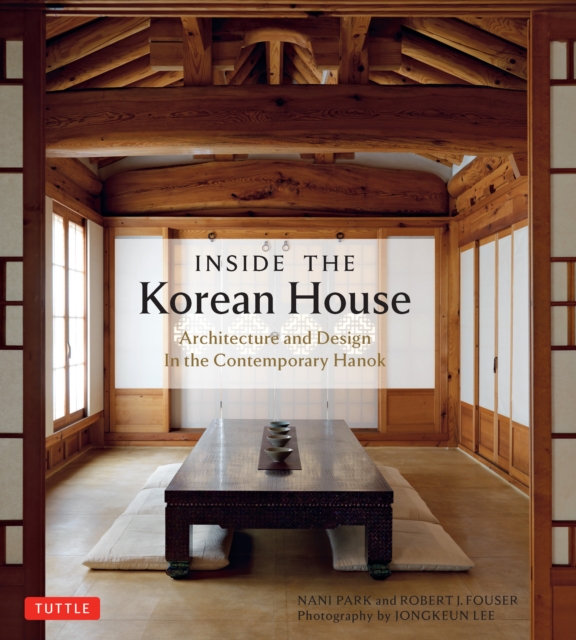
Hanok: the Korean house
Hanok: The Korean House provides new insights on the stylish traditional homes that are increasingly popular in Seoul today. While the exteriors of these houses are indistinguishable from traditional Hanok that were built decades ago, the insides have completely changed and adapted with the times. Korea is a nation that has radically transformed itself in recent decades, yet amidst the glass-and-steel skyscrapers and luxury apartments, the traditional Korean home or Hanok still survives and plays a surprisingly important role. This book showcases 12 very special Hanok that have been selected to reflect the Korea of today-a country of traditional values with a modern approach. The fundamental Hanok design has not changed. Traditional materials of stone, wood and clay are still the only components used in these houses. They also incorporate natural elements such as wind and sunlight, and baesanimsu-known in Chinese as feng shui, used to position the Hanok in harmony with the natural forces and geographical features of the site. Each Hanok has a unique story to tell and this book conveys the story of each house from the point of view of the owners, many of whom are talented architects. It is intended to give the reader a feel for contemporary Korean culture and identity in a country which is now getting back in touch with its traditional roots.
eBook

Old Cuba
\"From Old Havana to Santiago de Cuba, Old Cuba offers an intimate look at the historic architecture--the houses, apartments, monuments, charming public spaces, centuries old churches--of the storied country.\"--Jacket flap.
Book


The splendor of Cuba : 450 years of architecture and interiors
An unprecedented tour of stunning and architecturally significant Cuban palacios, mansions, and private homes that have been meticulously preserved, previously un-photographed, and inaccessible to visitors. At a time when more travelers are rediscovering Cuba, this lavishly illustrated volume offers a different view of the island's cultural achievements. It presents not the picturesque Cuba of Castro's era, with its derelict buildings and peeling paint, but the opulent world of the Spanish Creole aristocracy of the colonial period, with its Mudejar craftsmanship and baroque palacios, the sugarcane plantations (ingenios) and coffee plantations (cafetales), and classically inspired grand mansions.
Book

European Women in Persian Houses
During the course of the 19th century, a relatively modern medium entered the private space of Iranian houses of the wealthy and became a popular feature of interior design in Persia. This was print media - lithographed images on paper and postcards - and their subject was European women. These idealised images adorned houses across the country throughout the Qajar period and this trend was particularly fashionable in Isfahan and mural decorations at the entrance gate of the Qaysarieh bazaar. The interest in images of Western women was an unusual bi-product of Iran's early political and cultural encounters with the West. In a world where women were rarely seen in public and, even then, were heavily veiled, the notion of European women dressed in - by Iranian standards - elegant and revealing clothing must have sparked much curiosity and some titillation among well-to-do merchants and aristocrats who felt the need to create some association, however remote, with these alien creatures. The introduction of such images began during the Safavid era in the 17th century with frescoes in royal palaces. This spread to other manifestations in the form of tile work and porcelain in the Qajar era, which became a testament to the popularity of this visual phenomenon among Iran's urban elite in the 19th and early 20th century. Parviz Tanavoli, the prominent Iranian artist and sculptor, here brings together the definitive collection of these unique images. European Women in Persian Houses will be essential for collectors and enthusiasts interested in Iranian art, culture and social history.
eBook