
Catalogue Search | MBRL


Are you sure you want to remove the book from the shelf?

{{itemTitle}}
285
result(s) for
"Interkulturelle Bildung"
Sort by:


Keepin' it real
How can we help African American and Latino students perform better in the classroom and on exams? Why are so many African American and Latino students performing less well than their Asian and White peers? Researchers have argued that African American and Latino students who rebel against “acting white” doom themselves to lower levels of scholastic, economic, and social achievement. However, this book argues that what is needed is a broader recognition of the unique cultural styles and practices that non-white students bring to the classroom. Based on extensive interviews and surveys of students in New York, the book demonstrates that the most successful negotiators of the American school systems are the multicultural navigators, culturally savvy teens who draw from multiple traditions, whether it be knowledge of hip hop or of classical music, to achieve their high ambitions. The book refutes the common wisdom about teenage behavior and racial difference, and shows how intercultural communication, rather than assimilation, can help close the black-white gap.
eBook

Rethinking multicultural education for the next generation
\"Rethinking Multicultural Education for the Next Generation builds on the legacy of social justice multicultural education, while recognizing the considerable challenges of reaching todays college students. By drawing on breakthrough research in two fields neuroscience and animal studies Nadine Dolby argues that empathy is an underlying element of all living beings. Dolby shows how this commonality can provide a scaffolding for building an exciting new approach to developing multicultural and global consciousness, one that has the potential to transform how our students see and relate to the world around them. This book features classroom vignettes and reflections, discussion of research with pre-service teachers on the concept of empathy, and pedagogical suggestions for fostering the new empathy in students. Incorporating discussions of animal emotions, sustainability, and our responsibilities to all living creatures and the planet, Dolby challenges multicultural educators to rethink both curriculum and pedagogy and to begin new and bolder conversations about how empathy for humans, animals, and the planet must be part of a new approach to teaching\"-- Provided by publisher.
Book

Challenging divisions through teacher education and history teaching. The case of Bosnia and Herzegovina
Educating teachers to teach language, culture and history in a post-conflict country such as Bosnia and Herzegovina, which is still deeply divided and fragmented, implies enormous social and moral responsibilities. These endeavours represent continuous challenges where the processes of healing the wounds in such vulnerable situations, so deep and irreparable, are discussed and contextualised within the long-term social recovery in which the education of children and young people takes on a primary transformative role. The present paper examines the education policies and divisions in Bosnia and Herzegovina in the past twenty years, which reflect the segregation, politicisation and fragmentation in the post-war society. It also focuses on the role of educators in teaching for peace, antidiscrimination and intercultural understanding by addressing the issues of social exclusion, injustice, prejudice, privilege and violence across the curriculum. It problematises the construction and representation of historical and cultural knowledge, which is usually ethnocentric in orientation. Special emphasis is placed on the role of universities, i.e., university teachers and teacher educators, in promoting critical thinking and universal humanistic values among students in Bosnia and Herzegovina in general, and those studying at the English Department, University of Sarajevo, in particular. Drawing on the theories and resources of critical and intercultural pedagogy and peace education, the paper explores the possibilities of discussing stereotypes and prejudice with first-year BA students at the English Department within their Introduction to British Studies course, and with MA student teachers within their Interculturalism in Language Education course, which deals with peacebuilding and intercultural sensitivity in teaching English from a cultural perspective. (DIPF/Orig.)
Journal Article

Cultural diversity and education
This comprehensive book explores the importance of cultural diversity in the field of education. It delves into the significance of embracing diverse backgrounds, beliefs, and perspectives within the classroom. With a focus on creating inclusive learning environments, the book provides valuable insights into curriculum development and teaching strategies that promote cultural understanding and sensitivity. Through a variety of case studies and practical examples, readers gain a deeper understanding of how cultural diversity can enrich the educational experience for both students and educators. This book is an essential resource for anyone passionate about fostering inclusive education.
eBook

Adapting educational and psychological tests for cross-cultural assessment
Adapting Educational and Psychological Tests for Cross-Cultural Assessment critically examines and advances new methods and practices for adapting tests for cross-cultural assessment and research. The International Test Commission (ITC) guidelines for test adaptation and conceptual and methodological issues in test adaptation are described in detail, and questions of ethics and concern for validity of test scores in cross-cultural contexts are carefully examined. Advances in test translation and adaptation methodology, including statistical identification of flawed test items, establishing equivalence of different language versions of a test, and methodologies for comparing tests in multiple languages, are reviewed and evaluated. The book also focuses on adapting ability, achievement, and personality tests for cross-cultural assessment in educational, industrial, and clinical settings.
This book furthers the ITC's mission of stimulating research on timely topics associated with assessment. It provides an excellent resource for courses in psychometric methods, test construction, and educational and/or psychological assessment, testing, and measurement. Written by internationally known scholars in psychometric methods and cross-cultural psychology, the collection of chapters should also provide essential information for educators and psychologists involved in cross-cultural assessment, as well as students aspiring to such careers.
Contents: Preface. Part I: Cross-Cultural Adaptation of Educational and Psychological Tests: Theoretical and Methodological Issues. R.K. Hambleton, Issues, Designs, and Technical Guidelines for Adapting Tests Into Multiple Languages and Cultures. F.J.R. van de Vijver, Y.H. Poortinga, Conceptual and Methodological Issues in Adapting Tests. T. Oakland, Selected Ethical Issues Relevant to Test Adaptations. S.G. Sireci, L. Patsula, R.K. Hambleton, Statistical Methods for Identifying Flaws in the Test Adaptation Process. S.G. Sireci, Using Bilinguals to Evaluate the Comparability of Different Language Versions of a Test. L.L. Cook, A.P. Schmitt-Cascallar, Establishing Score Comparability for Tests Given in Different Languages. L.L. Cook, A.P. Schmitt-Cascallar, C. Brown, Adapting Achievement and Aptitude Tests: A Review of Methodological Issues. Part II: Cross-Cultural Adaptation of Educational and Psychological Tests: Applications to Achievement, Aptitude, and Personality Tests. C.T. Fitzgerald, Test Adaptation in a Large-Scale Certification Program. C.Y. Maldonado, K.F. Geisinger, Conversion of the Wechsler Adult Intelligence Scale Into Spanish: An Early Test Adaption Effort of Considerable Consequence. N.K. Tanzer, Developing Tests for Use in Multiple Languages and Cultures: A Plea for Simultaneous Development. F. Drasgow, T.M. Probst, The Psychometrics of Adaptation: Evaluating Measurement Equivalence Across Languages and Cultures. M. Beller, N. Gafni, P. Hanani, Constructing, Adapting, and Validating Admissions Tests in Multiple Languages: The Israeli Case. P.F. Merenda, Cross-Cultural Adaptation of Educational and Psychological Testing. C.D. Spielberger, M.S. Moscoso, T.M. Brunner, Cross-Cultural Assessment of Emotional States and Personality Traits.
eBook

Young people and everyday multiculturalism
\"Unlike as with previous generations, diversity and multiculturalism are engrained in the lives of today's urban youth. Within their culturally diverse urban environments, young people from different backgrounds now routinely encounter one another in their everyday lives and negotiate and contest ways of living together and sharing civic space. What are their strategies for producing, disrupting and living well with difference, how do they create inclusive forms of belonging, and what are the conditions that militate against social cohesion amongst youth? This unique ethnography from education and cultural studies expert Anita Harris explores the ways young people manage conditions of cultural diversity in multicultural cities and suburbs, focusing particularly on how young people in the multicultural cities of Australia experience, define and produce mix, conflict, community and citizenship. This book illuminates rich, local approaches to living with difference from the perspective of a generation uniquely positioned to address this global challenge\"-- Provided by publisher.
Book
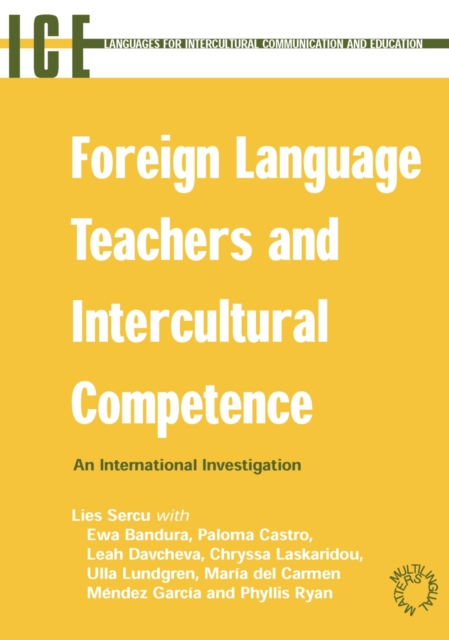
Foreign language teachers and intercultural competence
This volume reports on a study that focused on teachers' beliefs regarding intercultural competence teaching in foreign language education. Its conclusions are based on data received from teachers in seven countries: Belgium, Bulgaria, Poland, Mexico, Greece, Spain and Sweden.
eBook

