
Catalogue Search | MBRL


Are you sure you want to remove the book from the shelf?

{{itemTitle}}
599
result(s) for
"International Cooperation history China."
Sort by:

The China-US partnership to prevent spina bifida : the evolution of a landmark epidemiological study
\"An American-Chinese partnership to prevent spina bifida and related birth defects succeeded through old-fashioned field epidemiology, advocates with influence, and genuine collaboration based on personal relationships built on trust, respect, and shared proboblem-solving\"--Provided by publisher.
Book

The Great Manchurian Plague of 1910-1911
When plague broke out in Manchuria in 1910 as a result of transmission from marmots to humans, it struck a region struggling with the introduction of Western medicine, as well as with the interactions of three different national powers: Chinese, Japanese, and Russian. In this fascinating case history, William Summers relates how this plague killed as many as 60,000 people in less than a year, and uses the analysis to examine the actions and interactions of the multinational doctors, politicians, and ordinary residents who responded to it.
Summers covers the complex political and economic background of early twentieth-century Manchuria and then moves on to the plague itself, addressing the various contested stories of the plague's origins, development, and ecological ties. Ultimately, Summers shows how, because of Manchuria's importance to the world powers of its day, the plague brought together resources, knowledge, and people in ways that enacted in miniature the triumphs and challenges of transnational medical projects such as the World Health Organization.
eBook

Non-Traditional Security Issues and the South China Sea
While there is abundant literature discussing non-traditional security issues, there is little mention of such issues existing in the South China Sea. This area is vulnerable to natural hazards and marine environmental degradation. The marine ecosystem is threatened by various adverse sources including land-based pollution, busy shipping lanes, and over-exploitation activities which threaten the security of the surrounding population. This area is also threatened by piracy and maritime crimes but law enforcement becomes difficult due to unclear maritime boundaries. This volume is designed to explore the security cooperation and regional approaches to these non-traditional security issues in the hope to build a peaceful environment and maintain international and regional security and order in the South China Sea region.
Shicun Wu, PhD, is currently President of National Institute for South China Sea Studies. Visiting scholar to the School of Advanced International Studies(SAIS) of John Hopkins University in 1998, to the Seminar on the Dynamics of US Foreign Policy-Regional Security sponsored by U.S. Government in 1999, and senior research fellow with Asia-Pacific Center for Security Studies in 2001, and the Harvard Kennedy School in 2008. His research focuses on history and geography on the South China Sea, ocean delimitation, international relations and regional security strategy. His main publication includes Maritime Security in the South China Sea: Regional Implications and International Cooperation (2009),Origin and Development of Spratly Disputes (2010), Collection of Literatures on the South China Sea Issues, A Bibliography of Research on the South China Sea, The Issue of the South China Sea Islands in the Time of the Republic of China (1911-1949), Contest on the South China Sea and Zheng He’s Voyages to the Indian Ocean, Historical background on the 1943 Sino-British New Treaty, On Relativity of Cognition of the History, The Foundation of Sino-ASEAN Free Trade Zone and Cross-Strait Commercial Relations, Imperative Task-the Exploitation of South China Sea Resources, etc. Keyuan Zou is Harris Professor of International Law at the Lancashire Law School of the University of Central Lancashire (UCLan), United Kingdom. He specializes in international law, in particular law of the sea and international environmental law. Before joining UCLan, he worked in Dalhousie University (Canada), Peking University (China), University of Hannover (Germany) and National University of Singapore. He is Academic Advisor to the China National Institute for South China Sea Studies and the Centre for Ocean Law and Policy of the Shanghai Jiaotong University in China. He is member of the ESRC Peer Review College and the Commission on Environmental Law of IUCN. He has published over 60 refereed
eBook

Major Law and Policy Issues in the South China Sea
Major law and policy issues in the South China Sea are discussed mainly from the perspectives of leading American and European scholars in the study of the complex South China Sea disputes. The issues include regional maritime cooperation and regime building, Southeast Asian countries' responses to the Chinese assertiveness, China's historic claims, maritime boundary delimitation and excessive maritime claims, military activities and the law of the sea, freedom of navigation and its impact on the problem, the dispute between Vietnam and China, confidence-building measures and U.S.-Taiwan-China relations in the South China Sea, and Taiwan's role in the resolution to the South China Sea issues. Over the past three years, there have been several incidents in the South China Sea between the claimants, and also between the claimants and non-claimants over fisheries, collection of seismic data, exploration for oil and gas resources, and exercise of freedom of navigation. Third party concerns and involvement in the South China Sea disputes have been increasing as manifested in actions taken by the United States, India, and Japan. It is therefore important to examine South China Sea disputes from the legal and political perspective and from the view point of American and European experts who have been studying South China Sea issues for many years.
eBook

China learns from the Soviet Union, 1949-present
It is well known that the Soviet Union strongly influenced China in the early 1950s, since China committed itself both to the Sino-Soviet alliance and to the Soviet model of building socialism. What is less well known is that Chinese proved receptive not only to the Soviet economic model but also to the emulation of the Soviet Union in realms such as those of ideology, education, science, and culture. In this book an international group of scholars examines China's acceptance and ultimate rejection of Soviet models and practices in economic, cultural, social, and other realms. The chapters vividly illustrate the wide-ranging and multi-dimensional nature of Soviet influence, which to this day continues to manifest itself in one critical aspect, namely in China's rejection of liberal political reform.
eBook
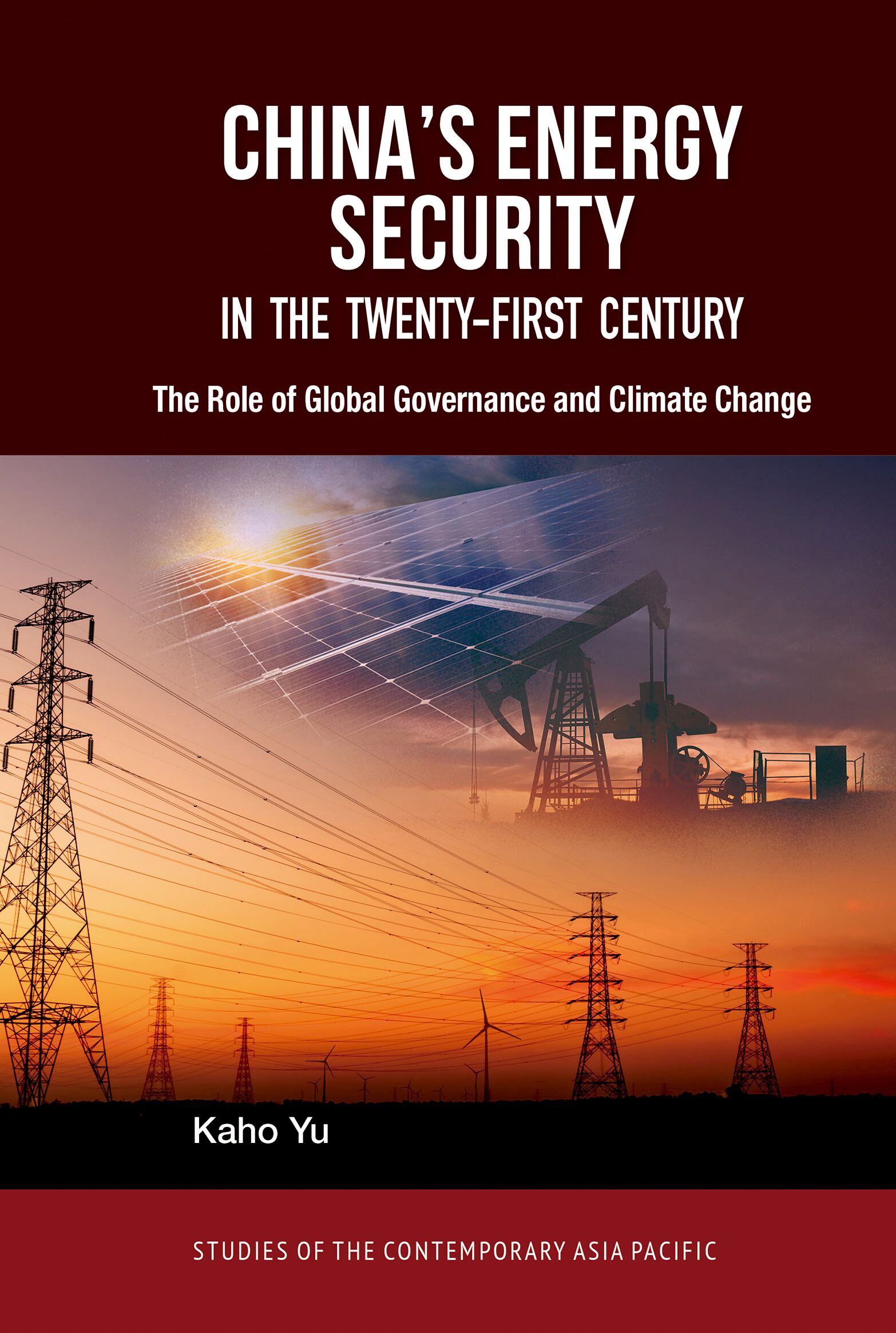
China's Energy Security in the Twenty-First Century
Kaho Yu's China's Energy Security in the Twenty-First Century: The Role of Global Governance and Climate Change explores the evolution of China's energy security from its bilateral going-out strategy to its more multilateral Belt and Road Initiative. By analysing the topic from a multidisciplinary perspective, this book examines China's evolving role in global energy governance through four empirical case studies: China's energy cooperation with Russia and Central Asia, Africa, the European Union, and the Asia Infrastructure Investment Bank.
eBook

China-Russia Strategic Alignment in International Politics
Post-Cold War China-Russia strategic cooperation has displayed significant development and become an increasingly important factor in contemporary international politics. However, there has been no theory-grounded framework and corresponding measurements that would allow an accurate and systematic assessment of the level of China-Russia alignment and its progress over time. How closely aligned are China and Russia? How to define and measure strategic alignments between states? This book bridges area studies and International Relations literature to develop a set of objective criteria to measure and explain the development of strategic alignment in post-Cold War China-Russia relations. China-Russia Strategic Alignment in International Politics establishes that on a range of criteria, China-Russia alignment has been moving towards a full-fledged alliance, showing a consistent incremental upward trend. There are strong structural incentives for furthering the China-Russia alignment. The alignment framework developed in the book is applicable to other cases of interstate strategic cooperation and enables systematic comparisons of different strategic alignments.
eBook

Thirty years of South Korea-China Relations: Cooperation, Conflict, and Competition
This study provides a comprehensive review of South Korea-China relations over the past three decades, focusing on the evolution of their economic cooperation, political interactions, and responses to the changing international context. Since the establishment of diplomatic ties in 1992, the two countries have experienced significant growth in bilateral trade, investment, and cultural exchanges. However, the relationship has also faced challenges, notably the THAAD controversy and intensifying US-China rivalry. This study examines how South Korea-China relations have evolved between cooperation and competition, highlighting the importance of pragmatic diplomacy and building mutual trust. The study concludes that maintaining a delicate balance and exploring new areas of cooperation are crucial for future stability and mutual development in the region.
Journal Article

Fighting to Be Friends: Third-Party Bargaining, Alliance Formation, and War
Alliance formation typically entails some risk of abandonment, wherein an ally may not honor its obligations in the future. When potential security partners’ preferences are misaligned, this risk looms large, discouraging mutually beneficial investment in an alliance. How can a prospective ally credibly reassure an uncertain patron that their preferences align, to mitigate abandonment risks and elicit a security commitment? We show formally that pre-alliance bargaining with third parties is one way to do so. When the patron holds abandonment concerns, the prospective ally can reassure the patron by making greater concessions to the patron’s existing allies, but more hard-line demands of its rivals. This finding implies that the prospect of an alliance can alternately promote conflict with a prospective patron’s enemies and forestall conflict with its friends. Indeed, we show that incentives for pre-alliance reassurance can result in war, even with perfect asset divisibility, no commitment problems, and complete information among the belligerents. The results are illustrated by China’s intervention in the Korean War and Australia’s post-World War II rapprochement with Japan, which were motivated largely to foster security cooperation with the Soviet Union and the United States, respectively.
Journal Article
Facing Off and Saving Face: Covert Intervention and Escalation Management in the Korean War
States pursue their cooperative and competitive goals using both public and private policy tools. Yet there is a profound mismatch between the depth, variety, and importance of covert activity and what scholars of International Relations (IR) know about it. This article addresses this gap by analyzing how adversaries struggle for influence within the covert sphere, why they often retreat to it, and when they abandon it. It focuses on secrecy among adversaries intervening in local conflicts and develops a theory about secrecy's utility as a device for creating sustainable limits in war. Drawing on insights about secrecy and face-work from the sociologist Erving Goffman, I show that major powers individually and collectively conceal evidence of foreign involvement when the danger of unintended conflict escalation is acute. Doing so creates a kind of “backstage” in which adversaries can exceed limits on war without stimulating hard-to-resist pressure to escalate further. An important payoff of the theory is making sense of puzzling cases of forbearance: even though adversaries often know about their opponent's covert activity, they often abstain from publicizing it. Such “tacit collusion” arises when both sides seek to manage escalation risks even as they compete for power and refuse to capitulate. The article evaluates the theory via several nested cases of external intervention in the Korean War. Drawing on newly available materials documenting the covert air war between secretly deployed Soviet pilots and Western forces, the cases show how adversaries can successfully limit war by concealing activity from outside audiences. Beyond highlighting the promise in studying the covert realm in world politics, the article has important implications for scholarship on coercive bargaining, reputation, state uses of secrecy, and how regime type influences conflict behavior.
Journal Article