
Catalogue Search | MBRL


Are you sure you want to remove the book from the shelf?

{{itemTitle}}
80
result(s) for
"International Criminal Court -- Rules and practice"
Sort by:

The Reparation System of the International Criminal Court
Dedicated to one of the great innovations in the proceedings before the International Criminal Court, this book offers a comprehensive analysis of the Court's power to order a convicted person to make reparations to victims, possibilities for its implementation and its potential to bring justice to victims.
eBook

Counsel Misconduct before the International Criminal Court
This is the first comprehensive study of the law governing professional misconduct by defence lawyers before the International Criminal Court. The ICC’s regulatory regime was introduced in response to instances of misconduct experienced by other international and domestic criminal courts. The book first turns to how the ICC’s forerunners – the International Criminal Tribunals for the former Yugoslavia and Rwanda and the Special Court for Sierra Leone – coped with misconduct, often resulting in controversy. The book also looks at the approaches that have evolved in Germany and the United States, reflecting the different role of defence lawyers in the civil and common law criminal justice traditions. The book offers a unique insight into the professional responsibilities of defence lawyers within the various international and national regimes. Offering practical guidance on disciplinary systems and other sanctioning mechanisms, it also explores the inherent tension at the heart of the defence lawyer’s role: to ensure the human right to a fair trial we want them to be zealous advocates for their clients; at the same time we ask them to commit themselves as officers of the court.
eBook
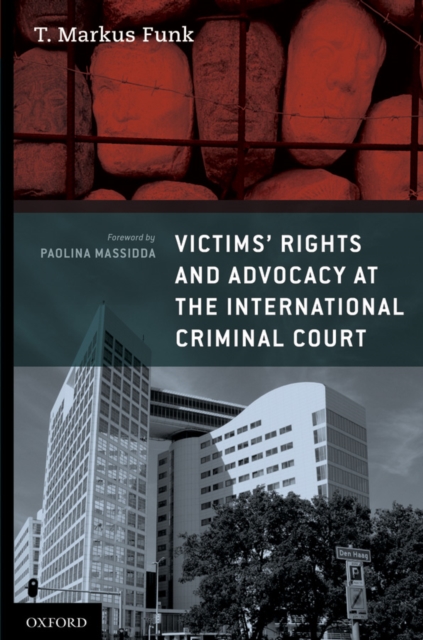
Victims' rights and advocacy at the International Criminal Court
Victims' Rights and Advocacy at the International Criminal Court is the first detailed analysis of the newly-recognized right of victims to participate in the trials of their accused abusers. Author T. Markus Funk draws on his extensive background in international criminal law and litigation to walk the reader through this unique - and, indeed, controversial - body of procedural and substantive rights for victims of atrocity crimes. To set the stage for his analysis, Mr. Funk provides a historical account of the ICC's creation and the origins of victims' rights. In addition, Mr. Funk gives the reader practical guidance on what it takes to litigate cases before the Court. This background, in turn, allows the reader to work through a number of key questions: How does the ICC function and how is it structured? What are the legal, theoretical, and political pillars upon which the ICC is built? What is the proper role for victims in atrocity crimes litigation? How successfully has the ICC lived up to its promises to victims? How does one become an ICC victim representative, prosecutor, or judge, and what does it take to fulfill the mandate of these positions? What are the costs and benefits sovereign nations must weigh before joining the ICC? What institutional flaws have kept the ICC, as well as other predecessor ad hoc tribunals, from meeting the weighty expectations they have set for themselves and the world community? In addition to addressing these key issues, Mr. Funk proposes concrete reforms to help the ICC fulfill its mission of effectively redressing past atrocities, while preserving the rights of both victims and the accused. The book also presents a detailed explanation of the ICC's rules of procedure and evidence and other practical issues impacting the Court's daily litigation practice. Featuring a foreword by Paolina Massidda, Principal
Counsel of the Office of Public Counsel for Victims at the International Criminal Court, Victims' Rights and Advocacy at the International Criminal Court equips lawyers, victim advocates, academics, government officials, and other interested Court observers and decision-makers with a thorough understanding of the promises and potential pitfalls of victim advocacy, and, indeed, advocacy in general, at the ICC. The book, therefore, is an indispensable guide to anyone interested in this new, important and constantly-evolving juridical body.
eBook
Crimes against Humanity
This book traces the evolution of crimes against humanity (CAH) and their application from the end of World War I to the present day, in terms of both historic legal analysis and subject-matter content. The first part of the book addresses general issues pertaining to the categorization of CAH in normative jurisprudential and doctrinal terms. This is followed by an analysis of the specific contents of CAH, describing its historic phases going through international criminal tribunals, mixed model tribunals and the International Criminal Court. The book examines the general parts and defenses of the crime, along with the history and jurisprudence of both international and national prosecutions. For the first time, a list of all countries that have enacted national legislation specifically directed at CAH is collected, along with all of the national prosecutions that have occurred under national legislation up to 2010.
eBook

The Rome Statute for the International Criminal Court
The book traces the background to the establishment of the ICC, analyses the Statute and associated instruments and reviews its case law. It examines comprehensively the parameters, framework of operation of a unique judicial institution regarded by many as an achievement of our epoch.
eBook
The Trial Proceedings of the International Criminal Court
This is the first publication on the trial proceedings of the International Criminal Court, the ICTY and the ICTR collected in one volume. It covers the essential procedural and evidentiary aspects of trials before the ICC from the beginning of an investigation until the sentence, including appeals, revision, and enforcement of the sentence.
eBook
An Introduction to the Law of International Criminal Tribunals
In An Introduction to the Law of International Criminal Tribunals Geert-Jan Alexander Knoops offers an overview of the basic topics in international criminal law (ICL).It discusses main characteristics of International Criminal Tribunals (ICTs), as well as definitions of international crimes. The book will delve into issues of jurisdiction and complementarity, liability principles and specialized defences. Other topics are: due process rights, evidence, trials in absentia and State cooperation. A new chapter is devoted to the geopolitical effects of international criminal prosecutions.The second revised edition includes a chapter on the \"new\" crime of aggression and is updated with the most recent developments in ICL. The book is essential to everyone becoming familiar with the basic topics and challenges within ICL.
eBook

Biden Administration Rescinds Sanctions Against International Criminal Court Officials
On April 1, 2021, the Biden administration issued an executive order reversing the Trump administration's sanctions on International Criminal Court (ICC) personnel. The administration rescinded the sanctions placed upon the ICC prosecutor, Fatou Bensouda, and the head of the Office of the Prosecutor's Jurisdiction, Complementarity, and Cooperation Division, Phakiso Mochochoko, and removed the officials from the Treasury Department's Office of Foreign Assets Control List of Specially Designated Nationals and Blocked Persons. The ICC, European Union (EU), and human rights groups welcomed the reversal.
Journal Article

Penal Protection for Women in Jordan: How Compatible Are International Agreements and Jordanian Legislation?
This article analyses the degree to which Jordanian penal legislation conforms to international human rights standards regarding the protection of women from violence, specifically the Convention on the Elimination of All Forms of Discrimination Against Women (CEDAW) and the United Nations Bangkok Rules. Jordan has implemented legislative reforms targeting gender-based violence; however, these reforms are incomplete, disjointed, and frequently misaligned with international standards. This study employs a doctrinal methodology to analyse Articles 292-311 of the Jordanian Penal Code and associated procedural rules, assessing their substantive and procedural provisions in relation to international legal obligations. This analysis includes rulings from the Jordanian Court of Cassation from 2008 to 2024, alongside comparative references to legal practices in the United Kingdom, France, and Australia. The findings indicate significant shortcomings, including the lack of criminalisation for marital rape, unclear definitions of sexual acts involving minors, inconsistencies in the treatment of deceptive sexual conduct, and inadequate aggravating provisions for cases of familial abuse or human trafficking. Although there have been positive measures such as gender-specific search protocols and confidential settlement alternatives in domestic violence situations, the study identifies procedural deficiencies in the search, trial, and incarceration processes that negatively affect women. The article suggests specific legislative amendments to align Jordanian law with international obligations. These include redefining sexual offences within a gender-neutral and consent-based framework, expanding aggravating factors to protect more women, and reforming procedural guarantees to avoid discriminatory or patriarchal interpretations. The study concludes that Jordan has made measurable progress in implementing gender-sensitive reforms, but the existing legal framework does not fully achieve the principles of equality, dignity, and protection outlined in CEDAW and related international instruments. To attain substantive compliance, it is essential that Jordan should implement comprehensive statutory reform, provide institutional training, and adopt a human rights-centered approach to criminal justice.
Journal Article