
Catalogue Search | MBRL


Are you sure you want to remove the book from the shelf?

{{itemTitle}}
1,722
result(s) for
"International economic relations -- History -- 20th century"
Sort by:


The Economic Weapon
The first international history of the emergence of
economic sanctions during the interwar period and the legacy of
this development Economic sanctions dominate the landscape
of world politics today. First developed in the early twentieth
century as a way of exploiting the flows of globalization to defend
liberal internationalism, their appeal is that they function as an
alternative to war. This view, however, ignores the dark paradox at
their core: designed to prevent war, economic sanctions are modeled
on devastating techniques of warfare. Tracing the use of economic
sanctions from the blockades of World War I to the policing of
colonial empires and the interwar confrontation with fascism,
Nicholas Mulder uses extensive archival research in a political,
economic, legal, and military history that reveals how a coercive
wartime tool was adopted as an instrument of peacekeeping by the
League of Nations. This timely study casts an overdue light on why
sanctions are widely considered a form of war, and why their
unintended consequences are so tremendous.
eBook


The UN and global political economy : trade, finance, and development
Against the backdrop of a 20-year revolt against free trade orthodoxy by
economists inside the UN and their impact on policy discussions since the 1960s, the
authors show how the UN both nurtured and inhibited creative and novel intellectual
contributions to the trade and development debate. Presenting a stirring account of
the main UN actors in this debate, The UN and Global Political Economy focuses on
the accomplishments and struggles of UN economists and the role played by such UN
agencies as the Department of Economic (and Social) Affairs, the United Nations
Commission on Trade and Development, and the Economic Commission for Latin America
(and the Caribbean). It also looks closely at the effects of the Latin American debt
crisis of the 1980s, the growing strength of the World Trade Organization (WTO) in
the 1990s, and the lessons to be drawn from these and other recent
developments.
eBook


International Organizations and the Analysis of Economic Policy, 1919–1950
This 2002 book expands our understanding of the distinctive policy analysis produced between 1919 and 1950 by economists and other social scientists for four major international organizations: the League of Nations, the International Labor Organization, the Bank for International Settlements, and the United Nations. These practitioners included some of the twentieth century's eminent economists, including Cassel, Haberler, Kalecki, Meade, Morgenstern, Nurkse, Ohlin, Tinbergen, and Viner. Irving Fisher and John Maynard Keynes also influenced the work of these organizations. Topics covered include: the relationship between economics and policy analysis in international organizations; business cycle research; the role and conduct of monetary policy; public investment; trade policy; social and labor economics; international finance; the coordination problem in international macroeconomic policy; full employment economics; and the rich-country-poor-country debate. Normative agendas underlying international political economy are made explicit, and lessons are distilled for today's debates on international economic integration.
eBook

The developing countries and the world economic order
The Developing Countries and the World Economic Order provides a lucid introduction to the debate about the developing countries and the quest for a New International Economic Order. The primary objective is to indicate some of the fundamental requirements that must be satisfied by an equitable world order. Since the present economic situation and demands of developing countries cannot be understood thoroughly without prior knowledge of how the present world order has evolved, Part I begins with a detailed historical survey. An account of economic development up to the Second World War and of the colonial heritage of the developing countries is followed by a description of the way in which the postwar world order came into being. Part II analyses more recent developments, including the central demands of developing countries and the background to these demands, and outlines a new perspective on the NIEO programme with suggestions are offered on how the developing countries could secure for themselves a larger share of the world's resources. A major theme of the book is that important changes in the world order take place irrespective of the recommendations adopted at international conferences -- Provided by Publisher.
Book
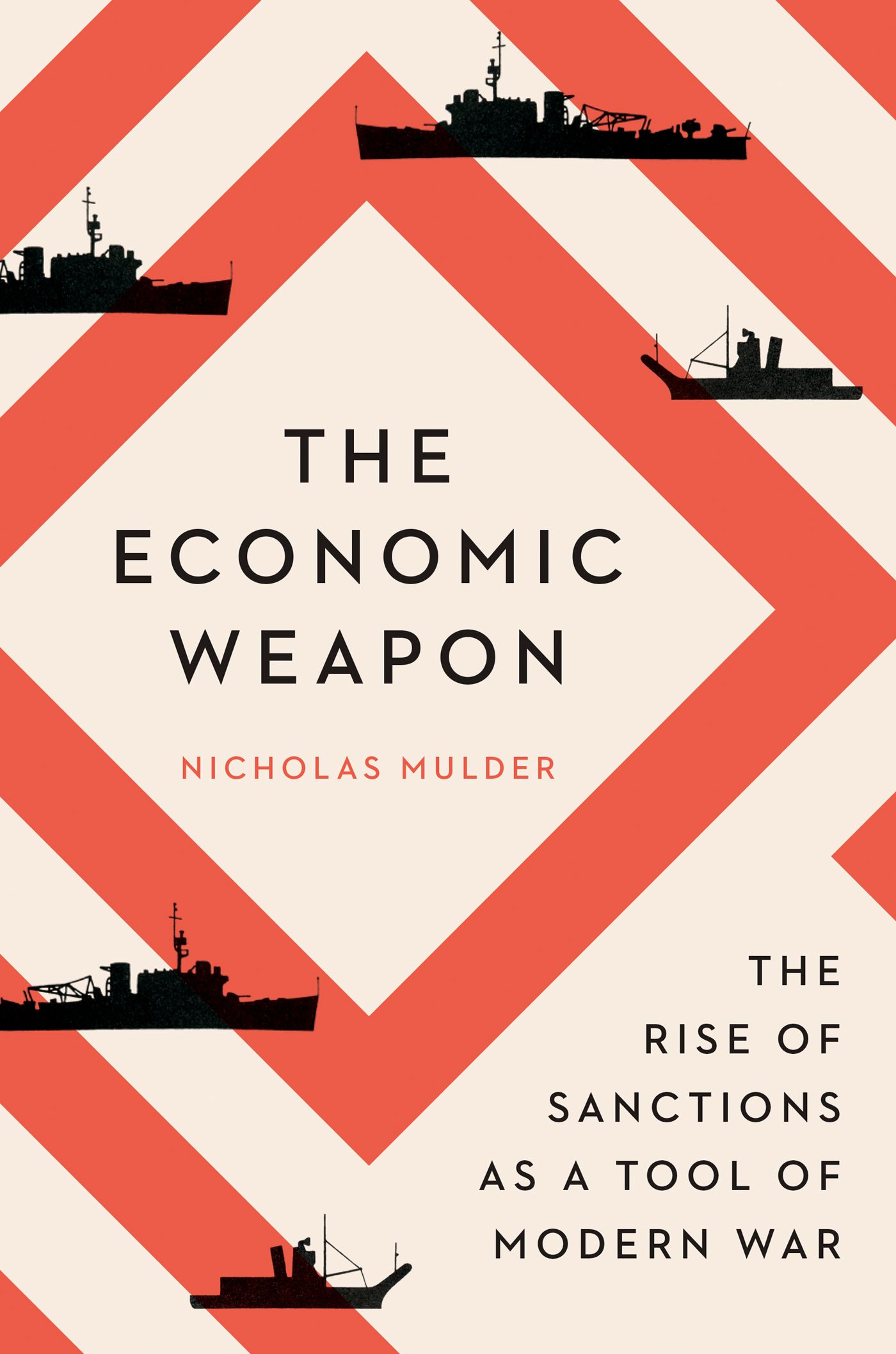
The Economic Weapon
\"Tracing the history of economic sanctions from the blockades of World War I to the policing of colonial empires and the interwar confrontation with fascism, Nicholas Mulder combines political, economic, legal, and military history to reveal how a coercive wartime tool was adopted as an instrument of peacekeeping by the League of Nations.This timely study casts an overdue light on why sanctions are widely considered a form of war, and why their unintended consequences are so tremendous.\"
eBook

Camille Gutt and postwar international finance
\"As a businessman, financier, diplomat, minister and the first managing director of the International Monetary Fund, Camille Gutt (1884-1971) was involved in all the important financial negotiations that took place between the 1920s and the 1950s. Crombois uses Gutt's personal archives to examine the rise and fall of financial diplomacy as a largely private enterprise. He looks at how financial diplomacy and official diplomacy differed, and confronts the confusion between private and public interests, the high level of informality in the financial sector and the growth of postwar self-identification with national interests\"--P. [4] of cover.
BOOK

Fishing a Borderless Sea
Over the centuries, processing and distribution of products from land and sea has stimulated the growth of a global economy. In the broad sweep of world history, it may be hard to imagine a place for the meager little herring baitfish. Yet, as Brian Payne adeptly recounts, the baitfish trade was hotly contested in the Anglo-American world throughout the nineteenth century. Politicians called for wars, navies were dispatched with guns at the ready, vessels were seized at sea, and violence erupted at sea.Yet, the battle over baitfish was not simply a diplomatic or political affair. Fishermen from hundreds of villages along the coastline of Atlantic Canada and New England played essential roles in the construction of legal authority that granted or denied access to these profitable bait fisheries.Fishing a Borderless Seaillustrates how everyday laborers created a complex system of environmental stewardship that enabled them to control the local resources while also allowing them access into the larger global economy.
eBook