
Catalogue Search | MBRL


Are you sure you want to remove the book from the shelf?

{{itemTitle}}
278,330
result(s) for
"International relations-US"
Sort by:

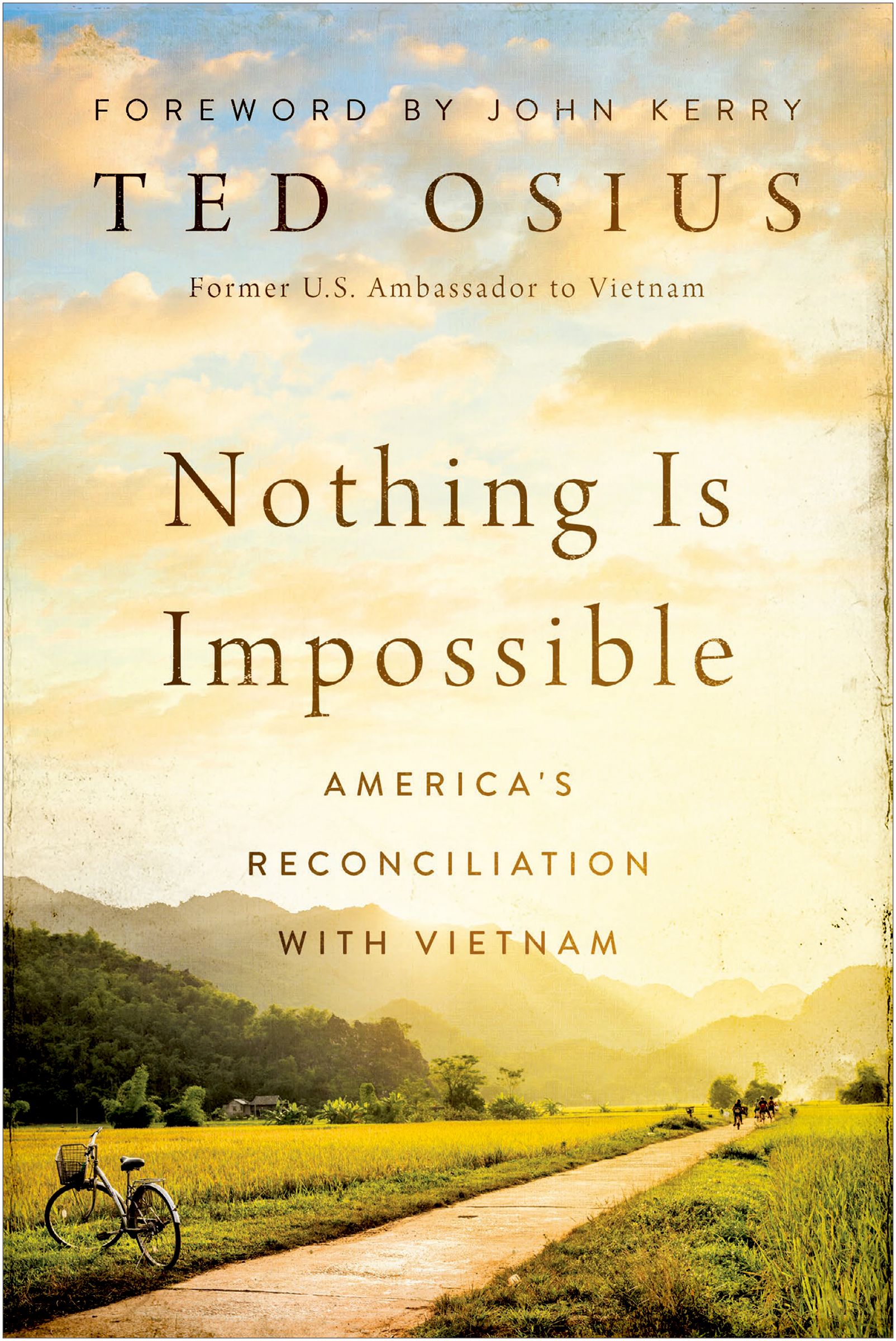
Nothing is Impossible
Today Vietnam is one of America’s strongest international partners, with a thriving economy and a population that welcomes American visitors. How that relationship was formed is a twenty-year story of daring diplomacy and a careful thawing of tensions between the two countries after a lengthy war that cost nearly 60,000 American and more than two million Vietnamese lives. Ted Osius, former ambassador during the Obama administration, offers a vivid account, starting in the 1990s, of the various forms of diplomacy that made this reconciliation possible. He considers the leaders who put aside past traumas to work on creating a brighter future, including senators John McCain and John Kerry, two Vietnam veterans and ideological opponents who set aside their differences for a greater cause, and Pete Peterson—the former POW who became the first U.S. ambassador to a new Vietnam. Osius also draws upon his own experiences working first-hand with various Vietnamese leaders and traveling the country on bicycle to spotlight the ordinary Vietnamese people who have helped bring about their nation’s extraordinary renaissance. With a foreword by former Secretary of State John Kerry, Nothing Is Impossible tells an inspiring story of how international diplomacy can create a better world.
eBook


China, the United States, and competition for resources that enable emerging technologies
Historically, resource conflicts have often centered on fuel minerals (particularly oil). Future resource conflicts may, however, focus more on competition for nonfuel minerals that enable emerging technologies. Whether it is rhenium in jet engines, indium in flat panel displays, or gallium in smart phones, obscure elements empower smarter, smaller, and faster technologies, and nations seek stable supplies of these and other nonfuel minerals for their industries. No nation has all of the resources it needs domestically. International trade may lead to international competition for these resources if supplies are deemed at risk or insufficient to satisfy growing demand, especially for minerals used in technologies important to economic development and national security. Here, we compare the net import reliance of China and the United States to inform mineral resource competition and foreign supply risk. Our analysis indicates that China relies on imports for over half of its consumption for 19 of 42 nonfuel minerals, compared with 24 for the United States—11 of which are common to both. It is for these 11 nonfuel minerals that competition between the United States and China may become the most contentious, especially for those with highly concentrated production that prove irreplaceable in pivotal emerging technologies.
Journal Article

Unmaking an exception: A critical genealogy of US exceptionalism
US exceptionalism is a hot topic in contemporary political discourse in the United States and in recent years it has attracted increasing attention from International Relations (IR) scholars. Unfortunately, however, analysis of US exceptionalism in has been compromised by its failure to historicise the concept and by its reliance on myths cultivated in other disciplines. This article offers a critical genealogy of US exceptionalism in order to expose it for what it is: a discourse that works to legitimate the United States' exceptions to domestic and international law in the minds of its citizens and foreign observers.
Journal Article

History and the Debate Over Intellectual Property
This article responds to recent calls for organizational research to address larger, more globally relevant questions and to pay attention to history, by analyzing the crucial debate over intellectual property rights (IPR) between the United States and China. Despite the recent US position, the United States has not always been a leading IPR advocate. Rather, it was a leading IPR violator during the nineteenth century. An institution-based view of IPR history suggests that both the US refusal to protect foreign IPR in the nineteenth century and the current Chinese lack of enthusiasm to meet US IPR demands represent rational choices. However, as cost-benefit considerations change institutional transitions are possible. We predict that to the same extent the United States voluntarily agreed to strengthen IPR protection when its economy became sufficiently innovation-driven, China will similarly improve its IPR protection.
Journal Article


Does Public Diplomacy Sway Foreign Public Opinion? Identifying the Effect of High-Level Visits
Although many governments invest significant resources in public-diplomacy campaigns, there is little well-identified evidence of these efforts’ effectiveness. We examine the effects of a major type of public diplomacy: high-level visits by national leaders to other countries. We combine a dataset of the international travels of 15 leaders from 9 countries over 11 years, with worldwide surveys administered in 38 host countries. By comparing 32,456 respondents interviewed just before or just after the first day of each visit, we show that visiting leaders can increase public approval among foreign citizens. The effects do not fade away immediately and are particularly large when public-diplomacy activities are reported by the news media. In most cases, military capability differentials between visiting and host countries do not appear to confer an advantage in the influence of public diplomacy. These findings suggest that public diplomacy has the potential to shape global affairs through soft power.
Journal Article