
Catalogue Search | MBRL


Are you sure you want to remove the book from the shelf?

{{itemTitle}}
75
result(s) for
"Internationale Arbeitsorganisation"
Sort by:
Global employment trends for youth 2022 investing in transforming futures for young people
The 2022 edition discusses the impact of the COVID-19 pandemic on young people and their labour market prospects during the recovery and beyond. Youth have been disproportionately affected by the pandemic and youth labour markets are now being buffeted by the lingering impacts of the pandemic, geopolitical risks and macroeconomic risks such as the impact of supply chain disruptions and rising inflation, particularly that of food and energy. There is also the potential permanent damage wreaked by these crises on the fabric of labour markets. As countries seek to address these multiple challenges, they must also not lose sight of longer-term priorities. In particular, targeted investment in the green, blue (ocean), digital, creative and care economies hold great potential to provide decent jobs for young people while setting economies on path towards greater sustainability, inclusiveness and resilience.
Paper

PATHOLOGY OF PATH DEPENDENCY? THE ILO AND THE CHALLENGE OF NEW GOVERNANCE
Using archival sources, the authors study strategic and organizational change in the International Labour Organization (ILO) over the last twenty years. They focus specifically on the ILO's efforts to incorporate certain elements of the \"new governance\" model into its policies and organizational practices, which include the shift from standards expressed as detailed legal norms to \"soft law\"; the active involvement of civil society organizations other than trade unions and employer associations in regulatory activities; and the introduction of quantitative indicators of compliance with labor standards. They argue that the efforts of the ILO leadership have been waylaid by the organization's corporatist structure, which gives employer associations and trade unions veto power over policy developments at a time in which these actors are increasingly unable to agree on concrete policy measures. Finally, the authors ask whether this corporatist structure accurately reflects the ILO's self-defined mission: providing \"decent work for all.\"
Journal Article

The New Division of Labor
As the current recession ends, many workers will not be returning to the jobs they once held--those jobs are gone. InThe New Division of Labor, Frank Levy and Richard Murnane show how computers are changing the employment landscape and how the right kinds of education can ease the transition to the new job market.
The book tells stories of people at work--a high-end financial advisor, a customer service representative, a pair of successful chefs, a cardiologist, an automotive mechanic, the author Victor Hugo, floor traders in a London financial exchange. The authors merge these stories with insights from cognitive science, computer science, and economics to show how computers are enhancing productivity in many jobs even as they eliminate other jobs--both directly and by sending work offshore. At greatest risk are jobs that can be expressed in programmable rules--blue collar, clerical, and similar work that requires moderate skills and used to pay middle-class wages. The loss of these jobs leaves a growing division between those who can and cannot earn a good living in the computerized economy. Left unchecked, the division threatens the nation's democratic institutions.
The nation's challenge is to recognize this division and to prepare the population for the high-wage/high-skilled jobs that are rapidly growing in number--jobs involving extensive problem solving and interpersonal communication. Using detailed examples--a second grade classroom, an IBM managerial training program, Cisco Networking Academies--the authors describe how these skills can be taught and how our adjustment to the computerized workplace can begin in earnest.
eBook

Trading away what kind of jobs?
Economists and other social scientists are calling for a reassessment of the impact of international trade on labor markets in developed and developing countries. Classical models of globalization and trade, based upon the international exchange of finished goods, fail to capture the fragmentation of much commodity production and the geographical separation of individual production tasks. This fragmentation, captured in the growing volume of intra-industry trade, prompts investigation of the effects of trade within, rather than between, sectors of the economy. In this paper we examine the relationship between international trade and the task structure of US employment. We link disaggregate US trade data from 1972 to 2006, the NBER manufacturing database, the Decennial Census, and occupational and task data from the Dictionary of Occupational Titles. Within-industry shifts in task characteristics are linked to import competition and technological change. Our results suggest that trade has played a major role in the growth in relative demand for nonroutine tasks, particularly those requiring high levels of interpersonal interaction.
Journal Article

Les origines de l’OIT (1890-1950) : élaboration et premières expérimentations d’un modèle d’« Europe sociale »
Dès la fin du XIX e siècle, les puissances européennes ont tenté d’instaurer une concurrence loyale et de lutter contre le « dumping social » à l’échelle internationale. Très vite, ces États se sont rejoints sur la nécessité d’élaborer un cadre social pour y parvenir. Il devait être composé de conventions sociales expérimentées dans l’Europe de l’Ouest en pointe sur la question ouvrière, pour ensuite être diffusées dans le monde. L’OIT, qui apparaît de ce fait comme l’aboutissement de ces travaux, poursuivit ces réflexions, notamment celles relatives à une « Europe sociale ». En fait, derrière cet espace marqué par une législation sociale commune aux puissances européennes et prôné par des membres de l’institution, il y avait un modèle démocratique et productiviste, soucieux de préserver tant les intérêts des ouvriers que ceux du patronat. Il s’agit donc de s’interroger sur ce modèle et sur les évolutions qu’il a connues, notamment sous l’impulsion de l’OIT, donc sur ce qu’est l’« Europe sociale ». The Origins of the ILO (1890-1950): Early Experiments in Modelling a “Social Europe”From the late XIX th century on, the major European powers made attempts to promote fair competition and combat social dumping at an international level. Governments soon agreed on the need for a social framework to achieve their objective. It was to consist of social conventions experimented in Western Europe, then at the cutting edge of labour issues, then exported to the rest of the world. The ILO, which can be seen as the culmination of these efforts, further developed thinking on such issues, particularly those related to Europe as a social entity. In fact the body recommended by members of the institution and marked by social legislation common to the European powers masked a democratic, productivist model keen to protect the interests not only of workers but also of employers. The article sets out to explore this model and its various stages of development, particularly as driven by the ILO, thereby seeking to shed light on the nature of « social Europe ».
Journal Article


International Institutions and Workers’ Rights: Between Labor Standards and Market Flexibility
International financial institutions (IFIs) like the International Monetary Fund and the World Bank often have used the leverage afforded them through their loan mechanisms to demand domestic labor market flexibility. At the same time, the International Labour Organization’s call to respect Core Labor Standards (CLS) in the global economy has increasingly gained acceptance since 1998. CLS that sanction freedom of association and collective bargaining have been particularly emphasized by the ILO since these are collective rights that enable the exercise of other rights. While IFIs have generally held to free market principles, new research findings and international pressure has led the IMF and World Bank to be more open to the idea of core labor standards. Implementation has often lagged, but some advances have been made. This includes the World Bank’s commitment to ensure respect for CLS through its private sector lending arm. Yet to be seen is whether these policy shifts will lead to greater respect for labor standards or whether the continuation of market-oriented reforms will further undermine labor’s collective power, creating new challenges for future resistance.
Journal Article
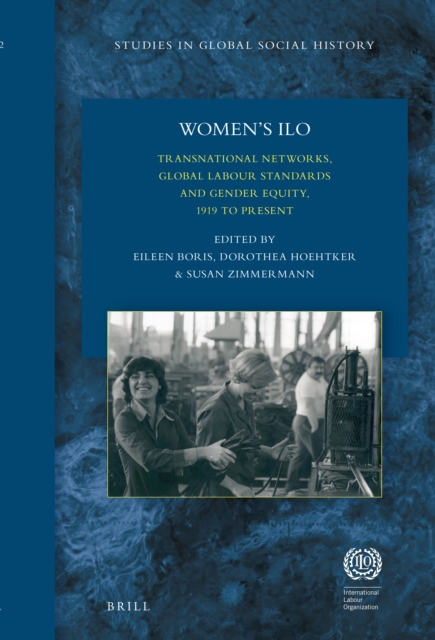
Women's ILO : transnational networks, global labour standards and gender equity, 1919 to present
Women's ILO examines a century-long history of women and their networks involved in and with the ILO, the gendered meaning of labour standards, and the challenges of achieving gender equity through international labour law, transnational campaigns, and local labour policies.
eBook

Großer Fortschritt für die Rechte indigener Völker
Die Entwicklung der Rechte indigener Völker und deren Präsenz auf internationalen Foren zeugen von einer erfolgreichen Interessenvertretung - unbeschadet offener Fragen. Die Dynamik und der Umfang dieser Entwicklung wären ohne die enorme und wirksame Mobilisierung indigener Völker nicht zustande gekommen.
This article outlines the emergence and development of the rights of indigenous peoples and discusses the legally binding nature of these rights. It provides insights into the building of concepts and principles in the international context. The article also provides examples that illustrate the legal and practical impacts and the complex network of international institutions and programs related to indigenous rights. However, this standard-setting is still incompleted as there are lacunas related to implementation. In sum, these developments are based on the interaction with the indigenous peoples, who have been mobilizing on behalf of their own cause.
Journal Article