
Catalogue Search | MBRL


Are you sure you want to remove the book from the shelf?

{{itemTitle}}
43,529
result(s) for
"Internet publishing."
Sort by:

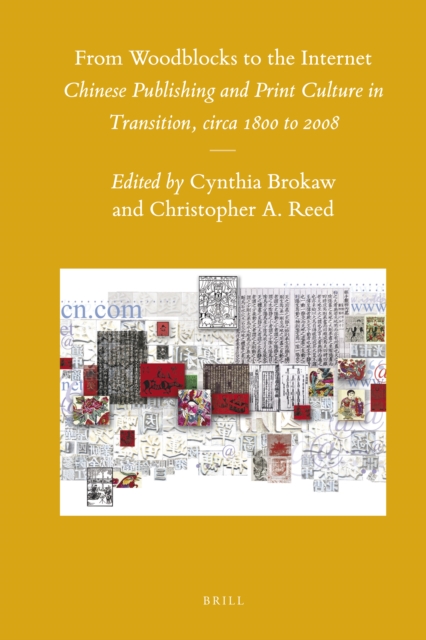
From woodblocks to the Internet : Chinese publishing and print culture in transition, circa 1800 to 2008
These essays examine the transformation of Chinese print culture over the past two centuries during which new technologies, intellectual change, and sociopolitical upheavals expanded reading audiences, spawned new genres of print, and reshaped the relationship between publishing and the state.
eBook

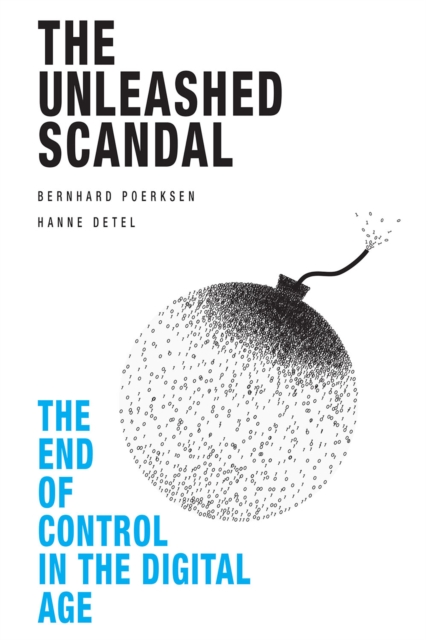
The Unleashed Scandal
In an age of ubiquitous digital media and permanent mutual observation scandals are omnipresent. Everybody can release them, everybody can become their victim. Videos on mobile phones terminate careers, Twitter messages generate outrage, and SMS messages turn into evidence. Documents of embarrassment and public disgrace today display a novel kind of lightness and agility. They can be copied in no time, spread very quickly, resist all censorship - and in the extreme case stir up worldwide indignation. The consequence: the reputation of the powerful and the powerless, of enterprises and states, can be destroyed in record time. In order to illustrate these considerations the books describes recent case-(hi)stories, discussing public figures such as Tiger Woods and Anthony Weiner, the powerful and the helpless that suddenly find themselves in a worldwide pillory.
eBook


Harm imbrication and virtualised violence: Reconceptualising the harms of doxxing
This article develops a framework for analysing the harms of doxxing: the practice of publishing personal identifying information about someone on the internet, usually with malicious intent. Doxxing is not just a breach of privacy, nor are its effects limited to first-order harms to an individual's bodily integrity. Rather, doxxing increases the spectre of second-order harms to an individual's security interests. To better understand these harms-and the relationships between them-we draw together the theories of Bhaskar, Deleuze and Levi to develop two concepts: the virtualisation of violence and harm imbrication. The virtualisation of violence captures how, when concretised into structures, the potential for harm can be virtualised through language, writing and digitisation. We show that doxxed information virtualises violence through constituting harm-generating structures and we analyse how the virtual harm-generating potential of these structures is actualised through first- and second-order harms against a doxxing victim. The concept of harm imbrication, by contrast, helps us to analyse the often-imbricated and supervenient relationship between harms. In doing so, it helps us explain the emergent - and supervenient - relationship between doxxing's first- and second-order harms.
Journal Article

Harm imbrication and virtualised violence: Reconceptualising the harms of doxxing
This article develops a framework for analysing the harms of doxxing: the practice of publishing personal identifying information about someone on the internet, usually with malicious intent. Doxxing is not just a breach of privacy, nor are its effects limited to first-order harms to an individual's bodily integrity. Rather, doxxing increases the spectre of second-order harms to an individual's security interests. To better understand these harms-and the relationships between them-we draw together the theories of Bhaskar, Deleuze and Levi to develop two concepts: the virtualisation of violence and harm imbrication. The virtualisation of violence captures how, when concretised into structures, the potential for harm can be virtualised through language, writing and digitisation. We show that doxxed information virtualises violence through constituting harm-generating structures and we analyse how the virtual harm-generating potential of these structures is actualised through first- and second-order harms against a doxxing victim. The concept of harm imbrication, by contrast, helps us to analyse the often-imbricated and supervenient relationship between harms. In doing so, it helps us explain the emergent - and supervenient - relationship between doxxing's first- and second-order harms.
Journal Article


Death of scientific journals after 350 years
Scientific journals have virtually disappeared as subscription-based familiar paper copies. These have been replaced by article by article access on internet sites (either subscription based paid for by libraries in multi-journal often million dollar 'Big Deal' packages or by author prepayments of thousand dollars 'article processing fees' (Omary and Lawrence, Dealing with rising publication costs. The Scientist 2017;31:29-31), followed by open access. The result appears to be the death of the traditional scientific journal as a familiar means of communication, after nearly 350 years from the time of Anton van Leeuwenhoek and Robert Hooke (for two early microbiology examples). Rather than journals with page numbers, individual reports are accessed using titles or manuscript file code numbers. This commentary is knowingly provocative, describing the rapidly changing situation in scientific publication at the beginning of the 21st century and predicting a bad future, basically the end of the long-time most-used vehicles for scientific communication, the paper scientific journal with volumes and pages. This view is not particular to this author and appears frequently today (e.g. The Scientist 2012; https://scholarlykitchen.sspnet.org/2016/10/26/revisiting-why-hasnt-scientific-publishing-been-disrupted-already/). This negative conclusion offers no better possibilities, as it is concluded that it is already too late and too far along this pathway for any meaningful middle ground. This commentary is intended for a broad group of potential readers, including authors and readers of this journal (who are active microbial scientists who need to adapt to individual manuscript identification numbers replacing page numbers), as well as the larger community interested broadly in scientific communication, and even our institutional librarians (who have experienced the disappearance of paper copies from their shelves, and especially unsustainable rapid increases in money costs at a time of very limited resources).
Journal Article