
Catalogue Search | MBRL


Are you sure you want to remove the book from the shelf?

{{itemTitle}}
2,784
result(s) for
"Internment camps"
Sort by:

The resistance network : the Armenian genocide and humanitarianism in Ottoman Syria, 1915-1918
\"This book is the history of an underground network of humanitarians, missionaries, and diplomats in Ottoman Syria who helped save the lives of thousands during the Armenian Genocide. The book challenges depictions of Armenians as passive victims of violence and subjects of humanitarianism, demonstrating the key role they played in organizing a humanitarian resistance to the destruction of their people\"-- Provided by publisher
BOOK
Nazi persecution and postwar repercussions
Drawing on a selection of recently available documents from the International Tracing Service, one of the largest Holocaust-related archival repositories in the world, this compelling volume provides new insights into human decision-making in genocidal settings, the factors that drive it, and its far-reaching consequences.
eBook

The Gulag : a very short introduction
A vast system of prisons, camps, and exile settlements, the Gulag was one of the defining attributes of the Stalinist Soviet Union and one of the most heinous examples of mass incarceration in the twentieth century. It combined a standard prison system with the goal of isolating and punishing alleged enemies of the Soviet regime. More than 25 million people passed through the Gulag from its creation in 1930 to its dismantling in the 1950s. By presenting both the everyday experiences of ordinary prisoners and the overall political and economic background of the system, this book offers a succinct and comprehensive study of the Gulag and its legacy in the former USSR.
Book

An Eye for Injustice
As wartime hysteria mounted after December 1941, the U.S. government began forcibly relocating West Coast individuals with Japanese ancestry to ten inland sites. Hunt, Idaho's Minidoka War Relocation Center opened in August 1942. Dr. Robert C. Sims was devoted to research, writing, and education related to this unjust World War incarceration. Topics include Idaho Governor Chase Clark's role in the removal decision, life in camp, the impact of Japanese labor on Idaho's sugar beet and potato harvests, the effects of loyalty questionnaires, and more. His articles, papers, and speeches expose this national tragedy as well as the resilience of those who suffered.
eBook


Concentrationary Art
Largely forgotten over the years, the seminal work of French poet, novelist and camp survivor Jean Cayrol has experienced a revival in the French-speaking world since his death in 2005. His concept of a concentrationary art—the need for an urgent and constant aesthetic resistance to the continuing effects of the concentrationary universe—proved to be a major influence for Hannah Arendt and other writers and theorists across a number of disciplines. Concentrationary Art presents the first translation into English of Jean Cayrol’s key essays on the subject, as well as the first book-length study of how we might situate and elaborate his concept of a Lazarean aesthetic in cultural theory, literature, cinema, music and contemporary art.
eBook

Lawyer, jailer, ally, foe : complicity and conscience in America's World War II concentration camps
\"In the Japanese American relocation camps of World War II, internees could, on any given day, be both clients and victims of their assigned War Relocation Authority lawyers. The morally ambiguous remit of these attorneys was wide and often contradictory, including overseeing the day-to-day administration of the camps, settling internal disputes between inmates, managing conflict between detainees and their government captors, and providing legal representation for prisoners outside of the camps. In re-creating the daily lives of these WRA attorneys, Eric L. Muller, a leading expert on Japanese American relocation and internment during World War II, seeks to capture historical subjects as three-dimensional, flawed human beings\"-- Provided by publisher.
Book
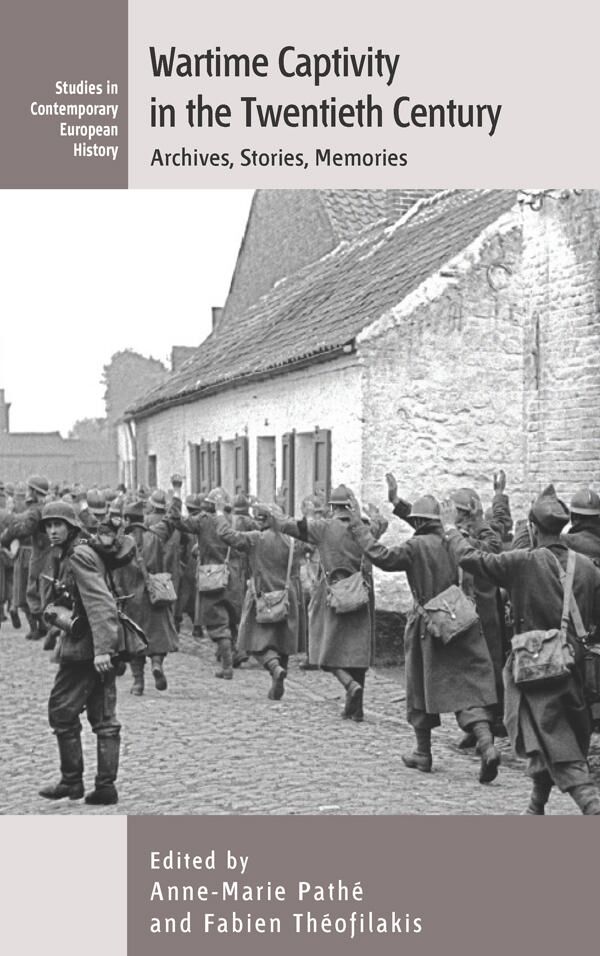
Wartime Captivity in the 20th Century
Long a topic of historical interest, wartime captivity has over the past decade taken on new urgency as an object of study. Transnational by its very nature, captivity's historical significance extends far beyond the front lines, ultimately inextricable from the histories of mobilization, nationalism, colonialism, law, and a host of other related subjects. This wide-ranging volume brings together an international selection of scholars to trace the contours of this evolving research agenda, offering fascinating new perspectives on historical moments that range from the early days of the Great War to the arrival of prisoners at Guantanamo Bay.
eBook


Stalin's Gulag at war : forced labour, mass death, and Soviet victory in the Second World War
Stalin's Gulag at Warplaces the Gulag within the story of the regional wartime mobilization of Western Siberia during the Second World War. The author explores a diverse array of issues, including mass death, informal practices, and the responses of prisoners and personnel to the war.
eBook