
Catalogue Search | MBRL


Are you sure you want to remove the book from the shelf?

{{itemTitle}}
234
result(s) for
"Interplanetary flight"
Sort by:


Biological effects of the hypomagnetic field: An analytical review of experiments and theories
During interplanetary flights in the near future, a human organism will be exposed to prolonged periods of a hypomagnetic field that is 10,000 times weaker than that of Earth's. Attenuation of the geomagnetic field occurs in buildings with steel walls and in buildings with steel reinforcement. It cannot be ruled out also that a zero magnetic field might be interesting in biomedical studies and therapy. Further research in the area of hypomagnetic field effects, as shown in this article, is capable of shedding light on a fundamental problem in biophysics-the problem of primary magnetoreception. This review contains, currently, the most extensive bibliography on the biological effects of hypomagnetic field. This includes both a review of known experimental results and the putative mechanisms of magnetoreception and their explanatory power with respect to the hypomagnetic field effects. We show that the measured correlations of the HMF effect with HMF magnitude and inhomogeneity and type and duration of exposure are statistically absent. This suggests that there is no general biophysical MF target similar for different organisms. This also suggests that magnetoreception is not necessarily associated with evolutionary developed specific magnetoreceptors in migrating animals and magnetotactic bacteria. Independently, there is nonspecific magnetoreception that is common for all organisms, manifests itself in very different biological observables as mostly random reactions, and is a result of MF interaction with magnetic moments at a physical level-moments that are present everywhere in macromolecules and proteins and can sometimes transfer the magnetic signal at the level of downstream biochemical events. The corresponding universal mechanism of magnetoreception that has been given further theoretical analysis allows one to determine the parameters of magnetic moments involved in magnetoreception-their gyromagnetic ratio and thermal relaxation time-and so to better understand the nature of MF targets in organisms.
Journal Article


The BepiColombo Laser Altimeter
The BepiColombo Laser Altimeter (BELA) is the first European laser altimeter constructed for interplanetary flight. BELA uses a 50 mJ pulsed Nd:YAG laser operating at 10 Hz with a 20 cm aperture receiver to perform the ranging. The instrument also uses a digital approach for range detection and pulse analysis. The ranging accuracy is expected to be better than 2 metres and ∼20 cm in optimum conditions. With the given, only slightly elliptical, orbit, BELA should return a consistent data set for the most if not all of the planet. The instrument is required to function in an extreme environment with the thermal issues being particularly demanding. Novel solutions have been taken to resolve these issues. BELA is described in detail and its predicted performance outlined on the basis of pre-flight testing.
Journal Article

How will people travel to Mars?
\"Advancements in space exploration over the years have shown us that Mars has water, one of the necessary conditions for life as we know it. Does that mean people will be able to travel to Mars soon? This book answers that common question through accessible, fun text written by an educator and vivid photography straight from NASA. Even the most reluctant reader will enjoy how easily this text walks through the current projects and past missions of Mars' history and future.\"-- Provided by publisher.
Book

MiRNAs shape mouse age-independent tissue adaptation to spaceflight via ECM and developmental pathways
As human space exploration accelerates, understanding the organism-wide molecular effects of longer spaceflight in mammals becomes increasingly critical. Non-coding RNAs like miRNAs are key to regulating this landscape. We thus analyze 686 small RNA samples of female mice from 13 solid organs at 3 and 8 months of age, after at least 3 weeks on the International Space Station and compare them to earth-bound controls. We observe significant spaceflight effects in systemic tissue remodeling pathways along the Fat-Liver-Pancreas axis and in heart, brain, spleen and thymus. The
MIR-17/92
and
MIR-1/133
families drive distinct molecular changes through specific gene targeting. Age-dependent changes, smaller in magnitude compared to age-independent changes, primarily involve tissue remodeling through
MIR-8
,
MIR-154
and
MIR-15
families in mesenteric adipose tissue, pancreas, and diaphragm. Our findings provide evidence on how spaceflight regulates mammalian gene expression in preparation for interplanetary spaceflight.
Understanding the organism-wide molecular effects of spaceflight becomes increasingly critical as space exploration accelerates. Here, the authors show that miRNAs mediate microgravity-induced adaptations via extracellular matrix, DNA damage and developmental pathways, as shown by small RNA profiling in 13 organs of mice during and after spaceflight.
Journal Article

Claiming T-Mo
\"In this lush interplanetary tale, Novic is an immortal Sayneth priest who flouts the conventions of a matriarchal society by choosing a name for his child. This act initiates chaos that splits the boy in two, unleashing a Jekyll-and-Hyde child upon the universe. Named T-Mo by his mother and Odysseus by his father, the story spans the boy's lifetime a from his early years with his mother Silhouette on planet Grovea to his travels to Earth where he meets and marries Salem, and together they bear a hybrid named Myra. The story unfolds through the eyes of these three distinctive women: Silhouette, Salem and Myra. As they confront their fears and navigate the treacherous paths to love and accept T-Mo/Odysseus and themselves, the darkness in Odysseus urges them to unbearable choices that threaten their very existence.\"--Publisher description.
Book

Optimization of the interplanetary flight to Mars with three-pulse approach to Phobos based on Lagrange principle
The problem of optimal control of the spacecraft interplanetary flight from the Earth to Mars with a three-pulse approach to the Phobos tracking orbit is considered. The departure of the spacecraft from the Earth is also approximated by pulses. The attraction of the Earth and Mars is taken into account. The problem is solved numerically on the basis of Lagrange principle. The results are compared with the scheme of a full turn free approach to Phobos. The initial approximation is carried out based on a combination of Lambert problems solutions. The software package is developed. Ephemerides are taken into account in the calculations, and the NASA SPICE package is used.
Journal Article

Voyage of the dogs
\"SOS. Lopside the rescue mutt and his canine crew are working alongside their humans onboard the spaceship Laika. We are the dogs. Then the dogs are abandoned, millions of miles from civilization, and survival seems impossible. We are alone. But these are all good dogs--and good dogs always complete their mission.\"-- Publisher's description.
Book
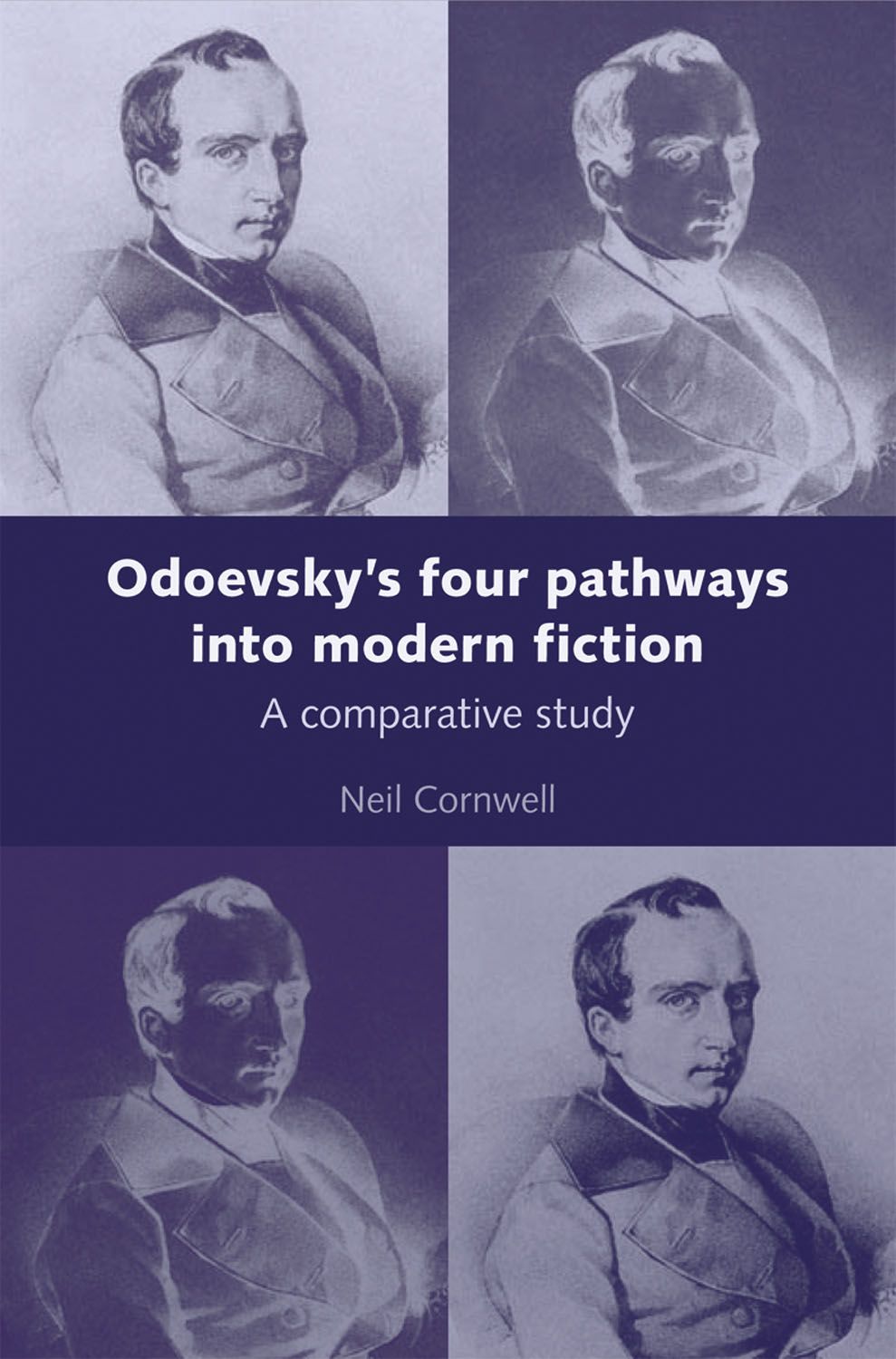
Odoevsky's four pathways into modern fiction
This book takes four stories by the Russian Romantic author Vladimir Odoevsky to illustrate ‘pathways’, developed further by subsequent writers, into modern fiction. Featured here are: the artistic (musical story), the rise of science fiction, psychic aspects of the detective story, and of confession in the novel. The four chapters also examine the development of the featured categories by a wide range of subsequent writers in fiction ranging from the Romantic period up to the present century. The study works backwards from Odoevsky’s stories, noting respective previous examples or traditions, before proceeding to follow the ‘pathways’ observed into later Russian, English and comparative fiction. Whilst appealing to specialists in Russian and comparative literature, these chapters are accessible to a student readership taking courses involving the main areas featured – including the arts in literature, fictional artistic biography, interplanetary flight and civilisations, detective fiction, and novelistic confession.
eBook