
Catalogue Search | MBRL


Are you sure you want to remove the book from the shelf?

{{itemTitle}}
27
result(s) for
"Interviewing Great Britain."
Sort by:


How to succeed at the medical interview
How to Succeed at the Medical Interview provides candidates with a competitive edge. It reduces the likelihood of unexpected questions or situations and helps improve confidence before and during the medical interview. This new second edition includes updated content on changes to the structure of healthcare and how this affects both the application and interview process. It details the types of questions that will be asked at medical interviews and also provides improved guidance for overseas doctors and healthcare professionals and for those seeking to practice abroad. How to Succeed at the Medical Interview is the ideal guide for Foundation Programme trainees, Specialist Registrars and General Practitioner trainees. It is also valuable for healthcare professionals facing competitive medical interviews at any stage of their career.
eBook


The Microanalysis of Political Communication
This analysis of political speeches and televised political interviews in the UK, based on the Annual Party Conferences (1996-2000) and the last five general elections (1983-2001), evaluates the interview skills of politicians and political interviewers, investigates how and why politicians equivocate and handle interruptions and examines the nature of applause, both invited and uninvited, in political speeches.
Peter Bull is a Senior Lecturer in the Department of Psychology at the University of York. He is the author of fifty academic publications principally concerned with the microanalysis of interpersonal communication. These include several books, the most recent of which is Communication Under the Microscope: The Theory and Practice of Microanalysis (Psychology Press, 2002).
Introduction Part I: Political Speeches Part II: Televised Political Interviews Conclusions
eBook

Succeed in your medical school interview : stand out from the crowd and get into your chosen medical school
\"After completing the medical school application comes the last and often most challenging aspect of the school selection process: the interview. Notoriously hard to prepare for, it's difficult to know what questions might be asked and how to answer them.Extensively revised, How to Succeed In Your Medical School Interview de-mystifies the interview process. It provides a systematic and methodical process which enables the interviewee to mine information from examiners, while demonstrating academic ability. Full of practice questions and free downloadable podcasts of mock interviews, this book offers tips on preparation, presentation, and most importantly, what to say. The most significant addition to the book covers the multiple mini-interview system, which schools are beginning to use instead of the formal, fixed panel interview. This new system is made up of short \"stations\" ranging from 3-10 minutes, with a specific goal and a separate interviewer. The format can be a conventional interview question, a role play, linguistic skill test, writing exercise, or another challenge. The author has also added more graph-and-table data interpretation questions to the Oxbridge interview section and updated discussion material to include the current \"hot topics\" in medicine, such as e-cigarettes, medical ethics, and the US patent ban on genes. \"-- Provided by publisher.
Book
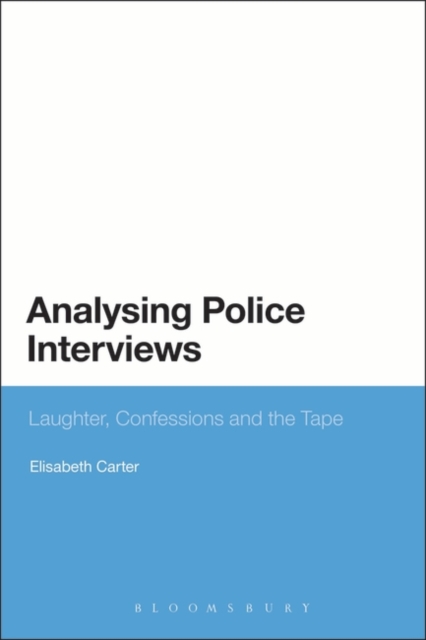
Analysing police interviews : laughter, confessions, and the tape
Winner of the British Society of Criminology 'Criminology Book Prize 2012' This book uses transcripts from real UK police interviews, investigating previously unexplored and under-explored areas of the process.It illustrates the way in which police and suspects use language and sounds to inform, persuade and communicate with each other.
eBook


What Happens When Interviewers Ask Repeated Questions in Forensic Interviews with Children Alleging Abuse?
This study was designed to explore 1) the ways in which interviewers refocus alleged victims of abuse on their previous responses and 2) how children responded when they were refocused on their previous responses. Transcripts of 37 forensic interviews conducted by British police officers trained using the best practices spelled out in the
Memorandum of Good Practice
were examined. The instances in which interviewers asked repeated questions were isolated and coded into categories with respect to the
reasons
why interviewers needed to ask the repeated question (i.e., there was no apparent reason, to challenge a child’s response, clarification, no answer the first time the question was asked, digression, or compound question). The children’s
responses
to the repeated questions were further categorised into mutually exclusive categories (i.e., elaboration, repetition, contradiction, or no answer). On average interviewers asked children 8 repeated questions per interview. Most of the time interviewers asked repeated questions to challenge a previous response (62%), but they were also sometimes asked for no apparent reason (20%). Children repeated previous responses or elaborated on a previous response 81% of the time and contradicted themselves 7% of the time when re-asked the same question. We conclude that children did not appear unduly pressured to change their answers, and, more importantly, did not contradict themselves when interviewers attempted to refocus them on particular responses.
Journal Article

Regulation in Action
This incisive study shows that \"regulation\", against which many have warned but which some psychotherapists still imagine to be a solution to all their ills, is actually already here. The author traces her way through this apparatus, and makes a compelling case for taking the HPC seriously as a machine that incarnates the very kind of unhealthy practice it pretends to set itself against.'- Professor Ian Parker, Manchester Metropolitan University'. If you want to know about the reality of state regulation, how it works in practice - as opposed to what people say about it - you should read this book. A shocking and unsettling account.'- Paul Gordon, author of The Hope of Therapy and former chair of the Philadelphia Association'. Do not let the simplicity of this lucid account of a difficult problem deceive you. 'This book investigates the claim that regulation by agencies of State is one of the prerequisites for improving professional practice. It displays how the underlying administrative interests of such bureaucracies are detrimental to the structure of professional communities.
eBook

Professionalism, Boundaries and the Workplace
Professionalism, Boundaries and the Workplace is a practical text that examines a range of sensitive issues concerned with managing and maintaining professional boundaries between worker and client. It uses experiences from probation, social work, the NHS, small business and church settings. A number of issues are addressed including:
the relationship between personal and professional values
changing professional-client relationships
definitions of 'being professional'
conflicts arising from different understandings of professionalism.
eBook