
Catalogue Search | MBRL


Are you sure you want to remove the book from the shelf?

{{itemTitle}}
305
result(s) for
"Interviewing Technique."
Sort by:

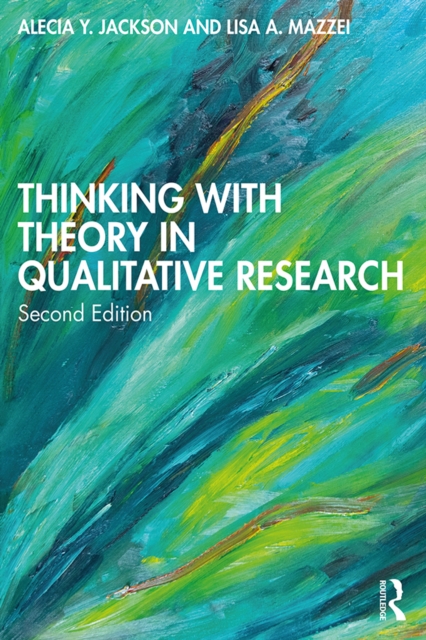
Thinking with Theory in Qualitative Research
Thinking with Theory in Qualitative Research: Second Edition demonstrates how to enact various philosophical concepts in practices of inquiry, effectively opening up the process of thought in qualitative studies.
Thinking with Theory in Qualitative Research functions as a refusal of pregiven method, intensifying creativity, experimentation, and newness. Readers are invited into the threshold of theory to traverse philosophers and their concepts, reorienting conventional approaches to inquiry. Each chapter presents a thinking with process as a way of reading intensively through plugging in performative accounts of two first-generation academic women to philosophical concepts from Derrida, Spivak, Foucault, Butler, Barad, and Deleuze and Guattari. This book is a deliberate attempt to unsettle what is expected to be represented or recognized in terms of both meaning and method in traditional practices of qualitative research, which become unproductive and untenable in this different image of thought.
New to this edition
Fully revised and rewritten Chapter 1 that introduces the technique of plugging in as contingent, strategic movements of thought. Also new to Chapter 1 is a shift in language away from traditional practices in qualitative research (data and analysis) to performative accounts and becoming-questions
Fully revised \"Thinking with intra-action\" chapter, which focuses on Karen Barad's ontoepistemological framework of agential realism, and the concepts of posthumanist performativity and entangled agencies
Fully revised and rewritten Chapter 8 that presents plugging in and thinking with as ontological
Further development of and new material on the \"plugging in\" technique
Schematic cues updated and extended for all of the Interludes
In the ten years since the first edition was published, Thinking with Theory in Qualitative Research has become a vanguard text in the field of postfoundational inquiry for its accessible but thorough introductions to philosophically informed inquiry. This book is for experienced and novice researchers, and students in introductory, general, and advanced qualitative inquiry courses, who may also be first-time readers of philosophy. This text will function as an entry into techniques of thinking with a new theoretical vocabulary.
eBook

Why you, why me, why now : the mindset and moves to land that first job, from networking to cover letters, resumes, and interviews
\"Getting a job means successfully navigating the application process, and today that requires the right mindset--and the skills to convey it to a potential employer. You need to focus on the organization's needs, not your own, often a challenge for recent and soon-to-be college graduates. In this book, writing professor Rachel Toor shows you how to identify those needs, decide whether you are a good match for a job, and then tell a clear, concise, and authentic story about yourself through your cover letter, resumé, and interviews. Full of insights from hiring managers and career professionals in a wide range of fields, the book reveals the traits employers are looking for and how they--and their AI bots--evaluate application materials. Instead of templates and timelines, it offers advice on how to present yourself professionally, from cover letter salutation to post-interview thank-you note. It also includes practical tips on such matters as understanding LinkedIn, preparing for Zoom interviews, and selecting appropriate references. And throughout it features Toor's tips on good writing, from choosing the right words to get past the bots and make the most of limited space to using classic storytelling techniques to explain what you can contribute to an organization. Encouraging, funny, and blunt, this is a job-search guide like no other\"-- Provided by publisher.
Book

Reframing Holocaust Testimony
Institutions that have collected video testimonies from the few remaining Holocaust survivors are grappling with how to continue their mission to educate and commemorate. Noah Shenker calls attention to the ways that audiovisual testimonies of the Holocaust have been mediated by the institutional histories and practices of their respective archives. Shenker argues that testimonies are shaped not only by the encounter between interviewer and interviewee, but also by technical practices and the testimony process. He analyzes the ways in which interview questions, the framing of the camera, and curatorial and programming preferences impact how Holocaust testimony is molded, distributed, and received.
eBook

Leading Interview and Interrogation Techniques. Focus on Cognitive Interview
Criminal investigation in Mexico is performed by the investigation triad, which is made up of police and experts in diff erent areas such as medicine and prosecutors. They all use interview and interrogation techniques to do their work. Unfortunately, in Mexico, there is no culture of training in governmental institutions responsible for investigating crimes, and results in ignorance of techniques for obtaining objective and reliable information that guarantees the protection of fundamental rights. This chapter illustrates the scope and limits of interview and interrogation techniques and their objectives, with emphasis on the cognitive interview (CI). The CI, which has been validated scientifi cally, is one of the best tools to obtain useful information, that is, results of a CI that have been conducted in the field can be used in a court of law. This technique can be used with victims, witnesses, or suspects. The current chapter also describes the most utilized techniques, cognitive interview, mnemonic techniques, Strategic Use of Evidence, and Verifi ability Approach.
Journal Article

The Quality of Forensic Child Interviewing in Child Sexual Abuse Cases in Indonesia
Most of the foregoing research on child investigative interviewing has focused on interview practices in Western countries, thus potentially limiting the generalizability and application of the findings to improve interview practices in non-Western countries. The current studies are the first to examine police interviewing practices involving alleged child sexual abuse (CSA) victims in Indonesia which has marked cultural differences compared with Western countries. In Study 1, we presented Indonesian police child interviewers (
N
= 26) with a sexual abuse case vignette concerning a 7-year-old girl. Police interviewers were asked to write down the questions they would pose to the child. We categorized questions into four types: open-prompts, directives, option-posing, and suggestive. In Study 2, we examined Indonesian police files (
N
= 24) containing child sexual abuse interviews and also scored the type of questions used as per the first study. We compared our data with those obtained in Western countries. The consistent finding in both studies is that Indonesian police interviewers rarely used open-prompts, asked more directive and option-posing questions. Consistent with findings from Western countries, our studies provide indirect evidence that open-prompts may be infrequently used by forensic child interviewers in Indonesia.
Journal Article

Psychobabble: A Preliminary Study of the Novel Educational Game to Teach Psychiatric Interviewing Techniques
Objective
This article details a novel intervention for teaching psychiatric interviewing techniques implemented at McGovern Medical School at UTHealth Houston.
Methods
Forty medical students played the newly developed educational game Psychobabble to enhance their assessment of auditory hallucinations. Pre-session and post-session surveys assessed students’ inquiry methods, competence, training relevance, and exercise efficacy. Paired
t
-tests compared pre-session and post-session data. Qualitative analysis identified emergent themes from participant comments.
Results
There was an average increase of 12.11 questions between the estimated number of questions (mean = 9.57; SD = 6.00) and the actual number of questions formulated during the game (mean = 21.68; SD = 5.40;
p
< 0.01). There was a significant increase from the pre-session (mean = 1.82; SD = 0.97) to the post-session (mean = 3.72; SD = 0.76) self-reported competence levels, which more than doubled on average (
p
< 0.01).
Conclusion
The themes that emerged from the qualitative data demonstrate that Psychobabble encourages creativity, broadens assessment methods, has educational significance for learners, and may ultimately lead to improved patient care by enhancing the understanding and diagnosis of psychiatric symptomatology. Medical schools and residency training programs should consider incorporating educational games such as Psychobabble to enhance the interviewing techniques of trainees and their self-efficacy in these skills.
Journal Article

Utility and Effectiveness of the Context Manipulation Techniques: Police Investigators’ Perspectives
The foremost goal of conducting an investigative interview is to obtain as much accurate information as possible. To achieve this, investigators employ a variety of interviewing techniques. Kelly et al. (Psychol Public Policy Law 19:165–178,
2013
) proposed a taxonomy interviewing techniques, grouping them into six domains (i.e., Rapport and Relationship Building, Context Manipulation, Emotion Provocation, Collaboration, Confrontation/Competition, and Presentation of Evidence). In this study, we focused on assessing the Context Manipulation domain (e.g., considering seating arrangements, time of day, clothing). Specifically, we sought to examine police investigators’ use and beliefs about the effectiveness of context manipulation techniques. A sample of 81 police investigators completed the survey. Our findings provide evidence that investigators believe the interview setting to have importance and are already employing some context manipulation techniques in their practice. Techniques mentioned most often were related to seating arrangement, investigators’ clothing, and item availability for suspects (e.g., water, coffee). This survey also provides evidence that investigators are receptive to using context manipulation techniques in their practice, despite how little they are currently taught during trainings. Understanding what context manipulation techniques investigators use and believe to be useful in their interviewing practice may have implications for future training, as well as for the (re)design of interview rooms.
Journal Article