
Catalogue Search | MBRL


Are you sure you want to remove the book from the shelf?

{{itemTitle}}
104
result(s) for
"Interviews Southern States."
Sort by:

From Macon to Jacksonville : more conversations in Southern rock
From Macon to Jacksonville features in-depth interviews with many more of the stars that came out of Florida, Georgia, and the Carolinas during the hey-day of Southern Rock. From members of Lynyrd Skynyrd (Gary Rossington, Ed King, Artimus Pyle) and Molly Hatchet (Danny Joe Brown, Dave Hlubek, Duane Roland) to Outlaws (Henry Paul), Blackfoot, 38 Special (Don Barnes, Donnie Van Zant), Gov't Mule, Doc Holliday, Col. Bruce Hampton, Widespread Panic, and many others, the Southern Rock world continues to be chronicled and celebrated. Also included are recently discovered archival conversations with legendary Allman Brothers Band roadie, Red Dog Campbell and the original Marshall Tucker Band's road crew chief, Moon Mullins.
Book

Southern Farmers and Their Stories
The industrial expansion of the twentieth century brought with it a profound shift away from traditional agricultural modes and practices in the American South. The forces of economic modernity -- specialization, mechanization, and improved efficiency -- swept through southern farm communities, leaving significant upheaval in their wake. In an attempt to comprehend the complexities of the present and prepare for the uncertainties of the future, many southern farmers searched for order and meaning in their memories of the past. In Southern Farmers and Their Stories, Melissa Walker explores the ways in which a diverse array of farmers remember and recount the past. The book tells the story of the modernization of the South in the voices of those most affected by the decline of traditional ways of life and work. Walker analyzes the recurring patterns in their narratives of change and loss, filling in gaps left by more conventional political and economic histories of southern agriculture. Southern Farmers and Their Stories also highlights the tensions inherent in the relationship between history and memory. Walker employs the concept of \"communities of memory\" to describe the shared sense of the past among southern farmers. History and memory converge and shape one another in communities of memory through an ongoing process in which shared meanings emerge through an elaborate alchemy of recollection and interpretation. In her careful analysis of more than five hundred oral history narratives, Walker allows silenced voices to be heard and forgotten versions of the past to be reconsidered. Southern Farmers and Their Stories preserves the shared memories and meanings of southern agricultural communities not merely for their own sake but for the potential benefit of a region, a nation, and a world that has much to learn from the lessons of previous generations of agricultural providers.
eBook


Freedom Walk
In 1963, the streams of religious revival, racial strife, and cold-war politics were feeding the swelling river of social unrest in America. Marshaling massive forces, civil rights leaders were primed for a widescale attack on injustice in the South. By summer the conflict rose to great intensity as blacks and whites clashed in Birmingham.
Outside the massive drive, Bill Moore, a white mail carrier, had made his own assault a few months earlier. Jeered and assailed as he made a solitary civil rights march along the Deep South highways, he was ridiculed by racists as a \"crazy man.\" His well publicized purpose: to walk from Chattanooga to Jackson and hand-deliver a plea for racial tolerance to Ross Barnett, the staunchly segregationist governor of Mississippi. On April 23, on a highway near Attalla, Alabama, this lone crusader was shot dead.
Although he was not a nobly ideal figure handpicked by shapers of the movement, inadvertently he became one of its earliest martyrs and, until now, part of an overlooked chapter in the history of the civil rights movement.
Floyd Simpson, a grocer and a member of the Gadsden, Alabama chapter of the Ku Klux Koan, was charged with Moore's murder.
A week later, a white college student named Sam Shirah led five black and five white volunteers into Alabama to finish Moore's walk. They were beaten and jailed. Four other attempts to complete the postman's quest were similarly stymied.
Moore had kept a journal that detailed his goal. Using it, along with interviews and extensive newspaper and newsreel reports, Mary Stanton has documented this phenomenal freedom walk as seen through the eyes of Moore, Shirah, and the gunman, the three protagonists.
Though all shared a deep love of the South, their strong feelings about who was entitled to walk its highways were in deadly conflict.
Mary Stanton, an assistant public administrator of the town of Mamaroneck, N.Y., is the author ofFrom Selma to Sorrow: The Life and Death of Viola Lliuzzo. Her work has appeared inSouthern Exposure,Gulf South Historical Review, andGovernment Executive.
eBook

Living with Jim Crow : African American women and memories of the segregated South
\"This groundbreaking book collects black women's personal recollections of their public and private lives during the period of legal segregation in the American South. Using first-person narratives, collected through oral history interviews, the book emphasizes women's role in their families and communities, treating women as important actors in the economic, social, cultural, and political life of the segregated South. By focusing on the commonalities of women's experiences, as well as the ways that women's lives differed from the experiences of southern black men, Living with Jim Crow analyzes the interlocking forces of racism and sexism\"--Provided by publisher.
Book


Capricorn rising : conversations in southern rock
his book is a collection of interviews with many of the stars, producers, and associates of the 1970s Southern record label, Capricorn, which was founded in the heart of Macon, Georgia in 1969. The author has been interviewing the movers and shakers in rock and country music for over twenty-five years, and with this volume, he collects word for word, complete interviews with Capricorn artists including Gregg Allman, Dickey Betts, George McCorkle, Bonnie Bramlett, Paul Hornsby, Johnny Sandlin, Chuck Leavell, and many others, providing a glimpse into the early 70s when Southern Rock was born in Macon. Capricorn Rising also includes memorials to the two men who founded the Capricorn studio and record label, Phil Walden and Frank Fenter.
Book
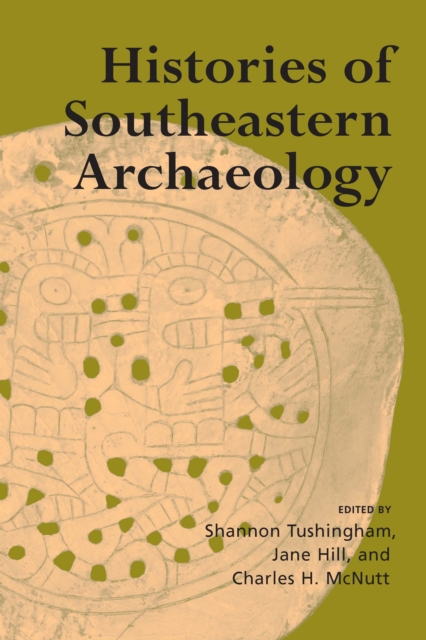
Histories of southeastern archaeology
This volume provides a comprehensive, broad-based overview, including first-person accounts, of the development and conduct of archaeology in the Southeast over the past three decades.Histories of Southeastern Archaeology originated as a symposium at the 1999 Southeastern Archaeological Conference (SEAC) organized in honor of the retirement of Charles H. McNutt following 30 years of teaching anthropology. Written for the most part by members of the first post-depression generation of southeastern archaeologists, this volume offers a window not only into the archaeological past of the United States but also into the hopes and despairs of archaeologists who worked to write that unrecorded history or to test scientific theories concerning culture.The contributors take different approaches, each guided by experience, personality, and location, as well as by the legislation that shaped the practical conduct of archaeology in their area. Despite the state-by-state approach, there are certain common themes, such as the effect (or lack thereof) of changing theory in Americanist archaeology, the explosion of contract archaeology and its relationship to academic archaeology, goals achieved or not achieved, and the common ground of SEAC. This book tells us how we learned what we now know about the Southeast's unwritten past. Of obvious interest to professionals and students of the field, this volume will also be sought after by historians, political scientists, amateurs, and anyone interested in the South.Additional reviews:\"A unique publication that presents numerous historical, topical, and personal perspectives on the archaeological heritage of the Southeast.\"-Southeastern Archaeology
eBook

