
Catalogue Search | MBRL


Are you sure you want to remove the book from the shelf?

{{itemTitle}}
932
result(s) for
"Intifada"
Sort by:
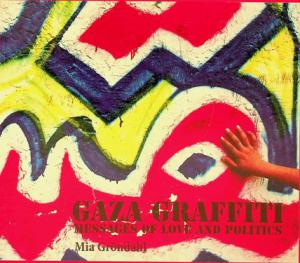
Gaza graffiti : messages of love and politics
Documents the graffiti of the Palestinian territory of the Gaza Strip, including its political and social themes and depiction of prominent figures.
Book

Soldiering under Occupation
Often, violent behavior or harassment from a soldier is dismissed by the military as unacceptable acts by individuals termed, \"rotten apples.\" In this study, the author argues that this dismissal is unsatisfactory and that there is an urgent need to look at the (mis)behavior of soldiers from a structural point of view. When soldiers serve as an occupational force, they find themselves in a particular situation influenced by structural circumstances that heavily influence their behavior and moral decision-making. This study focuses on young Israeli men and their experiences as combat soldiers in the Israeli Defense Forces (IDF), particularly those who served in the \"Occupied Palestinian Territories\" (OPT) during the \"Al AqsaIntifada,\" which broke out in 2000. In describing the soldiers' circumstances, especially focusing on space, the study shows how processes of numbing on different levels influence the (moral) behavior of these soldiers.
eBook

Rethinking Contemporary Warfare
The combat experience of Israel's ground forces in the second Palestinian uprising, the Al-Aqsa Intifada (2000–2006), is given full critical attention in this engaging study. Based on extensive interviews and observations, Rethinking Contemporary Warfare explores the ongoing debate about how the armed forces of industrial democracies wage contemporary military operations. Irregular warfare presents challenges, as routine activities can suddenly turn into violent action, forcing military forces to quickly adapt under the changing circumstances of the conflict. Such \"new wars\" are a messy reality consisting of high and low intensity conflict, the involvement of media and human rights movements, and the martial administration of civilian populations. Exploring the broad social and organizational features of these militaries, this volume sets forth new analytical tools to understand the peculiarities of irregular warfare in the post-Cold War era. These critical concepts include loose coupling between units, organizations that mediate between ground forces and civilian environments, and the militarization of civilian environments in urban warfare
eBook


Tested by Zion
This book tells the full inside story of the Bush Administration and the Israeli-Palestinian conflict. Written by a top National Security Council officer who worked at the White House with Bush, Cheney, and Rice and attended dozens of meetings with figures like Sharon, Mubarak, the kings of Jordan and Saudi Arabia, and Palestinian leaders, it brings the reader inside the White House and the palaces of Middle Eastern officials. How did 9/11 change American policy toward Arafat and Sharon's tough efforts against the Second Intifada? What influence did the Saudis have on President Bush? Did the American approach change when Arafat died? How did Sharon decide to get out of Gaza, and why did the peace negotiations fail? In the first book by an administration official to focus on Bush and the Middle East, Elliott Abrams brings the story of Bush, the Israelis, and the Palestinians to life.
eBook

The lost years : radical Islam, intifada, and wars in the Middle East, 2001-2006
From Ariel Sharon's ascent to power in February 2001 to the Israel-Lebanon conflict in July 2006, the Middle East has seen the most murderous years of a feud which is, today, half a century old. After the monumental convergence of powers at Camp David, the world watched with bated breath as hope for a peaceful resolution to the long, bitter dispute between Israel and Palestine was lost in the wake of the Intifada. Following years of searching for an end to the bloodshed, how did the tragic blindness of both parties throw this region into such chaos? In The Lost Years, Charles Enderlin presents a scrupulous chronicle of the Israeli and Palestinian descent into hell. Political leaders and secret negotiators, military chiefs and CIA agents, Enderlin has met them all - Israelis and Palestinians -and he accounts for all sides, including U.S. and international involvement. He trails the bad political calculations of the Palestinians, which led to the defeat of Fatah and to the victory of the Islamists. And he exposes Israel's unilateral political approach and new military doctrines that had disastrous consequences for both camps. Intifada, September 11th, war in Iraq, the construction of the wall, the withdrawal from Gaza, the end of the reigns of the two old enemies, Arafat and Sharon, the electoral victory of Hamas, and the war in Lebanon; Enderlin reveals the implacable logic at work behind the crucial events of a confused period. The Lost Years, the sequel to Enderlin's bestselling book, Shattered Dreams, is an essential work for those who try to understand without judging, but still want to believe in peace. -- Publisher's Description.
Book

Occupied by Memory
Occupied by Memory explores the memories of the first Palestinian intifada. Based on extensive interviews with members of the \"intifada generation,\" those who were between 10 and 18 years old when the intifada began in 1987, the book provides a detailed look at the intifada memories of ordinary Palestinians. These personal stories are presented as part of a complex and politically charged discursive field through which young Palestinians are invested with meaning by scholars, politicians, journalists, and other observers. What emerges from their memories is a sense of a generation caught between a past that is simultaneously traumatic, empowering, and exciting - and a future that is perpetually uncertain. In this sense, Collins argues that understanding the stories and the struggles of the intifada generation is a key to understanding the ongoing state of emergency for the Palestinian people. The book will be of interest not only to scholars of the Middle East but also to those interested in nationalism, discourse analysis, social movements, and oral history.
eBook


The Second Palestinian Intifada
This is a comprehensive account of the momentous events which shaped the political landscape not only of Palestine and Israel but of the entire Middle East region.
Addressing the most controversial issues, including the alarming escalation in suicide bombings, and the construction of the Separation Wall, he reports on the huge rate of unemployment and hunger in the Occupied Territories - statistics so critical that NGOs compare their magnitude to African nations such as the Congo. From the brutality of the Israeli army to the ever-compromising nature of the Palestinian Authority, few are spared Ramzy Baroud’s thoughtful critique.
The book is clear and concise, with one chapter dedicated to the major events of each year, and includes a comprehensive timeline.
eBook