
Catalogue Search | MBRL


Are you sure you want to remove the book from the shelf?

{{itemTitle}}
486
result(s) for
"Introduced organisms Control."
Sort by:


The ethics and rhetoric of invasion ecology
The Ethics and Rhetoric of Invasion Ecology provides an introduction to the controversial treatment and ongoing violence routinely utilized against non-native species.Drawing from the tradition of critical animal scholars, Stanescu and Cummings have assembled a group of advocates who argue for a different kind of relationship with foreign species.
eBook

Invasive species management : a handbook of principles and techniques
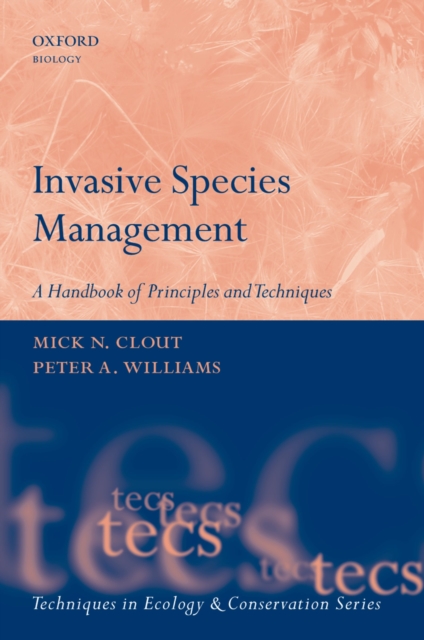
Invasive alien species are a major and growing threat to biodiversity worldwide. The transport of organisms through increased levels of trade and tourism is leading to the widespread breaching of natural biogeographic barriers at unprecedented rates. Consequences can be severe, especially in naturally isolated ecosystems. Invasive alien species can cause the extinction of vulnerable endemic species, alter the structure and composition of communities, disrupt successional pathways, and lead to the loss of ecosystem services. Global climate change may further exacerbate the spread of alien species, as climatic zones shift and potential ranges alter. The effective management of invasive alien species is clearly a priority for biological conservation worldwide. This book first provides strategies for managing such species at successive invasion stages, from prevention at the border to control of major infestations. It then describes the general tools and approaches that are recommended for successful management of particular groups of invasive organisms in a range of environments. In each case, the ecological basis and practical requirements of invasive alien species management are addressed. This integration of proven techniques and policies will be useful to a wide readership of students, academics, conservation practitioners, invasive species managers, legislators, and to the broader community concerned with biological conservation.
eBook

Invasive species
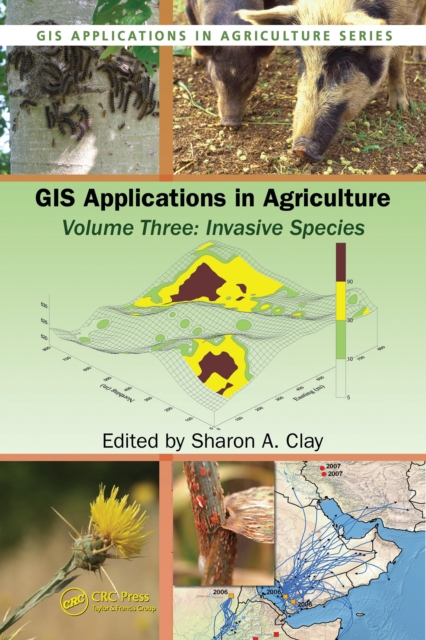
While many \"alien\" plant and animal species are purposefully introduced into new areas as ornamentals, livestock, crops, and even pets, these species can escape into other areas and threaten agricultural and native ecosystems causing economic and environmental harm, or harm to human health. Increasingly, scientists are using Geographic Information Systems (GIS) to track and manage the invaders, mitigate the potential rate of spread and level of impact, and protect the native economy and ecosystem. Beginning with an introduction to the use of GIS technology to capture, store, analyze, manage, and present data, GIS Applications in Agriculture, Volume Three: Invasive Species examines five relevant categories of geographic information including dispersal and transport, prediction and forecasting, mapping of current infestations, maps for management and control tactics, and impact assessment and method of control. It address GIS for studying the population ecology of a new species, niche requirements for species success, and the monitoring and control of several different species including Australian examples of intentionally introduced invasive species, insects and other animals that may also vector a disease, and invasive weed management from prediction to management. Chapters cover maps and imageries available on various Web sites and provide step-by-step tutorials or case studies that allow manipulation of datasets featured on the accompanying CD-ROM to make maps, perform statistical analyses, and predict future problems. It offers hands-on experience with a variety of software programs that create interactive queries (user-created searches), analyze spatial information, edit data and maps, and present the results of these operations in several different formats. Some of the programs are freeware, others are not, but each can be used to integrate, edit, share, and display geographic information. Color figures are also available on the CD-ROM.
eBook


Encyclopedia of biological invasions
This pioneering encyclopedia illuminates a topic at the forefront of global ecology—biological invasions, or organisms that come to live in the wrong place. Written by leading scientists from around the world, Encyclopedia of Biological Invasions addresses all aspects of this subject at a global level—including invasions by animals, plants, fungi, and bacteria—in succinct, alphabetically arranged articles. Scientifically uncompromising, yet clearly written and free of jargon, the volume encompasses fields of study including biology, demography, geography, ecology, evolution, sociology, and natural history. Featuring many cross-references, suggestions for further reading, illustrations, an appendix of the world’s worst 100 invasive species, a glossary, and more, this is an essential reference for anyone who needs up-to-date information on this important topic.
eBook

Cull of the wild : killing in the name of conservation
Taking a balanced and open approach to this emotive subject, Hugh speaks to experts on all sides of the debate. How do we protect endangered native species? Which species do we prioritise? And how do we reckon with the ethics of killing anything in the name of conservation?
BOOK

A planetary health innovation for disease, food and water challenges in Africa
Many communities in low- and middle-income countries globally lack sustainable, cost-effective and mutually beneficial solutions for infectious disease, food, water and poverty challenges, despite their inherent interdependence
1
–
7
. Here we provide support for the hypothesis that agricultural development and fertilizer use in West Africa increase the burden of the parasitic disease schistosomiasis by fuelling the growth of submerged aquatic vegetation that chokes out water access points and serves as habitat for freshwater snails that transmit
Schistosoma
parasites to more than 200 million people globally
8
–
10
. In a cluster randomized controlled trial (ClinicalTrials.gov: NCT03187366) in which we removed invasive submerged vegetation from water points at 8 of 16 villages (that is, clusters), control sites had 1.46 times higher intestinal
Schistosoma
infection rates in schoolchildren and lower open water access than removal sites. Vegetation removal did not have any detectable long-term adverse effects on local water quality or freshwater biodiversity. In feeding trials, the removed vegetation was as effective as traditional livestock feed but 41 to 179 times cheaper and converting the vegetation to compost provided private crop production and total (public health plus crop production benefits) benefit-to-cost ratios as high as 4.0 and 8.8, respectively. Thus, the approach yielded an economic incentive—with important public health co-benefits—to maintain cleared waterways and return nutrients captured in aquatic plants back to agriculture with promise of breaking poverty–disease traps. To facilitate targeting and scaling of the intervention, we lay the foundation for using remote sensing technology to detect snail habitats. By offering a rare, profitable, win–win approach to addressing food and water access, poverty alleviation, infectious disease control and environmental sustainability, we hope to inspire the interdisciplinary search for planetary health solutions
11
to the many and formidable, co-dependent global grand challenges of the twenty-first century.
By harvesting aquatic vegetation that provides habitat for snails that harbour
Schistosoma
parasites and converting it to compost and animal feed, a trial reduced schistosomiasis prevalence in children while providing wider economic benefits.
Journal Article