
Catalogue Search | MBRL


Are you sure you want to remove the book from the shelf?

{{itemTitle}}
4,950
result(s) for
"Iran -- History"
Sort by:


A History of Slavery and Emancipation in Iran, 1800-1929
Slavery in the Middle East is a growing field of study, but the history of slavery in a key country, Iran, has never before been written. This history extends to Africa in the west and India in the east, to Russia and Turkmenistan in the north, and to the Arab states in the south. As the slave trade between Iran and these regions shifted over time, it transformed the nation and helped forge its unique culture and identity. Thus, a history of Iranian slavery is crucial to understanding the character of the modern nation. Drawing on extensive archival research in Iran, Tanzania, England, and France, as well as fieldwork and interviews in Iran, Behnaz A. Mirzai offers the first history of slavery in modern Iran from the early nineteenth century to emancipation in the mid-twentieth century. She investigates how foreign military incursion, frontier insecurity, political instability, and economic crisis altered the patterns of enslavement, as well as the ethnicity of the slaves themselves. Mirzai’s interdisciplinary analysis illuminates the complex issues surrounding the history of the slave trade and the process of emancipation in Iran, while also giving voice to social groups that have never been studied—enslaved Africans and Iranians. Her research builds a clear case that the trade in slaves was inexorably linked to the authority of the state. During periods of greater decentralization, slave trading increased, while periods of greater governmental autonomy saw more freedom and peace.
eBook


Religion and State in Iran 1785-1906
This title is part of UC Press's Voices Revived program, which commemorates University of California Press's mission to seek out and cultivate the brightest minds and give them voice, reach, and impact. Drawing on a backlist dating to 1893, Voices Revived makes high-quality, peer-reviewed scholarship accessible once again using print-on-demand technology. This title was originally published in 1969.
eBook
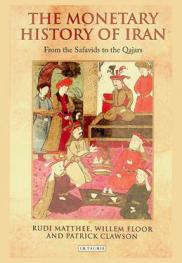
The monetary history of Iran : from the Safavids to the Qajars
This detailed study of Iran's monetary history, from the advent of the Safavid dynasty in 1501 to the end of Qajar rule in 1925, covers the of use of ready money and its circulation, the changing conditions of the country's mints, and the role of the state in managing money.
Book

Persian historic urban landscapes : interpreting and managing Maibud over 6000 years
Persian cities are part of a corridor of civilisation with settlements straddling thousands of years. Taking Maibud as a case study, Eisa Esfanjary traces the evolution of ancient settlements chronologically, thematically and methodologically.
eBook
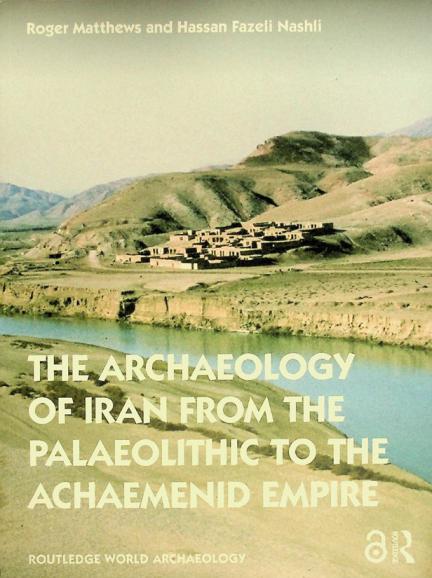
The archaeology of Iran : from the Palaeolithic to the Achaemenid empire
\"The Archaeology of Iran is the first modern academic study to provide a synthetic, diachronic analysis of the archaeology and early history of all of Iran from the Palaeolithic period to the end of the Achaemenid Empire at 330 BC. Drawing on the authors' deep experience and engagement in the world of Iranian archaeology, and in particular on Iran-based academic networks and collaborations, this book situates the archaeological evidence from Iran within a framework of issues and debates of relevance today. Such topics include human-environment interactions, climate change and societal fragility, the challenges of urban living, individual and social identity, gender roles and status, the development of technology and craft specialisation, and the significance of early bureaucratic practices such as counting, writing and sealing within the context of evolving societal formations. Richly adorned with more than 500 illustrations, many of them in colour, and accompanied by a bibliography with more than 3000 entries, this book will be appreciated as a major research resource for anyone concerned to learn more about the role of ancient Iran in shaping the modern world\"-- Provided by publisher.
Book

From the Indian ocean to the mediterranean
Drawing on a rich trove of documents, including correspondence not seen for 300 years, this study explores the emergence and growth of a remarkable global trade network operated by Armenian silk merchants from a small outpost in the Persian Empire. Based in New Julfa, Isfahan, in what is now Iran, these merchants operated a network of commercial settlements that stretched from London and Amsterdam to Manila and Acapulco. The New Julfan Armenians were the only Eurasian community that was able to operate simultaneously and successfully in all the major empires of the early modern world—both land-based Asian empires and the emerging sea-borne empires—astonishingly without the benefits of an imperial network and state that accompanied and facilitated European mercantile expansion during the same period. This book brings to light for the first time the trans-imperial cosmopolitan world of the New Julfans. Among other topics, it explores the effects of long distance trade on the organization of community life, the ethos of trust and cooperation that existed among merchants, and the importance of information networks and communication in the operation of early modern mercantile communities.
eBook
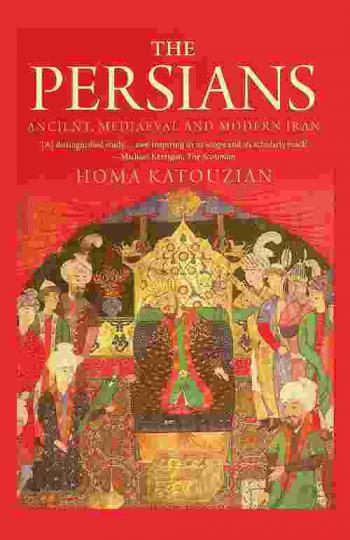
The Persians : ancient, mediaeval and modern Iran
In recent years, Iran has gained attention mostly for negative reasons--for its authoritarian religious government, disputed nuclear programme, and controversial role in the Middle East--but there is much more to the story of this ancient land than can be gleaned from the news. This ... history of Iran ... covers the entire history of the area from the foundation of the ancient Persian Empire to today's Iranian state. Writing from an Iranian rather than a European perspective, Katouzian integrates the significant cultural and literary history of Iran with its political and social history. Some of the greatest poets of human history wrote in Persian--among them Rumi, Omar Khayyam, and Saadi--and Katouzian discusses and occasionally quotes their work ... Katouzian argues that the absolute and arbitrary power traditionally enjoyed by Persian/Iranian rulers has resulted in an unstable society where fear and short-term thinking dominate.
Book

Social Change in Medieval Iran 132-628 AH (750-1231 AD)
This study contributes to the history of social changes in Iran during the Abbasid Caliphate (AH 132–656, AD 750–1258) by foregrounding the perspective of Persian language historians – from Abu Ali Bal'ami (AH 363, AD 974), the first known Persian historian, to Atamelak Joveyni (AH 623–681, AD 1226–1283), the great historian of the Mongol Era. By applying the insights of Anthony Giddens and the theory of structuration to address the interactions of social agents and structures, this book provides a coherent narrative of social transformation in medieval Iran.
eBook