
Catalogue Search | MBRL


Are you sure you want to remove the book from the shelf?

{{itemTitle}}
6
result(s) for
"Iran Sipāh-i Pāsdārān-i Inqilāb-i Islāmī"
Sort by:
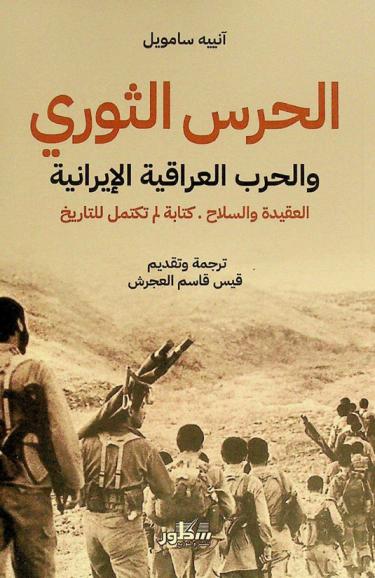
الحرس الثوري والحرب العراقية الإيرانية : العقيدة والسلاح .. كتابة لم تكتمل للتاريخ
تقدم الكاتبة، قراءة لامعة لأفكار الحرس الثوري الإيراني، على وجه الخصوص فيما يتعلق بالظروف التي انتهزها العراق لبدء الحرب ضد إيران، ثم قرار إيران (بعد عام 1982) باستمرار خوض الحرب ورفض وقف إطلاق النار مالم يذعن العراق لمطالب إيران، وهي ما تسميه المصادر الإيرانية بـ(خوض الحرب) من أجل السلام. تشير الكاتبة الى انتهاز الظروف الدولية المواتية في عام 1980، حين كان العداء الدولي يتصاعد ضد إيران، بينما رأى العراق في الثورة الإسلامية فرصة وتهديدا في الوقت نفسه. كانت فرصة بالنسبة للعراق، لأنه كان يراقب جيدا تنامي العداء بين إيران والغرب عموما، وهو ما يعني أن أي عمل عسكري عراقي ضد إيران سيحظى بالضرورة بمباركة غربية، وهو ما تجسد بقرار مجلس الأمن الدولي ذي الرقم (479) الداعي الى وقف إطلاق النار دون أن يشير بأي شكل من الاشكال الى أن العراق كان يحتل أراض إيرانية في ذلك الوقت.
Book

The State Department Designates Iran's Islamic Revolutionary Guards Corps as a Foreign Terrorist Organization
On April 8, 2019, President Trump announced that his administration would designate Iran's Islamic Revolutionary Guards Corps (IRGC) as a foreign terrorist organization (FTO) under Section 219 of the Immigration and Nationality Act (INA). This is the first time the United States has designated an arm of another government, rather than a non-state actor, as an FTO. In his announcement, Trump asserted that the Iranian government has used the IRGC to engage in a campaign of global terrorism. The measure, which officially took effect on April 15, expands on previous terrorism-related sanctions imposed on the IRGC and Iran.
Journal Article

Temperature rising : Iran's revolutionary guards and wars in the Middle East
Iran is a country at war - in Syria, Iraq, and Yemen.The founder of the Islamic Republic, Ayatollah Khomeini, always told audiences that the revolution was not about Iran, but the whole region.
eBook

Taking on Iran
Abraham D. Sofaer argues that US policy toward Iran cannot safely be restricted to a strategy that considers only the two high-risk, costly, and potentially infeasible options of a preventive attack on Iran's nuclear facilities or containing a nuclear-armed Iran. Instead, the United States should respond forcefully to Iranian Revolutionary Guard Corps (IRGC) aggression, enhancing its credibility and increasing the likelihood that Iran will negotiate in earnest. The United States must also be prepared to engage Iran in a disciplined manner, avoiding disabling preconditions and adopting the negotiating practices used successfully by the United States when dealing with the Soviet Union during the 1980s.
eBook

Iran unveiled
Iran is currently experiencing the most important change in its history since the revolution of 1979 and the establishment of the Islamic Republic: The regime in Tehran, traditionally ruled by the Shia clergy, is transforming into a military dictatorship dominated by the officers of the Islamic Revolutionary Guards Corps (IRGC; Sepah-e Pasdaran-e Enqelab-e Eslami). This transformation is changing not only the economy and society in Iran, but also the Islamic Republic's relations with the United States and its allies.
eBook