
Catalogue Search | MBRL


Are you sure you want to remove the book from the shelf?

{{itemTitle}}
81,979
result(s) for
"Iran."
Sort by:
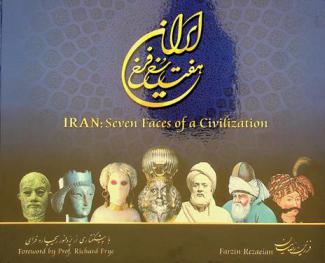
Iran : seven faces of a civilization = Īrān : haft rukh-I tamaddun
Visual recreation of modern and ancient Iran.
Book

Young and Defiant in Tehran
With more than half its population under twenty years old, Iran is one of the world's most youthful nations. The Iranian state characterizes its youth population in two ways: as a homogeneous mass, \"an army of twenty millions\" devoted to the Revolution, and as alienated, inauthentic, Westernized consumers who constitute a threat to the society. Much of the focus of the Islamic regime has been on ways to protect Iranian young people from moral hazards and to prevent them from providing a gateway for cultural invasion from the West. Iranian authorities express their anxieties through campaigns that target the young generation and its lifestyle and have led to the criminalization of many of the behaviors that make up youth culture.In this ethnography of contemporary youth culture in Iran's capital, Shahram Khosravi examines how young Tehranis struggle for identity in the battle over the right to self-expression. Khosravi looks closely at the strictures confronting Iranian youth and the ways transnational cultural influences penetrate and flourish. Focusing on gathering places such as shopping centers and coffee shops, Khosravi examines the practices of everyday life through which young Tehranis demonstrate defiance against the official culture and parental dominance. In addition to being sites of opposition, Khosravi argues, these alternative spaces serve as creative centers for expression and, above all, imagination. His analysis reveals the transformative power these spaces have and how they enable young Iranians to develop their own culture as well as individual and generational identities. The text is enriched by examples from literature and cinema and by livid reports from the author's fieldwork.
eBook


Political Islam, Iran, and the Enlightenment
Ali Mirsepassi's book presents a powerful challenge to the dominant media and scholarly construction of radical Islamist politics, and their anti-Western ideology, as a purely Islamic phenomenon derived from insular, traditional and monolithic religious 'foundations'. It argues that the discourse of political Islam has strong connections to important and disturbing currents in Western philosophy and modern Western intellectual trends. The work demonstrates this by establishing links between important contemporary Iranian intellectuals and the central influence of Martin Heidegger's philosophy. We are also introduced to new democratic narratives of modernity linked to diverse intellectual trends in the West and in non-Western societies, notably in India, where the ideas of John Dewey have influenced important democratic social movements. As the first book to make such connections, it promises to be an important contribution to the field and will do much to overturn some pervasive assumptions about the dichotomy between East and West.
eBook


Theater State and the Formation of Early Modern Public Sphere in Iran
This first systematic study of a wide range of Persian and European archival and primary sources, analyzes how the Muharram rituals changed from being an orginally devotional practice to public events of political significance, setting the stage for the emergence of the early modern Iranian public sphere in the Safavid period.
eBook


From the Indian ocean to the mediterranean
Drawing on a rich trove of documents, including correspondence not seen for 300 years, this study explores the emergence and growth of a remarkable global trade network operated by Armenian silk merchants from a small outpost in the Persian Empire. Based in New Julfa, Isfahan, in what is now Iran, these merchants operated a network of commercial settlements that stretched from London and Amsterdam to Manila and Acapulco. The New Julfan Armenians were the only Eurasian community that was able to operate simultaneously and successfully in all the major empires of the early modern world—both land-based Asian empires and the emerging sea-borne empires—astonishingly without the benefits of an imperial network and state that accompanied and facilitated European mercantile expansion during the same period. This book brings to light for the first time the trans-imperial cosmopolitan world of the New Julfans. Among other topics, it explores the effects of long distance trade on the organization of community life, the ethos of trust and cooperation that existed among merchants, and the importance of information networks and communication in the operation of early modern mercantile communities.
eBook


Democracy in Modern Iran
Can Islamic societies embrace democracy? In Democracy in Modern Iran, Ali Mirsepassi maintains that it is possible, demonstrating that Islam is not inherently hostile to the idea of democracy. Rather, he provides new perspective on how such a political and social transformation could take place, arguing that the key to understanding the integration of Islam and democracy lies in concrete social institutions rather than pre-conceived ideas, the every day experiences rather than abstract theories. Mirsepassi, an Iranian native, provides a rare inside look into the country, offering a deep understanding of how Islamic countries like Iran and Iraq can and will embrace democracy.Democracy in Modern Iran challenges readers to think about Islam and democracy critically and in a far more nuanced way than is done in black-and-white dichotomies of Islam vs. Democracy, or Iran vs. the West. This essential volume contributes important insights to current discussions, creating a more complex conception of modernity in the Eastern world and, with it, Mirsepassi offers to a broad Western audience a more accurate, less cliched vision of Iran's political reality.
eBook