
Catalogue Search | MBRL


Are you sure you want to remove the book from the shelf?

{{itemTitle}}
3,635
result(s) for
"Iranian Americans"
Sort by:
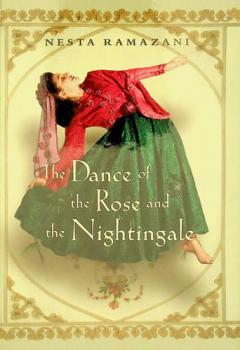
The dance of the rose and the nightingale
\"This is an autobiography of a young girl growing up in Iran. The daughter of an English Christian mother and an Iranian Zoroastrian father, Nesta Ramazani sketches her personal life story against the backdrop of a society marked by the fusion of Iranian, Islamic, and Western cultures, and by the efforts of an authoritarian state to force modernization on a traditional society.\"
Book
The American Institute of Iranian Studies
The American Institute of Iranian Studies is devoted to fostering research in the field of Iranian studies and promoting scholarly exchange between the United States and Iran. This collection of essays addresses the history and development of Iranian studies in the United States and the pivotal role of the Institute in furthering research in the field. The purview of the Institute is vast, covering Iranology—the study of Iranian peoples and cultures both within and across regions of Central and South Asia and the Middle East, where various forms of the Persian language are spoken. In keeping with the Institute’s dedication to facilitating research in Iran, the chapters in this volume represent fields of inquiry that have benefited from direct access to materials in the country. The essays describe the founding and work of the Institute, the emergence of Iranian studies in American universities, the Encyclopaedia Iranica , early archaeological research in Iran by the University of Pennsylvania and the University of Chicago, the birth and development of American museum collections of art from Iran, and case histories of areas of Iranian Studies that have been the traditional focus of Institute-sponsored research, including art history, history, philology, religion, and sociology. The contributors to this volume are Ahmad Ashraf, Shiva Balaghi, Medhi Bozorgmehr, Elton L. Daniel, Erica Ehrenberg, Carl W. Ernst, Stephen C. Fairbanks, Prudence O. Harper, Linda Komaroff, Judith A. Lerner, Franklin D. Lewis, Beatrice Forbes Manz, Alessandro Pezzati, Holly Pittman, D. T. Potts, Richard L. Spees, Mathew W. Stolper, Keyvan Tabari, and Christopher Thortnon.
eBook

Jasmine Zumideh needs a win
After lying on her college admissions, seventeen-year-old Jasmine needs to win her senior class election, but the Iran Hostage Crisis explodes across the nightly news and her opponent begins to stir up anti-Iranian hysteria at school causing Jasmine to reconcile with her identity in way she never has before.
Book

The American Institute of Iranian Studies
The American Institute of Iranian Studies is devoted to fostering research in the field of Iranian studies and promoting scholarly exchange between the United States and Iran. This collection of essays addresses the history and development of Iranian studies in the United States and the pivotal role of the Institute in furthering research in the field.The purview of the Institute is vast, covering Iranology—the study of Iranian peoples and cultures both within and across regions of Central and South Asia and the Middle East, where various forms of the Persian language are spoken. In keeping with the Institute’s dedication to facilitating research in Iran, the chapters in this volume represent fields of inquiry that have benefited from direct access to materials in the country. The essays describe the founding and work of the Institute, the emergence of Iranian studies in American universities, the Encyclopaedia Iranica, early archaeological research in Iran by the University of Pennsylvania and the University of Chicago, the birth and development of American museum collections of art from Iran, and case histories of areas of Iranian Studies that have been the traditional focus of Institute-sponsored research, including art history, history, philology, religion, and sociology.The contributors to this volume are Ahmad Ashraf, Shiva Balaghi, Medhi Bozorgmehr, Elton L. Daniel, Erica Ehrenberg, Carl W. Ernst, Stephen C. Fairbanks, Prudence O. Harper, Linda Komaroff, Judith A. Lerner, Franklin D. Lewis, Beatrice Forbes Manz, Alessandro Pezzati, Holly Pittman, D. T. Potts, Richard L. Spees, Mathew W. Stolper, Keyvan Tabari, and Christopher Thortnon.
eBook


From the Shahs to Los Angeles
Gold Medalist, 2013 Independent Publisher Book Awards in
the Religion category Saba Soomekh offers a fascinating
portrait of three generations of women in an ethnically distinctive
and little-known American Jewish community, Jews of Iranian origin
living in Los Angeles. Most of Iran's Jewish community immigrated
to the United States and settled in Los Angeles in the wake of the
1979 Iranian Revolution and the government-sponsored discrimination
that followed. Based on interviews with women raised during the
constitutional monarchy of the earlier part of the twentieth
century, those raised during the modernizing Pahlavi regime of
mid-century, and those who have grown up in Los Angeles, the book
presents an ethnographic portrait of what life was and is like for
Iranian Jewish women. Featuring the voices of all generations, the
book concentrates on religiosity and ritual observance, the
relationship between men and women, and women's self-concept as
Iranian Jewish women. Mother-daughter relationships, double
standards for sons and daughters, marriage customs, the appeal of
American forms of Jewish practices, social customs and pressures,
and the alternate attraction to and critique of materialism and
attention to outward appearance are discussed by the author and
through the voices of her informants.
eBook

Code of honor
When Iranian-American Kamran Smith learns that his big brother, Darius, has been labelled a terrorist, he sets out to piece together the codes and clues that will save his brother's life and his country from a deadly terrorist attack.
Book
Exiled Memories
\"I feel I am the wandering Jew who has no place to which she belongs. I thought I could settle down, but can't imagine staying. Whenever I bought a bar of soap and two came in the package, I thought there would be no need to buy a package of two because I would never last through the second. Why? Because I knew I was returning to Iran -- tomorrow. So too, I would buy the smallest size of toothpastes and jars of oil. Putting down roots here is an impossibility.\" These are the words of one Iranian emigre, driven from Tehran by the revolution of 1979. They are echoed time and again in this powerful portrayal of loss and survival. Impelled by these word and her own concerns about nationality and identity, Zohreh Sullivan has gathered together here the voices of sixty exiles and emigres. The speakers come from various ethnic and religious backgrounds and range in age from thirteen to eighty-eight. Although most are from the middle class, they work in a variety of occupations in the United States. But whatever their differences, here they engage in remembering the past, producing a discourse about their lives, and negotiating the troubled transitions from one culture to another. Unlike man other Iranian oral history projects, Exiled Memories looks at the reconstruction of memory and identity through diasporic narratives, through a focus on the Americas rather than on Iran. The narratives included here reveal the complex ways in which events and places transform identities, how overnight radical s become conservatives, friends become enemies, the strong become weak. Indeed, the narratives themselves serve this function -- serving to transfer or transform power and establish credibility. They reveal a diverse group of people in the process of knitting the story of themselves with the story of the collective after it has been torn apart.
eBook

A good country : a novel
\"Laguna Beach, California, 2009. Alireza Courdee, a fourteen-year-old straight-A student and chemistry whiz, takes his first hit of pot. In as long as it takes to inhale and exhale, he is transformed from the high-achieving son of Iranian immigrants into a happy-go-lucky stoner. He loses his virginity, takes up surfing, and sneaks away to all-night raves. For the first time, Reza--now Rez--feels like an American teen. Life is smooth; even lying to his strict father comes easily. But then he changes again, falling out with the bad boy surfers and in with a group of kids more awake to the world around them, who share his background, and whose ideas fill him with a very different sense of purpose\"-- Provided by publisher.
Book

Exiled Memories
\"I feel I am the wandering Jew who has no place to which she belongs. I thought I could settle down, but can't imagine staying. Whenever I bought a bar of soap and two came in the package, I thought there would be no need to buy a package of two because I would never last through the second. Why? Because I knew I was returning to Iran -- tomorrow. So too, I would buy the smallest size of toothpastes and jars of oil. Putting down roots here is an impossibility.\"These are the words of one Iranian emigre, driven from Tehran by the revolution of 1979. They are echoed time and again in this powerful portrayal of loss and survival. Impelled by these word and her own concerns about nationality and identity, Zohreh Sullivan has gathered together here the voices of sixty exiles and emigres. The speakers come from various ethnic and religious backgrounds and range in age from thirteen to eighty-eight. Although most are from the middle class, they work in a variety of occupations in the United States. But whatever their differences, here they engage in remembering the past, producing a discourse about their lives, and negotiating the troubled transitions from one culture to another.Unlike man other Iranian oral history projects,Exiled Memorieslooks at the reconstruction of memory and identity through diasporic narratives, through a focus on the Americas rather than on Iran. The narratives included here reveal the complex ways in which events and places transform identities, how overnight radical s become conservatives, friends become enemies, the strong become weak. Indeed, the narratives themselves serve this function -- serving to transfer or transform power and establish credibility. They reveal a diverse group of people in the process of knitting the story of themselves with the story of the collective after it has been torn apart.
eBook