
Catalogue Search | MBRL


Are you sure you want to remove the book from the shelf?

{{itemTitle}}
81
result(s) for
"Iranian authors"
Sort by:
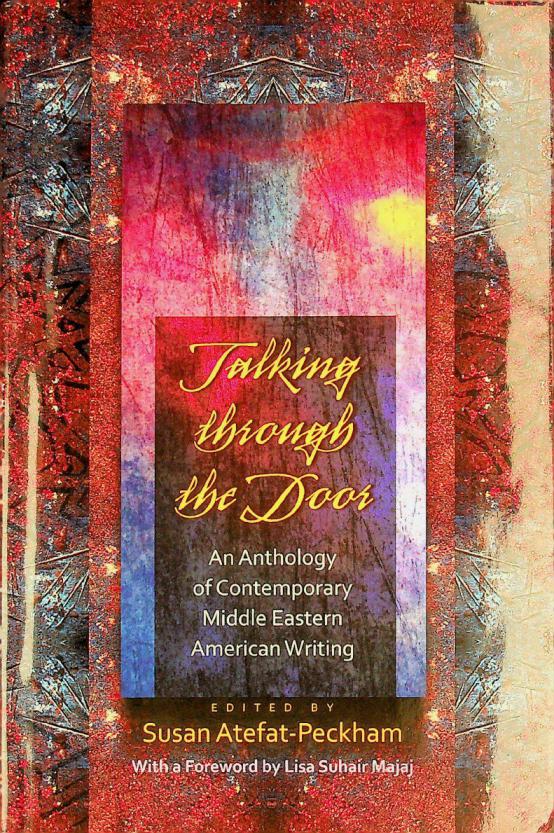

Modernity, Sexuality, and Ideology in Iran
In Iran, since the mid–nineteenth century, one issue has been a common concern: how should Iran become modern? More than a century of struggle for or against modernity has constituted much of the social, political, and cultural history of the country. In the decades since the 1979 Revolution, the question has become even more critical. In Modernity, Sexuality, and Ideology in Iran, Talattof finds that the process of modernity never truly unfolded, due in large part to Iran’s reluctance to embrace the seminal subjects of gender and sexuality. Talattof’s approach reflects a unique look at modernity as not only advances in industry and economy but also advances toward an open, intellectual discourse on sexuality. Exploring the life and times of Shahrzad, a dancer, actress, filmmaker, and poet, Talattof illuminates the country’s struggle with modernity and the ideological, traditional, and religious resistance against it. Born in 1946, she performed in several theater productions, became an acclaimed film star in the 1970s, and pursued a career as a journalist and poet. Following the revolution, she was imprisoned and eventually became homeless on the streets of Tehran. Her success and eventual decline as a female artist and entertainer illustrate the conflict between modernity and tradition and Iran’s failure to embrace an overt expression of sexuality. Talattof also profiles several other female artists of the 1970s, analyzing their lives and work as windows through which to examine what Iranian culture allowed and what it repudiated.
eBook
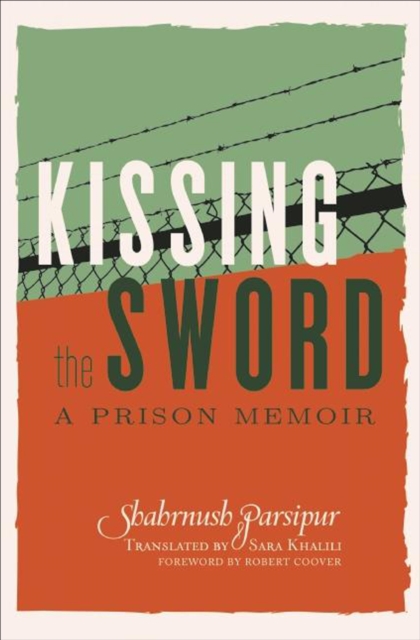
Kissing the Sword
Kissing The Sword is an important and shocking memoir of censorship and political oppression for writers in Iran. Acclaimed author Shahrnush Parsipur was imprisoned in Iran without ever being formally charged with a crime and in her revealing memoir she captures the surreal experience of serving time without being charged with a crime and witnessing the systematic destruction of any and all opposition to fundamentalist power.
eBook
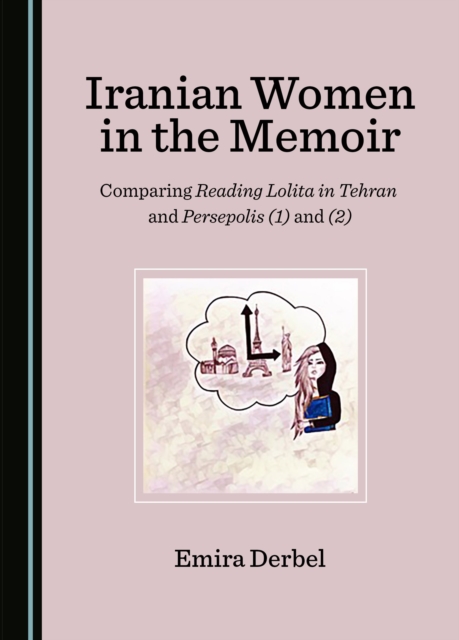
Iranian Women in the Memoir
This book investigates the various reasons behind the elevation of the memoir, previously categorized as a marginalized form of life writing that denudes the private space of women, especially in Western Asian countries such as Iran. Through a comparative investigation of Azar Nafisi's Reading Lolita in Tehran and Marjane Satrapi's Persepolis (1) and (2), the book examines the way both narrative and graphic memoirs offer possibilities for Iranian women to reclaim new territory, transgress a post-traumatic revolution, and reconstruct a new model of womanhood that evades socio-political and religious restrictions. Exile is conceptualized as empowering rather than a continued status of loss and disillusionment, and the liminality of both women writers turns into a space of artistic production. The book also resists the New Orientalist scope within which Reading Lolita in Tehran, more than Persepolis, has been misread. In order to reject these allegations, this work sheds light on the representation of Iranian women in Reading Lolita in Tehran, not as weak victims held captive by a totalitarian version of Islam, but as active participants rewriting their stories through the liberating power of the memoir. The comparative approach between narrative and comic memoirs is a fruitful way of displaying similar experiences of disillusionment, loss, return, and exile through different techniques. The common thread uniting both memoirs is their zeal to reclaim Iranian women's agency and strength over subservience and passivity.
eBook

The Literature of the Iranian Diaspora
The 1979 Revolution in Iran caused the migration of millions of Iranians, many of whom wrote of, and are still writing of, their experiences. Sanaz Fotouhi here traces the origins of the emerging body of diasporic Iranian literature in English, and uses these origins to examine the socio-political position and historical context from which they emerged. While situating this body of work through existing theories such as postcolonialism, Fotouhi sheds new light on the role of Iranian literature and culture in Western literature by showing that these writings distinctively reflect a diasporic experience unique to Iranians. Analysing the relationship between Iranians and their new surroundings by drawing on theories of migration, narration and identity, Fotouhi examines how the literature borne out of the Iranian Diaspora reflects socio-political realities today. The first of its kind, this book will be vital for researchers of Middle Eastern literature and its relationship with writings from the West, as well as those interested in the cultural history of the Middle East.
eBook


Mirrors of Entrapment and Emancipation
Mirrors of Entrapment and Emancipation explores the rich diversity of the meanings associated with the mirror and reflection in literature by women on the basis of the works of the Persian Forugh Farrokhzad (1935-1967) and her American contemporary Sylvia Plath (1932-1963). These two poets astutely employed mirror images for the realization as well as for communication of their turbulent psycho-emotional states to their readers, thereby capturing and conveying the essence of women desperately trapped among the antithetical images of twentieth-century womanhood.
eBook
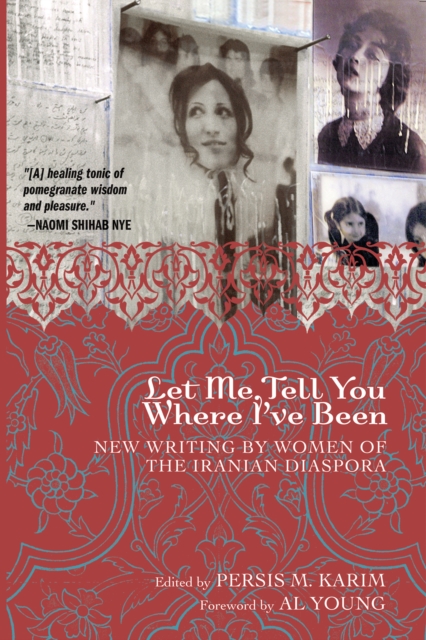
Let Me Tell You Where I've Been
Until recently, Iranian literature has overwhelmingly been the domain of men. But the new hybrid culture of diaspora Iranians has produced a prolific literature by women that reflects a unique perspective and voice. Let Me Tell You Where I've Been is an extensive collection of poetry, fiction, and nonfiction by women whose lives have been shaped and influenced by Iran's recent history, exile, immigration and the formation of new cultural identities in the United States and Europe. These writings represent an emerging and multi-cultural female sensibility. Unlike many flat media portrayals of Iranian women-as veiled, silenced-these writers offer a complex literary view of Iranian culture and its influences. These writers interrogate, challenge, and re-define notions of home and language and their work offers readers an experience of Iranian diaspora culture. Featuring over one hundred selections (two-thirds of which have never been published before) by more than fifty contributors--including such well-known writers as Gelareh Asayesh, Tara Bahrampour, Firoozeh Dumas, Roya Hakakian and Mimi Khalvati--the collection represents a substantial diversity of voices in this multicultural community. Divided into six sections, the book's themes of exile, family, culture resistance, and love, create a rich and textured view of the Iranian diaspora. The poems, short stories, and essays are suggestive of an important conversation about Iran, Iranian culture, the Persian and English languages, and the dual identities of many of its authors. This powerful collection is a tribute to the wisdom, insight, and sensitivity of women attempting to invent and articulate a literature of in-betweenness.
eBook


Publications by faculty members indexed in Science Citation Index and Scopus: an Iranian case study
Purpose
The paper aims to report an investigation that was conducted to identify the scholarly publications by faculty members of the Allameh Tabataba’i University that were indexed in two international databases, Science Citation Index (SCI) and Scopus, from the year the databases first included Iranian-authored papers (1987 and 1989, respectively) through the end of 2015.
Design methodology/approach
Scientometric methods and social network analysis techniques were used to conduct the study and to analyze the co-authorship network. Both quantitative and qualitative analyses were carried out on the data. Quantitative analysis was accomplished using Microsoft Excel, while the qualitative analysis was carried out using HistCite, VOSviewer and Pajek software.
Findings
Faculty members had the most international cooperation with colleagues from the USA and Switzerland, and they jointly authored papers with faculty and staff from other universities within Iran. The three institutions with the highest rate of co-authorship included the Islamic Azad University, Tehran University and Amir Kabir University of Technology.
Practical implications
The overall overlap among the two databases was about 21 per cent. The number of papers indexed by Scopus (583 records) was more than that by SCI (410 records). The total number of papers at an international level was much lower than that at the national level (6,426 records) in both the databases.
Originality/value
This paper provides insight into the scholarly works by the faculty of Allameh Tabataba’i University indexed in two international databases, SCI and Scopus. It also examines the co-authorship network structure.
Journal Article