
Catalogue Search | MBRL


Are you sure you want to remove the book from the shelf?

{{itemTitle}}
106
result(s) for
"Iraq -- History -- To 634"
Sort by:


The First Dynasty of the Sealand in Mesopotamia
The Sealand kingdom arose from the rebellion against Babylonian hegemony in the latter half of the 18th century BCE., forcing it to share power over Sumer and Akkad. Although its kings maintained themselves throughout the turmoil leading to the demise of the Amorite dynasty at Babylon, it remains one of the most poorly documented Mesopotamian polities. Until recently, it was known to us mainly through its inclusion into later king lists and chronicles, but the recent publication of well over 400 archival texts from a Sealand palace, soon followed by literary and divinatory tablets, finally makes it possible to study this polity from primary sources. This book proposes a history of the Sealand kingdom based on the new evidence and a reevaluation of previously known sources. The aspects examined are: the economy — mainly the palatial administration and transformation of agricultural and animal resources; the panthea and the palace-sponsored cult, which show that Sealand I kings may have positioned their rule in a Larsean tradition; the political history, including a discussion of the geography and the relative chronology; the recording and transmission of knowledge on the Sealand I dynasty in Mesopotamian historiography.
eBook

Technology in Mesopotamia
Examines the inventions and innovations developed by the Mesopotamians, such as building with mud, using the zodiac, and casting bronze.
Book

History, texts and art in early Babylonia : three essays
These essays represent a summation of Piotr Steinkeller's decades-long thinking and writing about the history of third millennium BCE Babylonia and the ways in which it is reflected in ancient historical and literary sources and art, as well as of how these written and visual materials may be used by the modern historian to attain, if not a reliable record of histoire événementielle, a comprehensive picture of how the ancients understood their history. The book focuses on the history of early Babylonian kingship, as it evolved over a period from Late Uruk down to Old Babylonian times, and the impact of the concepts of kingship on contemporaneous history writing and visual art. Here comparisons are drawn between Babylonia and similar developments in ancient Egypt, China and Mesoamerica. Other issues treated is the intersection between history writing and the scholarly, lexical, and literary traditions in early Babylonia; and the question of how the modern historian should approach the study of ancient sources of \"historical\" nature. Such a broad and comprehensive overview is novel in Mesopotamian studies to date. As such, it should contribute to an improved and more nuanced understanding of early Babylonian history.
eBook
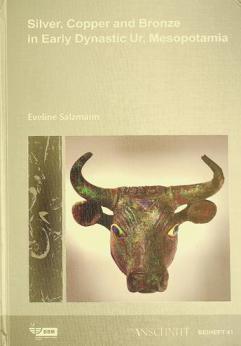
Silver, copper and bronze in early dynastic ur, mesopotamia : a high-resolution analysis Approach
The excavations of the Royal Tombs of Ur by Leonard Woolley in the 1920s to 30s provided a great wealth of precious metal artefacts, which must have travelled a long way due to their location in the metal-poor alluvial plains of the Euphrates. Where did you come from? Ur had a strategically important position on the shores of the Persian Gulf in the Early Bronze Age connecting to a long-distance trade network. The University of Pennsylvania's Museum of Archeology and Anthropology provided a collection of silver, copper, and bronze samples for provenance studies. They were analysed using state-of-the-art scientific methods. The results gave interesting information about the silver and copper sources. In addition, detailed methodological evaluation of the in situ analysis could be achieved, as well as a large-scale compilation of the old mining regions in the Near and Middle East, which was compiled by means of GIS applications.
Book

Women in the Ancient Near East
Women in the Ancient Near East offers a lucid account of the daily life of women in Mesopotamia from the third millennium BCE until the beginning of the Hellenistic period. The book systematically presents the lives of women emerging from the available cuneiform material and discusses modern scholarly opinion. Stol’s book is the first full-scale treatment of the history of women in the Ancient Near East.
eBook


The Role of Women in Work and Society in the Ancient Near East
Economic history is well documented in Assyriology, thanks to the preservation of dozens of thousands of clay tablets recording administrative operations, contracts and acts dealing with family law. Despite these voluminous sources, the topic of work and the contribution of women have rarely been addressed.
This book examines occupations involving women over the course of three millennia of Near Eastern history. It presents the various aspects of women as economic agents inside and outside of the family structure. Inside the family, women were the main actors in the production of goods necessary for everyday life. In some instances, their activities exceeded the simple needs of the household and were integrated within the production of large organizations or commercial channels. The contributions presented in this volume are representative enough to address issues in various domains: social, economic, religious, etc., from varied points of view: archaeological, historical, sociological, anthropological, and with a gender perspective.
This book will be a useful tool for historians, anthropologists, archaeologists and graduate students interested in the economy of the ancient Near East and in women and gender studies.
eBook

Ancient Mesopotamia
\"In Ancient Mesopotamia, readers discover the history and impressive accomplishments of the ancient Mesopotamians, including their extraordinary cultural achievements and technological wonders. Engaging text provides details on the civilization's history, development, daily life, culture, art, technology, warfare, social organization, and more.\"--Publisher's web site.
Book

Much Ado about Marduk
Scholars often assume that the nature of Mesopotamian kingship was such that questioning royal authority was impossible. This volume challenges that general assumption, by presenting an analysis of the motivations,methods, and motifs behind a scholarly discourse about kingship that arose in the final stages of the last Mesopotamian empires. The focus of the volume is the proliferation of a literature that problematizes authority in the Neo-Assyrian period, when texts first begin to specifically explore various modalities for critique of royalty. This development is symptomatic of a larger discourse about the limits of power that emerges after the repatriation of Marduk's statue to Babylon during the reign of Nebuchadnezzar I in the 12th century BCE. From this point onwards, public attitudes toward Marduk provide a framework for the definition of proper royal behavior, and become a point of contention between Assyria and Babylonia. It is in this historical and political context that several important Akkadian compositions are placed. The texts are analyzed from a new perspective that sheds light on their original milieux and intended functions.
eBook