
Catalogue Search | MBRL


Are you sure you want to remove the book from the shelf?

{{itemTitle}}
6
result(s) for
"Iraq Antiquities Catalogs"
Sort by:
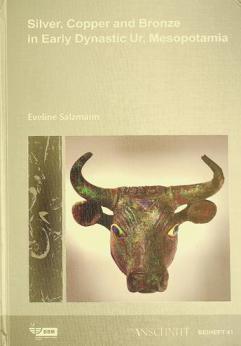
Silver, copper and bronze in early dynastic ur, mesopotamia : a high-resolution analysis Approach
The excavations of the Royal Tombs of Ur by Leonard Woolley in the 1920s to 30s provided a great wealth of precious metal artefacts, which must have travelled a long way due to their location in the metal-poor alluvial plains of the Euphrates. Where did you come from? Ur had a strategically important position on the shores of the Persian Gulf in the Early Bronze Age connecting to a long-distance trade network. The University of Pennsylvania's Museum of Archeology and Anthropology provided a collection of silver, copper, and bronze samples for provenance studies. They were analysed using state-of-the-art scientific methods. The results gave interesting information about the silver and copper sources. In addition, detailed methodological evaluation of the in situ analysis could be achieved, as well as a large-scale compilation of the old mining regions in the Near and Middle East, which was compiled by means of GIS applications.
Book

A City from the Dawn of History
The city of Erbil, which now claims to be one of the oldest continually inhabited cities in the world, lies on the rich alluvial plains at the foot of the piedmont of the Zagros mountains in a strategic position which from the earliest times made it a natural gateway between Iran and Mesopotamia. Within the context of ancient Mesopotamian civilisation there can be no doubt that it will have been one of the most important urban centres. Yet while the citadel of Erbil is without question a site of exceptional interest, archaeologically the mound has until recently remained virtually untouched. On the other hand rich documentation allows us to understand the context in which the city grew and flourished. This work is dedicated to the cuneiform sources. Together these include hundreds of documents stretching from the late third millennium to the mid first millennium BC. The very first references, in administrative documents from the archives of the royal palace at Ebla, date to ca. 2300 BC. In the eras that follow texts written in Sumerian and then Akkadian attest to the city's periods of independence alternating with its incorporation in the Ur III, Assyrian and Babylonian empires. From the Achaemenid period, while the Elamite texts from Persepolis are mostly unpublished, Erbil does appear both in the famous inscription of Darius I at Behistun and in the celebrated Passport of Nehtihur, an Aramaic document from Elephantine in Egypt. The sources include a wide variety of administrative texts, royal inscriptions, grants, chronicles, letters, votive dedications and oracular pronouncements which together give a unique insight into the history and society of this exceptional city.
eBook

Middle Babylonian texts in the Cornell University collections
\"Translation, transliteration, and commentary of cuneiform documents from Babylonia dating to the Kassite period, the middle of the second millennium BCE, in ancient Iraq\"-- Provided by publisher.
Book

Through a Glass, Darkly: Long-Term Antiquities Auction Data in Context
The antiquities catalogues of major auction houses comprise an accessible long-term source of information about the auction market in antiquities and the market in antiquities more generally. The information contained in these catalogues has been used to investigate the nature and scale of the market and to assess the impact of legal and normative measures of market control. But, by way of two case studies, referencing Iraqi and Cambodian material sold at the New York branch of Sotheby’s, this article argues that, while auction catalogues do provide an invaluable source of information for investigating the antiquities market, it can be misleading. Changing material or monetary statistics might reflect commercial factors unrelated to market control. For more reliable research, long-term auction data should be contextualized with information available from other sources.
Journal Article
A City from the Dawn of History
The city of Erbil, which now claims to be one of the oldest continually inhabited cities in the world, lies on the rich alluvial plains at the foot of the piedmont of the Zagros mountains in a strategic position which from the earliest times made it a natural gateway between Iran and Mesopotamia. Within the context of ancient Mesopotamian civilisation there can be no doubt that it will have been one of the most important urban centres. Yet while the citadel of Erbil is without question a site of exceptional interest, archaeologically the mound has until recently remained virtually untouched. On the other hand rich documentation allows us to understand the context in which the city grew and flourished. This work is dedicated to the cuneiform sources. Together these include hundreds of documents stretching from the late third millennium to the mid first millennium BC. The very first references, in administrative documents from the archives of the royal palace at Ebla, date to ca. 2300 BC. In the eras that follow texts written in Sumerian and then Akkadian attest to the city's periods of independence alternating with its incorporation in the Ur III, Assyrian and Babylonian empires. From the Achaemenid period, while the Elamite texts from Persepolis are mostly unpublished, Erbil does appear both in the famous inscription of Darius I at Behistun and in the celebrated Passport of Nehtihur, an Aramaic document from Elephantine in Egypt. The sources include a wide variety of administrative texts, royal inscriptions, grants, chronicles, letters, votive dedications and oracular pronouncements which together give a unique insight into the history and society of this exceptional city.
eBook

Royal Inscriptions on Clay Cones from Ashur now in Istanbul
The texts presented here were discovered by a German expedition to Ashur, capital of the Assyrians, more than half a century ago. They have remained in Istanbul, largely uncatalogued and unedited, until this publication, the first in a series to be prepared under the auspices of the Royal Inscriptions of Mesopotamia Project.
The inscriptions speak of the building by the kings of palaces and temples in various parts of Assyria, of the god who were invoked to bless the enterprises, and at times of military campaigns and victories.
Transliterations, commentaries, notes, and hand-copies for the indiviaul texts are provided along with the requisite indexes to make the volume a basic research tool for assyriologists.
eBook