
Catalogue Search | MBRL


Are you sure you want to remove the book from the shelf?

{{itemTitle}}
22
result(s) for
"Ireland Politics and government 1910-1921."
Sort by:


Civil service and the revolution in Ireland 1912-1938
This book is a history of the Irish civil service and its response to revolutionary changes in the State. It examines the response of the civil service to the threat of partition, World War, the emergence of the revolutionary forces of Dáil Éireann and the IRA through to the Civil War and the Irish Free State. Questioning the orthodox interpretation of evolution rather than revolution in the administration of the State it throws new light on civil service organization in British-ruled Ireland, the process whereby Northern Ireland came into existence, the Dáil Éireann administration in the War of Independence, and civil service attitudes to the new Irish Free State. Based on a wide range of new sources, the book is of interest to undergraduate and postgraduate students of Irish, Imperial and Commonwealth history and of post-colonial, governance and political studies as well as a reader with an interest in the role of the State in the process of decolonisation in the 20th century.
eBook

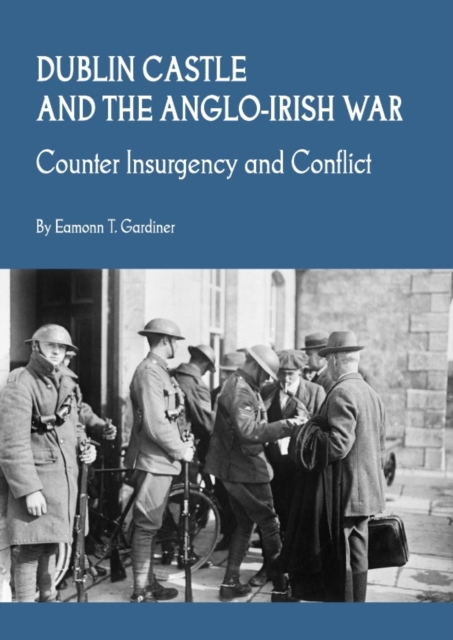
Dublin Castle and the Anglo-Irish War
The Irish War of Independence is still regarded as a conflict that is both enigmatic and emotive in content; it transformed the British imperial dream into a nightmare and was to shape the foreign and domestic agendas of two countries for nearly a century. This book seeks to examine the reasons and ask the hard questions to determine why the British state was unable to pour oil on troubled Irish waters and put Home Rule to bed and how that inability was left to fester. It examines in detai.
eBook

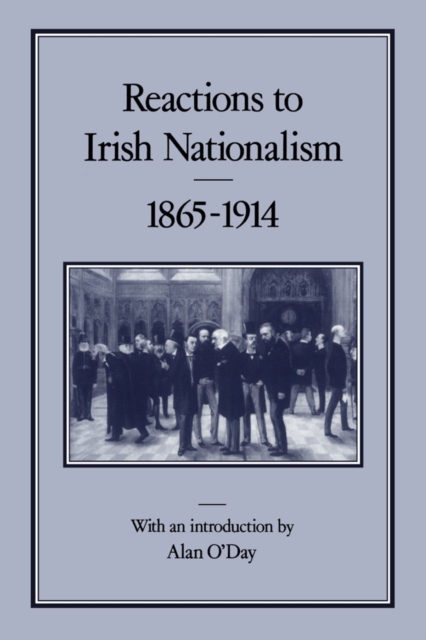
Reactions to Irish nationalism
From the mid-1860s to 1914 the Irish problem was frequently the prime issue in British politics. Quantitatively it absorbed more time and energy than any other question. There was little about Ireland which was not aired at length in the press, in Parliament and at the dinner tables of the British political elite. Fenianism obsessed British minds at the beginning of the period while at the end it seemed all too possible that Irish home rule would spark off the largest civil disruption in the British Isles since the seventeenth century. Throughout the late Victorian and Edwardian eras Ireland never drifted far from political consciousness. The importance of the Irish question in modern British history is undeniable. It remains a staple of schools and university history syllabuses. For many William Gladstone's long career, most of which had little connection with Ireland, was bound up with his mission to pacify the Emerald Isle. Charles Stewart Parnell, the Protestant nationalist who guided an essentially Catholic movement so triumphantly, has inspired the best in poetry and the worst of Hollywood. The Irish problem, understandably, has continued to excite interest and passion beyond any other issue of the time. Its ramifications are with us even today. Failure to resolve the Irish problem by 1914 left a bitter legacy and was a major factor in giving birth to the contemporary Northern Ireland violence. That the Irish question played so considerable a part in later nineteenth and early twentieth century Britain is at initial glance very curious. Ireland was a small, relatively poor backwater on the fringe of the British Isles and western Europe. It possessed few significant resources and had little intrinsic importance. Scotland and Wales, lands of infinitely more value to Britain, attracted little concern by comparison though both had grievances and aspirations similar to those in Ireland. Moreover, neither the industrial workers of Britain's cities or the agricultural classes of the countryside were given the consideration devoted to the humblest of Ireland's Catholic peasantry. Ireland's centrality is explicable in three principle ways. First, there was a range of outstanding Irish grievances which public opinion had been educated to understand demanded attention if the Catholics of the country were to consent freely to be part of a unified kingdom. Certain issues, then, were ripe for legislation. Secondly, a movement emerged which was able to galvanise the Catholic masses. It also proved effective in keeping Ireland to the fore in British life over an extended time.
eBook


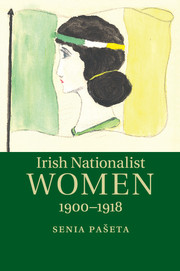
Irish Nationalist Women, 1900–1918
This is a major new history of the experiences and activities of Irish nationalist women in the early twentieth century, from learning and buying Irish to participating in armed revolt. Using memoirs, reminiscences, letters and diaries, Senia Pašeta explores the question of what it meant to be a female nationalist in this volatile period, revealing how Irish women formed nationalist, cultural and feminist groups of their own as well as how they influenced broader political developments. She shows that women's involvement with Irish nationalism was intimately bound up with the suffrage movement as feminism offered an important framework for women's political activity. She covers the full range of women's nationalist activism from constitutional nationalism to republicanism, beginning in 1900 with the foundation of Inghinidhe na hÉireann (Daughters of Ireland) and ending in 1918 with the enfranchisement of women, the collapse of the Irish Party and the ascendancy of Sinn Fein.
eBook