
Catalogue Search | MBRL


Are you sure you want to remove the book from the shelf?

{{itemTitle}}
109
result(s) for
"Irian Jaya"
Sort by:
The United Nations and the Indonesian Takeover of West Papua, 1962-1969
This book examines the role of the international community in the handover of the Dutch colony of West Papua/Irian Jaya to Indonesia in the 1960s and questions whether or not the West Papuan people ever genuinely exercised the right to self-determination guaranteed to them in the UN-brokered Dutch/Indonesian agreement of 1962. Indonesian, Dutch, US, Soviet, Australian and British involvement is discussed, but particular emphasis is given to the central part played by the United Nations in the implementation of this agreement. As guarantor, the UN temporarily took over the territory's administration from the Dutch before transferring control to Indonesia in 1963. After five years of Indonesian rule, a UN team returned to West Papua to monitor and endorse a controversial act of self-determination that resulted in a unanimous vote by 1022 Papuan 'representatives' to reject independence. Despite this, the issue is still very much alive today as a crisis-hit Indonesia faces continued armed rebellion and growing calls for freedom in West Papua.
eBook

Culture and cognition in the Acheulian industry: a case study from Gesher Benot Yaʿaqov
The Acheulian presence in the Dead Sea Rift and its environs is characterized by the discontinuity of its cultural manifestations. Nevertheless, the long stratigraphic sequences of the Acheulian Technocomplex provide a unique opportunity for synergetic examination along a temporal trajectory. Hominin cognitive and cultural behaviour are studied at Gesher Benot Yaʿaqov through analyses of lithic, palaeontological and palaeobotanical assemblages, as well as the Early–Middle Pleistocene environment, ecology and climate. The study attempts to reconstruct reduction sequences of some major artefact groups at the site, which include raw material acquisition, production, technology, typology, usage and discard. Experimental archaeology illustrates artefact mobility on the palaeo-landscape. Strategies of biomass-exploitation are studied in detail, with other aspects yielding additional information on hominin subsistence and adaptive responses to their environment. The cultural marker of fire and the spatial association of selected categories of finds are integrated in the general synthesis, allowing reconstruction of the cultural and cognitive realm of Acheulian hominins. The synthesis attempts to reassess the abilities, social structure, subsistence and adaptability to the changing environment of hominins in the Levantine Corridor.
Journal Article
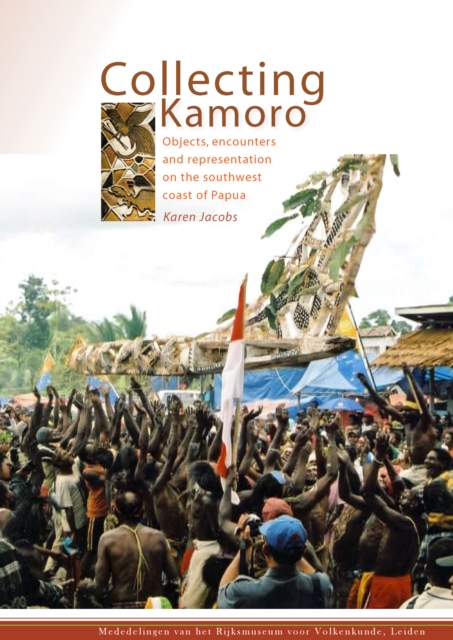
Collecting Kamoro : objects, encounters and representation in Papua (Western New Guinea)
The story of ethnographic collecting is one of cross-cultural encounters. This book focuses on collecting encounters in the Kamoro region of Papua from the earliest collections made in 1828 until 2011. Exploring the links between representation and collecting, the author focuses on the creative and pragmatic agency of Kamora people in these collecting encounters.
eBook

Paradise Betrayed
In the third Quarterly Essay for 2002 John Martinkus details what is being done to West Papua by its Indonesian overlords. He illustrates how those who seek independence are killed and tortured for their cause. There is now no one like the Papuan leader Theys Eluay, murdered in 2001 by the Indonesian military, and a campaign of death and terror has been launched on those who raise the Morning Star flag. Martinkus shows how the wealth of the Freeport mine underpins a regimen of repression and he reports on the rise of Laskar Jihad, the imported Islamic extremists who spread fear inthe name of Indonesian domination. In a powerful, groundbreaking piece of reportage, Martinkus shows how West Papua is another East Timor waiting to happen and how this is made possible by the indifference of everyone from the United Nations to the Australian government. \"John Martinkus' narrative is as engrossing as it is appalling. It is full of menace and madness and the smell of death.\" -Peter Craven, Introduction \"The violence in West Papua today ... is being orchestrated by the same figures in the Indonesian military who were behind the events in East Timor ... the whole repressive network of the Indonesian military that laid [it] waste.\" -John Martinkus, Paradise Betrayed.
eBook


From 'Stone-Age' to 'Real-Time'
There are probably no other people on earth to whom the image of the ‘stone-age’ is so persistently attached than the inhabitants of the island of New Guinea, which is divided into independent Papua New Guinea and the western part of the island, known today as Papua and West Papua. From ‘Stone-Age’ to ‘Real-Time’ examines the forms of agency, frictions and anxieties the current moment generates in West Papua, where the persistent ‘stone-age’ image meets the practices and ideologies of the ‘real-time’ – a popular expression referring to immediate digital communication. The volume is thus essentially occupied with discourses of time and space and how they inform questions of hierarchy and possibilities for equality. Papuans are increasingly mobile, and seeking to rework inherited ideas, institutions and technologies, while also coming up against palpable limits on what can be imagined or achieved, secured or defended. This volume investigates some of these trajectories for the cultural logics and social or political structures that shape them. The chapters are highly ethnographic, based on in-depth research conducted in diverse spaces within and beyond Papua. These contributions explore topics ranging from hip hop to HIV/ AIDS to historicity, filling much-needed conceptual and ethnographic lacunae in the study of West Papua.
eBook

The Floodplain Forests of the Mamberamo Basin, Papua, Indonesia (Western New Guinea): Vegetation, Soils, and Local Use
New Guinea is the world’s largest, most speciose, and most culturally rich tropical island, and the little-studied Mamberamo Basin of Papua (Indonesian New Guinea) is recognised among the region’s most-important areas for biological diversity. Here, we examined the floodplain forests in the indigenous territory of Papasena, within the Mamberamo-Foja Wildlife Reserve in the Mamberamo Basin. As part of a training activity with local researchers, students, and civil servants, and with the permission and assistance of the local people, we employed various methods including the field surveys detailed here. We used variable-area tree plots, transects for non-trees and soil sampling, and local informants to document 17 plots: four in old-growth dryland forest, five in old-growth swamp forests (two seasonally flooded and three permanently wet including one dominated by sago, Metroxylon sagu Rottb.), five in secondary forest (fallows), and three in gardens (two in swamps and one on dryland). In total, we measured 475 trees over 10 cm in diameter at 1.3 m (dbh). The swamp forests had high local basal areas (highest value 45.1 m2 ha−1) but relatively low statures (20 m but with emergent trees over 40 m). In total, 422 morphospecies from 247 genera and 89 different families were distinguished. These included 138 tree species and 284 non-tree plant species. A quarter (105) of the morphospecies lacked species-level identifications. The woody families Rubiaceae, Araceae, Moraceae, and Euphorbiaceae were especially diverse, with 20 or more morphospecies each. Tree richness was highest in dryland forest (plot 7 having 28 species in 40 stems over 10 cm dbh) with more variation in the flooded forests. Non-tree vegetation showed similar patterns ranging from 65 species in one 40-by-5 m primary forest plot to just 5 in one seasonally flooded forest plot. The local people identified many plants as useful. Among trees, at least 59 species were useful for construction (the most common use), while, for non-trees, medicinal uses were most frequent. Inceptisols dominated (12 plots), followed by Ultisols and Entisols (3 and 2 plots, respectively). Drainage appeared poor and nutrient availability low, while land-suitability criteria implied little potential for crops aside from sago. We discuss the implication of local practises and more recent developments that may threaten the conservation of these floodplain systems. We underline the key role of local people in the oversight and protection of these ecosystems.
Journal Article

Wildmeat or Bushmeat? Subsistence Hunting and Commercial Harvesting in Papua (West New Guinea), Indonesia
It is well known that wild game provides a significant proportion of the dietary protein of the indigenous people of the eastern half of New Guinea (PNG), but almost nothing is known of its importance in the western half (the Indonesian province of Papua or Irian Jaya). We quantified hunting effort, harvest rates and wild meat consumption and sale in the Jayapura region of north-east Papua through interviews with 147 hunters from 21 villages and meal surveys in 93 households. Ten species of mammals, seven species of birds and at least two species of reptiles were harvested in our study area, but the introduced wild pig and rusa deer were the major target species. Hunting in our study area has shifted from a purely subsistence activity towards a more commercial form at least partly due to the emergence of markets created by Indonesian transmigrants. Although the hunting of non-indigenous and certain native species might be sustainable, the maintenance of populations of large threatened species will require sensitive management.
Journal Article

Diplycosia papuana (Ericaceae: Vaccinioideae: Gaultherieae): a new endemic species from central New Guinea
Diplycosia papuana (Ericaceae: Vaccinioideae: Gaultherieae), a new endemic species from central New Guinea, is described and illustrated here. Notes on the distribution, ecology and conservation status of the new species, as well as a consideration of closely related species, are provided.
Journal Article

Cherax (Astaconephrops) pulcher, a new species of freshwater crayfish (Crustacea, Decapoda, Parastacidae) from the Kepala Burung (Vogelkop) Peninsula, Irian Jaya (West Papua), Indonesia
A new species, Cherax (Astaconephrops) pulchersp. n., from Hoa Creek, close to the village Teminabuan in the southern-central part of the Kepala Burung (Vogelkop) Peninsula, West Papua, Indonesia, is described, figured and compared with the morphologically closest species, Cheraxboesemani Lukhaup & Pekny, 2008.
Journal Article