
Catalogue Search | MBRL


Are you sure you want to remove the book from the shelf?

{{itemTitle}}
291
result(s) for
"Irish Free State"
Sort by:
Manuscript recipe books as archaeological objects
During the mid- to late seventeenth century, women in Irish houses from elite backgrounds started to collect recipes, which they recorded in domestic manuscripts.While these manuscripts were made elsewhere at an earlier date, they were an almost entirely new arrival to Ireland in this period, and their sudden proliferation said much about changes.
eBook

The evolving role of national parliaments in the European Union
The role of national parliaments in the European Union (EU) has developed considerably over time. This book focuses on one parliament as a case study in this regard: the national parliament of Ireland, the Oireachtas. The basic structure of that parliament is modelled on that of the United Kingdom. Like the United Kingdom, Ireland joined the then European Communities on 1 January 1973. Within a relatively short period from the date of Ireland's joining the European Economic Community (EEC) in 1973, it became clear that major structural change to the Communities would be needed if the EEC were ever to fulfil its potential. The book examines the initial adaptations of its parliament to European integration and how Ireland's domestic parliamentary accommodation of membership slowly changed over time. It focuses on the considerable impact on domestic parliamentary arrangements of the recent banking and foreign debt crises and of the Treaty of Lisbon. An assessment of the role of the Oireachtas in European law and policy during the lifetimes of the 30th Dail (2007-11) and the 31st Dail (2011-16) follows. The book discusses the formation of the Joint Oireachtas Committee on European Union Affairs, which held its first meeting in private on 19 July 2016, and its first public meeting on 7 September. However, Ireland's position as a \"slow adaptor\" to European integration has meant that the Oireachtas has had more ground to make up than many other legislatures.
eBook

Public Diplomacy in Ireland and Japan
Public diplomacy enables private citizens to be involved in international relations either through initiatives sponsored by governments or through direct people-to-people contacts in areas such as culture, business, education, tourism and sport. Public Diplomacy in Ireland and Japan traces the evolution of this growing branch of diplomacy and examines the role it has played in the foreign policies of Ireland and Japan, and in their bilateral relationship. It concludes that public diplomacy has contributed significantly to strengthening the links between the two countries.
eBook
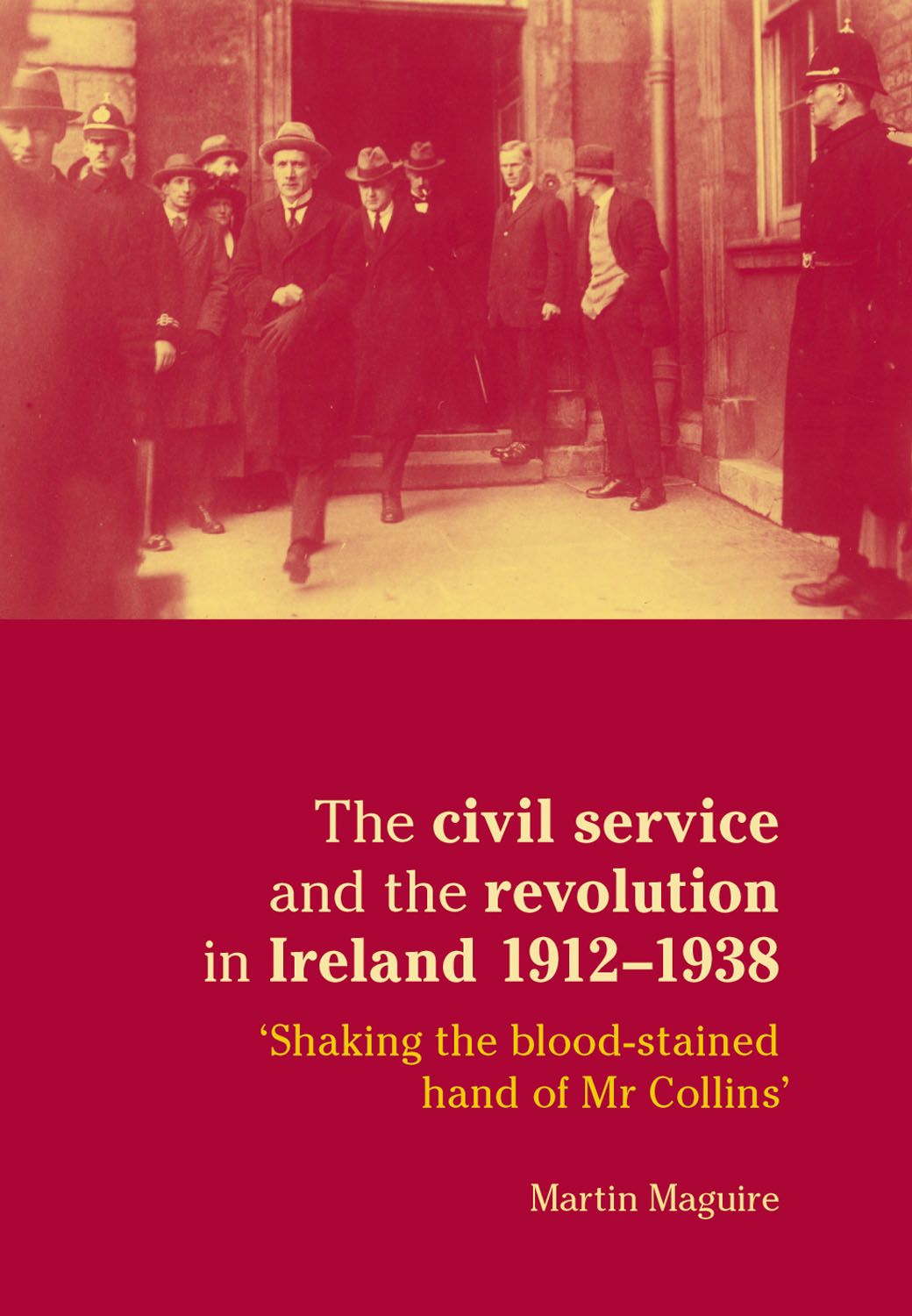
The civil service and the revolution in Ireland 1912–1938
This book is a history of the Irish civil service and its response to revolutionary changes in the State. It examines the response of the civil service to the threat of partition, World War, the emergence of the revolutionary forces of Dáil Éireann and the IRA through to the Civil War and the Irish Free State. Questioning the orthodox interpretation of evolution rather than revolution in the administration of the State it throws new light on civil service organization in British-ruled Ireland, the process whereby Northern Ireland came into existence, the Dáil Éireann administration in the War of Independence, and civil service attitudes to the new Irish Free State.Based on a wide range of new sources, the book is of interest to undergraduate and postgraduate students of Irish, Imperial and Commonwealth history and of post-colonial, governance and political studies as well as a reader with an interest in the role of the State in the process of decolonisation in the 20th century.
eBook
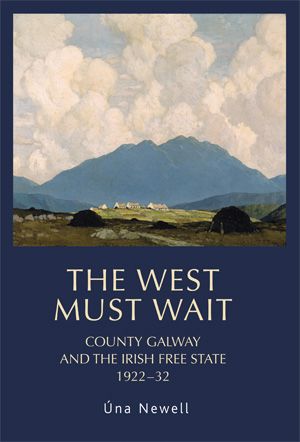
The West must wait
The West must wait presents a new perspective on the development of the Irish Free State. It extends the regional historical debate beyond the Irish revolution and raises a series of challenging questions about post-civil war society in Ireland.Through a detailed examination of key local themes – land, poverty, politics, emigration, the status of the Irish language, the influence of radical republicans and the authority of the Catholic Church – it offers a probing analysis of the socio-political realities of life in the new state.This book opens up a new dimension by providing a rural contrast to the Dublin-centred views of Irish politics. Significantly, it reveals the level of deprivation in local Free State society with which the government had to confront in the west. Rigorously researched, it explores the disconnect between the perceptions of what independence would deliver and what was achieved by the incumbent Cumann na nGaedheal administration.
eBook

Black Abolitionists in Ireland
The story of the anti-slavery movement in Ireland is little known, yet when Frederick Douglass visited the country in 1845, he described Irish abolitionists as the most ‘ardent’ that he had ever encountered. Moreover, their involvement proved to be an important factor in ending the slave trade, and later slavery, in both the British Empire and in America.
While Frederick Douglass remains the most renowned black abolitionist to visit Ireland, he was not the only one. This publication traces the stories of ten black abolitionists, including Douglass, who travelled to Ireland in the decades before the American Civil War, to win support for their cause. It opens with former slave, Olaudah Equiano, kidnapped as a boy from his home in Africa, and who was hosted by the United Irishmen in the 1790s; it closes with the redoubtable Sarah Parker Remond, who visited Ireland in 1859 and chose never to return to America. The stories of these ten men and women, and their interactions with Ireland, are diverse and remarkable.
eBook

Black Abolitionists in Ireland
Building on the narratives explored in volume one, this publication recovers the story of a further seven Black visitors to Ireland in the decades prior to the American Civil War.
eBook

Women, writing, and language in early modern Ireland
This book examines writing in English, Irish, and Spanish by women living in Ireland and by Irish women living on the continent between the years 1574 and 1676. This was a tumultuous period of political, religious, and linguistic contestation that encompassed the key power‐struggles of early modern Ireland. This study brings to light the ways in which women contributed; they strove to be heard and to make sense of their situations, forging space for their voices in complex ways and engaging with native and new language‐traditions. The book investigates the genres in which women wrote: poetry, nuns' writing, petition‐letters, depositions, biography, and autobiography. It argues for a complex understanding of authorial agency that centres on the act of creating or composing a text, which does not necessarily equate with the physical act of writing. The Irish, English, and European contexts for women's production of texts are identified and assessed. The literary traditions and languages of the different communities living on the island are juxtaposed in order to show how identities were shaped and defined in relation to each other. The book elucidates the social, political, and economic imperatives for women's writing, examines the ways in which women characterized female composition, and describes an extensive range of cross‐cultural, multilingual activity.
eBook

Burning the Big House
The gripping story of the tumultuous destruction of the Irish country house, spanning the revolutionary years of 1912 to 1923 During the Irish Revolution nearly three hundred country houses were burned to the ground. These \"Big Houses\" were powerful symbols of conquest, plantation, and colonial oppression, and were caught up in the struggle for independence and the conflict between the aristocracy and those demanding access to more land. Stripped of their most important artifacts, most of the houses were never rebuilt and ruins such as Summerhill stood like ghostly figures for generations to come. Terence Dooley offers a unique perspective on the Irish Revolution, exploring the struggles over land, the impact of the Great War, and why the country mansions of the landed class became such a symbolic target for republicans throughout period. Dooley details the shockingly sudden acts of occupation and destruction-including soldiers using a Rembrandt as a dart board-and evokes the exhilaration felt by the revolutionaries at seizing these grand houses and visibly overturning the established order.
eBook

Ireland, West Germany and the New Europe, 1949-73
A pioneering study of the seminal period from the declaration of the Republic of Ireland, and the foundation of the Federal Republic of Germany (FRG), in 1949 until Ireland and Britain entered the EEC in 1973. Draws on unexploited original sources from Ireland and Germany. Dramatically re-envisions the foundations of contemporary Ireland.
eBook