
Catalogue Search | MBRL


Are you sure you want to remove the book from the shelf?

{{itemTitle}}
708
result(s) for
"Irish diaspora"
Sort by:

Slow (Bio)archaeology: Recovering Stories of Irish Immigrant Lives in the Huntington Anatomical Collection
I consider the power of “slow archaeology” in a study of the Huntington Anatomical Collection, focusing on Irish immigrants who lived and worked in New York City over the course of the 19th and early 20th centuries. I argue that normative bioarchaeological categories and methods cannot fully account for the varied life histories of persons in the collection. Instead, I turn to the tenets of slow archaeology to move between scales of analysis and material traces. With a slow approach, embodied experiences of labor are highlighted and discourses about laborers are challenged. A slow approach seeks to recover the lived experiences of individuals exploited in life and made anonymous in death and is one potential way toward a more ethical bioarchaeology.
Journal Article

Something borrowed: women, Limerick lace and community heirlooms in the Australian Irish diaspora
Using the Limerick lace veil as a case study, this article argues that Irish female religious orders used Catholic materiality to maintain connections between former students and the wider Irish Catholic community within Australia. The ownership, manufacture and consumption of Limerick lace was predominantly shaped by women in Ireland and in Australia. Fashion provided a particularly feminine way of engaging with ethnic identity, separate from the male-dominated pulpit and the clubs of ethnic associational culture. By moving our focus to fashion choices, we can shift our exploration of religious and social power in the Irish Catholic Church to encompass more fully the diverse influences on ethnic and religious identity creation. Examining the practices of religious orders and how they engaged with the material culture of faith and ethnicity, this article presents a new perspective on the Irish Catholic diaspora which is currently missing from scholarship on the 'spiritual empire' during the nineteenth and twentieth centuries.
Journal Article

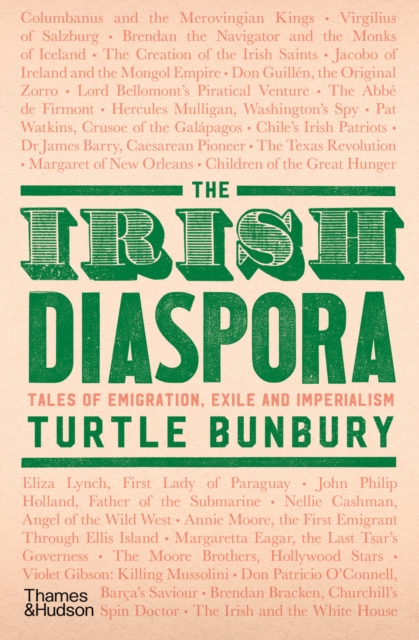
The Irish Diaspora
The Irish have always been a travelling people. In the centuries after the fall of Rome, Irish missionaries carried the word of Christianity throughout Europe, while soldiers and mariners from across the land ventured overseas in all directions. Since 1800 an estimated 10 million people have left the Irish shores and today more than 80 million people worldwide claim Irish descent. The advent of the British Empire ignited a slow but extraordinary exodus from Ireland. The pioneering explorers of the Tudor Age were soon overtaken in number by religious refugees, the Wild Geese who opted to live outside of the Protestant state and to take their chances in the Spanish or French empires, or in America. The Irish played a pivotal role in the foundation of the United States of America, just as they would in the Civil War that followed eighty-five years later. The lives of Irish emigrants wove in and out of the major events of global history, including the Abbe Edgeworth, confessor to King Louis XVI at his execution during the French Revolution; Margaretta Eagar, governess to the daughters of Nicholas II, the last Tsar of Russia; and William Lamport, who travelled from County Wexford to Central America, and became Don Guillen, a martyr for Mexican independence. Turtle Bunbury explores the lives of those men and women, great and otherwise, whose journeys whether driven by faith, a desire for riches and adventure, or purely for survival have left their mark on the world.
eBook

Tales from the Irish diaspora during COVID-19: Prompting a future research agenda for global mobility
The COVID-19 global pandemic raises fundamental questions about the future of global mobility. This paper considers publicly posted blog posts from members of the Irish diaspora during the early months of the global pandemic in 2020. Using real-time self-reporting blogs permitted an unobtrusive snapshot into the living experiences of members of the Irish diaspora during this time. Content analysis was undertaken on a total of fifty-nine individual blogs, and key themes across the blogs are explored. The primary theme of technology as both enabler and inhibiter is unpacked, in relation to global communication, work-life balance and working from home – anywhere in the world. A research agenda pertaining to the future of global mobility is proposed.
Journal Article

Cultural Representations in Irish Immigrants and Their Descendants in \Tréboles del Sur\ by Juan José Delaney
Prospects of better living conditions attracted thousands of Irish emigrants to Argentina between 1830 and 1930. In a hopeful attempt to redefine their lives, the newcomers contributed to the formation of the identity and the progress of our country. Although they were far away from their homeland, most Irish-born people kept strong ties with their land and relatives back in Ireland. Tréboles del Sur (2014 [1994]) by contemporary Irish-Argentine writer Juan José Delaney, is a collection of short stories which recount the life of Irish immigrants in Argentina and their descendants, ranging from the 1870s until 1983. This article aims at analyzing the representation of cultural aspects in those Irish immigrants. Stuart Hall’s concepts of representation, cultural identity and diasporic subjects, Raymond Williams’ concept of culture and the notion of cultural hybridity introduced by García Canclini are taken into account for the study. Our analysis is restricted to some of the fictional characters in Delaney’s work. The immigrants’ preservation of the links with their country of origin proves to be highly significant while forging bonds in a new environment
Journal Article

Diaspora and Comparison: The Global Irish as a Case Study
Kenny evaluates current scholarly efforts to put migration in global context through surveying studies of Irish immigration. In the nineteenth century, Catholic peasantry predisposed the Irish to regard emigration as involuntary banishment rather than voluntary enterprise or self-improvement.
Journal Article

“A Clannish Pride”: Eugene O'Neill's Eventual Embrace of His Irish Heritage
The plays of Eugene O'Neill dramatize acts of loyalty and honesty among members of Irish American families, from the early works (The Straw and Beyond the Horizon) to the last plays (Long Day's Journey Into Night, A Touch of the Poet, and A Moon for the Misbegotten). These virtues were not only featured in O'Neill's canon but also lived in his personal relations with kith and kin. O'Neill's embrace of his Irish heritage developed and matured over the course of several decades, from his teen years until his mid-fifties. He befriended fellow Irish writers O'Casey and Yeats and became a staunch supporter of the Irish Free State and eventually the Republic of Ireland. Over this long life's journey, O'Neill came to understand and believe that those key character traits were passed on to him via his Irish heritage, thus, encouraging him to embrace his “Irishness” with a certain “clannish pride.”
Journal Article