
Catalogue Search | MBRL


Are you sure you want to remove the book from the shelf?

{{itemTitle}}
227
result(s) for
"Irish question."
Sort by:


The Eternal Paddy
In
The Eternal Paddy , Michael de Nie examines anti-Irish prejudice, Anglo-Irish relations, and the construction of Irish and British identities in nineteenth-century Britain. This book provides a new, more inclusive approach to the study of Irish identity as perceived by Britons and demonstrates that ideas of race were inextricably connected with class concerns and religious prejudice in popular views of both peoples. De Nie suggests that while traditional anti-Irish stereotypes were fundamental to British views of Ireland, equally important were a collection of sympathetic discourses and a self-awareness of British prejudice. In the pages of the British newspaper press, this dialogue created a deep ambivalence about the Irish people, an ambivalence that allowed most Britons to assume that the root of Ireland’s difficulties lay in its Irishness. Drawing on more than ninety newspapers published in England, Scotland, and Wales,
The Eternal Paddy offers the first major detailed analysis of British press coverage of Ireland over the course of the nineteenth century. This book traces the evolution of popular understandings and proposed solutions to the \"Irish question,\" focusing particularly on the interrelationship between the press, the public, and the politicians. The work also engages with ongoing studies of imperialism and British identity, exploring the role of Catholic Ireland in British perceptions of their own identity and their empire.
eBook

Respectability and reform : Irish American women's activism, 1880-1920
\"This project offers a national study of the different agendas and strategies pursued by Irish American women in the Gilded Age and Progressive Era, focusing on their roles in diaspora nationalism, the labor movement, and the suffrage movement.\"--Provided by publisher.
Book
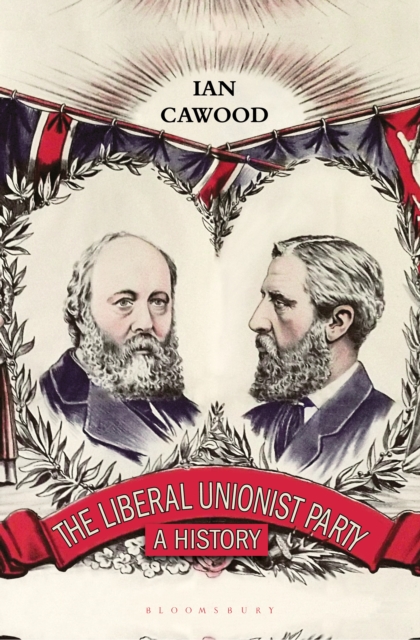
The Liberal Unionist Party
The Liberal Unionist party was one of the shortest-lived political parties in British history. It was formed in 1886 by a faction of the Liberal party, led by Lord Hartington, which opposed Irish home rule. In 1895, it entered into a coalition government with the Conservative party and in 1912, now under the leadership of Joseph Chamberlain, it amalgamated with the Conservatives. Ian Cawood here uses previously unpublished archival material to provide the first complete study of the Liberal Unionist party. He argues that the party was a genuinely successful political movement with widespread activist and popular support which resulted in the development of an authentic Liberal Unionist culture across Britain in the mid-1890s. The issues which this book explores are central to an understanding of the development of the twentieth century Conservative party, the emergence of a ‘national’ political culture, and the problems, both organisational and ideological, of a sustained period of coalition in the British parliamentary system.
eBook


Irishness and Womanhood in Nineteenth-Century British Writing
In The Wild Irish Girl, the powerful Irish heroine's marriage to a heroic Englishman symbolizes the Anglo-Irish novelist Lady Morgan's re-imagining of the relationship between Ireland and Britain and between men and women. Using this most influential of pro-union novels as his point of departure, Thomas J. Tracy argues that nineteenth-century debates over what constitutes British national identity often revolved around representations of Irishness, especially Irish womanhood. He maps out the genealogy of this development, from Edgeworth's Castle Rackrent through Trollope's Irish novels, focusing on the pivotal period from 1806 through the 1870s. Tracy's model enables him to elaborate the ways in which gender ideals are specifically contested in fiction, the discourses of political debate and social reform, and the popular press, for the purpose of defining not only the place of the Irish in the union with Great Britain, but the nature of Britishness itself.
eBook


Ireland : the politics of enmity, 1789-2006
This book is an innovative interpretation of the history of Anglo–Irish relations from 1789 right to the present day. The French Revolution had an electrifying impact on Irish society, with the 1790s seeing the birth of modern Irish republicanism and Orangeism. This decade also saw the political integration between Ireland and the British elite, such as with Pitt and Castlereagh. The Irish, who were strongly influenced by Edmund Burke's freedom philosophies, argued that Britain's strategic interests were best served by a policy of Catholic emancipation. Britain's failure to achieve this objective — dramatised by the horrifying and tragic Irish famine of 1846–50 — set the context for the emergence of a popular mass nationalism. Eventually, the Fenian, Parnell, and Sinn Fein movements expelled the British from most of the island. This book reassesses all the key leaders of Irish nationalism, alongside key British political leaders — from Tone, Parnell and de Valera, to Haughey, Peel and Blair. It evaluates the changing ideological passions of the modern Irish question, while examining the changing economical and social worlds in London, Dublin and Belfast, all in one coherent analysis.
eBook

These divided isles : Britain and Ireland, past and future
Ireland is Britain's closest neighbour - the sea crossing from Scotland measures only 12 miles. It was also its first captive in what became Britain's empire. The two nation's stories have been intertwined since Anglo-Norman invaders crossed the Irish Sea during the 12th century. 'These Troubled Isles' tells the extraordinary history of the past century in this tumultuous relationship, from the Anglo-Irish treaty of 1922 to the present day. This is a tale of deep division between Catholic nationalism and Protestant unionism, of wars and terrorist violence, and of occasional moments of great courage on the part of British and Irish leaders.
BOOK

The Fenians
Aspirations of social mobility and anti-Catholic discrimination were the lifeblood of subversive opposition to British rule in Ireland during the mid-nineteenth century. Refugees of the Great Famine who congregated in ethnic enclaves in North America and the United Kingdom supported the militant Fenian Brotherhood and its Dublin-based counterpart, the Irish Republican Brotherhood (IRB), in hopes of one day returning to an independent homeland. Despite lackluster leadership, the movement was briefly a credible security threat which impacted the history of nations on both sides of the Atlantic. Inspired by the failed Young Ireland insurrection of 1848 and other nationalist movements on the European continent, the Fenian Brotherhood and the IRB (collectively known as the Fenians) surmised that insurrection was the only path to Irish freedom. By 1865, the Fenians had filled their ranks with battle-tested Irish expatriate veterans of the Union and Confederate armies who were anxious to liberate Ireland. Lofty Fenian ambitions were ultimately compromised by several factors including United States government opposition and the resolution of volunteer Canadian militias who repelled multiple Fenian incursions into New Brunswick, Quebec, Ontario, and Manitoba. The Fenian legacy is thus multi-faceted. It was a mildly-threatening source of nationalist pride for discouraged Irish expatriates until the organization fulfilled its pledge to violently attack British soldiers and subjects. It also encouraged the confederation of Canadian provinces under the 1867 Dominion Act. In this book, Patrick Steward and Bryan McGovern present the first holistic, multi-national study of the Fenian movement. While utilizing a vast array of previously untapped primary sources, the authors uncover the socio-economic roots of Irish nationalist behavior at the height of the Victorian Period. Concurrently, they trace the progression of Fenian ideals in the grassroots of Young Ireland to its de facto collapse in 1870s. In doing so, the authors change the perception of the Fenians from fanatics who aimlessly attempted to free their homeland to idealists who believed in their cause and fought with a physical and rhetorical force that was not nonsensical and hopeless as some previous accounts have suggested. PATRICK STEWARD works in the Mayo Clinic Development Office in Rochester, Minnesota. He obtained a Ph.D. in Irish History at University of Missouri under the direction of Kerby Miller. Patrick additionally holds two degrees from Tufts University and he was a strategic intelligence analyst at the Drug Enforcement Administration in Washington, D.C. early in his professional career. BRYAN MCGOVERN is an associate professor of history at Kennesaw State University in Kennesaw, Georgia. He is author of the widely praised 2009 book John Mitchel, Irish Nationalist, Southern Secessionist and has written various articles, chapters, and book reviews on Irish and Irish-American nationalism.
eBook