
Catalogue Search | MBRL


Are you sure you want to remove the book from the shelf?

{{itemTitle}}
19,908
result(s) for
"Irish studies"
Sort by:


Public Diplomacy in Ireland and Japan
Public diplomacy enables private citizens to be involved in international relations either through initiatives sponsored by governments or through direct people-to-people contacts in areas such as culture, business, education, tourism and sport. Public Diplomacy in Ireland and Japan traces the evolution of this growing branch of diplomacy and examines the role it has played in the foreign policies of Ireland and Japan, and in their bilateral relationship. It concludes that public diplomacy has contributed significantly to strengthening the links between the two countries.
eBook

The Victorian novel and masculinity
\"'The old ideal of Manhood has grown obsolete,' wrote Thomas Carlyle in 1831, 'and the new is still invisible to us.' The essays in this volume explore the way Victorian novelists tried to answer the question of what it meant to 'be a man': how manhood was learned, sustained, broken, or restored, and how the idea of the manly was shaped by class, schooling, region and religion, and by scientific and medical debate. Topics covered include the playful subversion of gender roles in the early writings of Charlotte Brontèe; changing patterns of working class masculinity in London and Manchester; Dickens and the nurturing male; boyhood and girlhood in Eliot's The Mill on the Floss; the challenge to patriarchy in sensation fiction; manhood, imperialism and the adventure novel; masculinity and aestheticism; Hardy's reluctant, failed, or damaged men; and Conrad's studies of men isolated or divided against themselves\"-- Provided by publisher.
Book

Scéal Ghael-Linn
Gael Linn celebrates its sixtieth birthday in 2013. To mark the occasion, this book describes one of the most imaginative and innovative organisations in Irish social, cultural and business life. Beginning with Linnte Ghael Linn, pools based on Gaelic games, Gael-Linn later encompassed such activities as bingo, various forms of industry, publishing, the music business, education and film making to name but a few
eBook

Words like daggers : violent female speech in early modern England
\"Dramatic and documentary narratives about aggressive and garrulous women often cast such women as reckless and ultimately unsuccessful usurpers of cultural authority. Contending narratives, however, sometimes within the same texts, point to the effective subversion and undoing of the normative restrictions of social and gender hierarchies. Words Like Daggers explores the scolding invectives, malevolent curses, and ecstatic prophesies of early modern women as attested to in legal documents, letters, self-narratives, popular pamphlets, ballads, and dramas of the era. Examining the framing and performance of violent female speech between the 1590s and the 1660s, Kirilka Stavreva dismantles the myth of the silent and obedient women who allegedly populated early modern England. Blending gender theory with detailed historical analysis, Words Like Daggers asserts the power of women's language--the power to subvert binaries and destabilize social hierarchies, particularly those of gender, in the early modern era. In the process Stavreva reconstructs the speech acts of individual contentious women, such as the scold Janet Dalton, the witch Alice Samuel, and the Quaker Elizabeth Stirredge. Because the dramatic potential of women's powerful rhetorical performances was recognized not only by victims and witnesses of individual violent speech acts but also by theater professionals, Stavreva also focuses on how the stage, arguably the most influential cultural institution of the Renaissance era, orchestrated and aestheticized women's fighting words and, in so doing, showcased and augmented their cultural significance. \"-- Provided by publisher.
Book

The history of marriage equality in Ireland
Tracing the campaign for marriage equality, this book highlights how this movement and the related referendum result have propelled Ireland from a country perceived as one repressed and controlled by the Catholic church to a country that is now admired as a leader in equality of human rights.
eBook

Modernism, periodicals, and cultural poetics
\"Modernism, Periodicals, and Cultural Poetics addresses how late modernist poetry in Britain tended toward a culturalist expression and importantly how this occurred within the pages of literary periodicals. 'Periodical formations' describe networks of exchange within and between different literary periodicals that condition the types of poetry published and the kinds of poetic discourse that come to predominate. A re-emphasis on periodical production following the publication of Eliot's The Waste Land and culminating with the pre-Movement magazines of the 1940's illustrates a complex and diverse series of debates and negotiations about not only the tradition of English poetry and its role in contemporaneous form, but also how poetry of the period related to the avant-garde trends prominent on the European continent and in America. By focusing on periodical formations, the development of what are now accepted understandings of the period can be better addressed, and certain lasting assumptions can be demythologized\"-- Provided by publisher.
Book

The Templars, the Witch, and the Wild Irish
Early medieval Ireland is remembered as the \"Land of Saints and Scholars,\" due to the distinctive devotion to Christian faith and learning that permeated its culture. As early as the seventh century, however, questions were raised about Irish orthodoxy, primarily concerning Easter observances. Yet heresy trials did not occur in Ireland until significantly later, long after allegations of Irish apostasy from Christianity had sanctioned the English invasion of Ireland. InThe Templars, the Witch, and the Wild Irish, Maeve Brigid Callan analyzes Ireland's medieval heresy trials, which all occurred in the volatile fourteenth century. These include the celebrated case of Alice Kyteler and her associates, prosecuted by Richard de Ledrede, bishop of Ossory, in 1324. This trial marks the dawn of the \"devil-worshipping witch\" in European prosecutions, with Ireland an unexpected birthplace.
Callan divides Ireland's heresy trials into three categories. In the first stand those of the Templars and Philip de Braybrook, whose trial derived from the Templars', brought by their inquisitor against an old rival. Ledrede's prosecutions, against Kyteler and other prominent Anglo-Irish colonists, constitute the second category. The trials of native Irishmen who fell victim to the sort of propaganda that justified the twelfth-century invasion and subsequent colonization of Ireland make up the third. Callan contends that Ireland's trials resulted more from feuds than doctrinal deviance and reveal the range of relations between the English, the Irish, and the Anglo-Irish, and the church's role in these relations; tensions within ecclesiastical hierarchy and between secular and spiritual authority; Ireland's position within its broader European context; and political, cultural, ethnic, and gender concerns in the colony.
Early medieval Ireland is remembered as the \"Land of Saints and Scholars,\" due to the distinctive devotion to Christian faith and learning that permeated its culture. As early as the seventh century, however, questions were raised about Irish orthodoxy, primarily concerning Easter observances. Yet heresy trials did not occur in Ireland until significantly later, long after allegations of Irish apostasy from Christianity had sanctioned the English invasion of Ireland. InThe Templars, the Witch, and the Wild Irish, Maeve Brigid Callan analyzes Ireland's medieval heresy trials, which all occurred in the volatile fourteenth century. These include the celebrated case of Alice Kyteler and her associates, prosecuted by Richard de Ledrede, bishop of Ossory, in 1324. This trial marks the dawn of the \"devil-worshipping witch\" in European prosecutions, with Ireland an unexpected birthplace.Callan divides Ireland's heresy trials into three categories. In the first stand those of the Templars and Philip de Braybrook, whose trial derived from the Templars', brought by their inquisitor against an old rival. Ledrede's prosecutions, against Kyteler and other prominent Anglo-Irish colonists, constitute the second category. The trials of native Irishmen who fell victim to the sort of propaganda that justified the twelfth-century invasion and subsequent colonization of Ireland make up the third. Callan contends that Ireland's trials resulted more from feuds than doctrinal deviance and reveal the range of relations between the English, the Irish, and the Anglo-Irish, and the church's role in these relations; tensions within ecclesiastical hierarchy and between secular and spiritual authority; Ireland's position within its broader European context; and political, cultural, ethnic, and gender concerns in the colony.
eBook
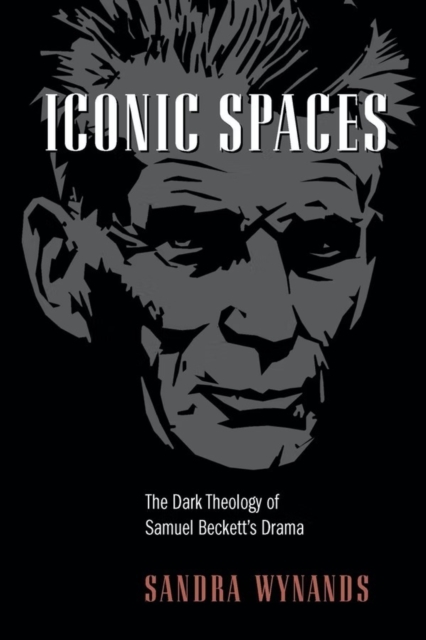
Iconic Spaces
Iconic Spaces looks at Samuel Beckett's mature
theatrical work as a displaced theology of the icon. Sandra
Wynands rejects conventional existentialist or nihilist
interpretations of Beckett's work, arguing instead that beneath
the text, in the depths of language and being, Beckett creates
an absolutely irreducible, transcendent space. She traces a
nondual model of perception and experience through a selection
of Beckett's art-critical and dramatic works, focusing in
particular on four minimalist plays:
Catastrophe, Not I, Quad, and
Film .
Iconic Spaces makes an important contribution to
scholars and students of literature, philosophy, theatre
studies, and religion by giving them an exciting new way of
reading and experiencing Beckett's work.
eBook

No solution
Utilising a wide range of archival correspondence and diaries, this monograph reconstructs the 1974-79 Labour government's policies in Northern Ireland. It covers the collapse of power-sharing in May 1974, the secret dialogue with the Provisional IRA during the 1975 ceasefire, the acquiescence of Labour ministers in continuing indefinite direct rule from Westminster, efforts to mitigate conflict through industrial investment, a major shift in security policy emphasizing the police over the army, the adaptation of republicans to the threat of these new measures and their own adoption of a 'Long War' strategy. In so doing, it sheds light on the challenges faced by British ministers, civil servants, soldiers and policemen and the reasons why the conflict lasted so long. It will be a key text for researchers and students of both British and Northern Irish politics.
eBook