
Catalogue Search | MBRL


Are you sure you want to remove the book from the shelf?

{{itemTitle}}
1,337
result(s) for
"Islam -- 21st century"
Sort by:


Western Muslims and the Future of Islam
In a Western world suddenly acutely interested in Islam, one question has been repeatedly heard above the din: where are the Muslim reformers? As the number of Muslims living in the West grows, the question of what it means to be a Western Muslim becomes increasingly important to the futures of both Islam and the West. While the media are focused on radical Islam, this book claims that a silent revolution is sweeping Islamic communities in the West, as Muslims actively seek ways to live in harmony with their faith within a Western context. French, English, German, and American Muslims—women as well as men—are reshaping their religion into one that is faithful to the principles of Islam, dressed in European and American cultures, and definitively rooted in Western societies. The book's goal is to create an independent Western Islam, anchored not in the traditions of Islamic countries but in the cultural reality of the West. It begins by offering a fresh reading of Islamic sources, interpreting them for a Western context and demonstrating how a new understanding of universal Islamic principles can open the door to integration into Western societies. The author contends that Muslims can—indeed must—be faithful to their principles while participating fully in the civic life of Western secular societies. This book offers a vision of a new Muslim Identity that rejects the idea that Islam must be defined in opposition to the West.
eBook


Modern Islamic Thought in a Radical Age
Among traditionally educated scholars in the Islamic world there is much disagreement on the crises that afflict modern Muslim societies and how best to deal with them, and the debates have grown more urgent since 9/11. Through an analysis of the work of Muhammad Rashid Rida and Yusuf al-Qaradawi in the Arab Middle East and a number of scholars belonging to the Deobandi orientation in colonial and contemporary South Asia, this book examines some of the most important issues facing the Muslim world since the late nineteenth century. These include the challenges to the binding claims of a long-established scholarly consensus, evolving conceptions of the common good, and discourses on religious education, the legal rights of women, social and economic justice and violence and terrorism. This wide-ranging study by a leading scholar provides the depth and the comparative perspective necessary for an understanding of the ferment that characterizes contemporary Islam.
eBook

Contemporary issues in Islam
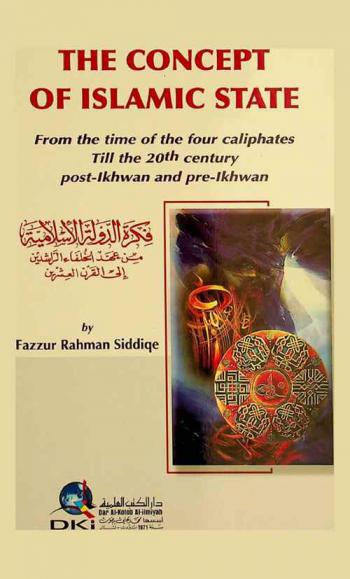
This book deals with certain \"hot-button\" contemporary issues in Islam, including the Shari'a, jihad, the caliphate, women's status, and interfaith relations. Notably, it places the discussion of these topics within a longer historical framework in order to reveal their multiple interpretations and contested applications over time.
eBook

Being a Muslim in the world
\"What does it mean to be a Muslim - in this world, in this deeply transformative time? Hamid Dabashi ask this seminal question anew, in the context of what he proposes is a post-Western world where the \"Islam and the West\" binary is collapsing and where \"the West,\" as a construct, no longer holds the same normative hegemony. Against the grain of more than two hundred years of colonialism and self-alienation, Islam remains not just a world religion but a worldly religion - one that has always been conscious of itself in successive imperial settings. With the rise of European and then American imperial adventures, Muslims have been on the receiving end of other worldly empires that have forced them into a self-alienating dialogue. Dabashi argues that the urgent task facing contemporary Muslims is to bring their worlds to self-consciousness beyond the self-alienating encounter with European colonial modernity and in the context of the new worldliness that Muslims (like all other people) face. This transition requires crafting a new language of critical conversation with Islam and its cosmopolitan heritage - a language that is tuned to the emerging, not the disappearing, world.\"--Publisher's website.
Book

Islamism and Islam
Despite the intense media focus on Muslims and their religion since the tragedy of 9/11, few Western scholars or policymakers today have a clear idea of the distinctions between Islam and the politically based fundamentalist movement known as Islamism. In this important and illuminating book, Bassam Tibi, a senior scholar of Islamic politics, provides a corrective to this dangerous gap in our understanding. He explores the true nature of contemporary Islamism and the essential ways in which it differs from the religious faith of Islam.
Drawing on research in twenty Islamic countries over three decades, Tibi describes Islamism as a political ideology based on a reinvented version of Islamic law. In separate chapters devoted to the major features of Islamism, he discusses the Islamist vision of state order, the centrality of antisemitism in Islamist ideology, Islamism's incompatibility with democracy, the reinvention of jihadism as terrorism, the invented tradition of shari'a law as constitutional order, and the Islamists' confusion of the concepts of authenticity and cultural purity. Tibi's concluding chapter applies elements of Hannah Arendt's theory to identify Islamism as a totalitarian ideology.
eBook

An introduction to Islam in the 21st century
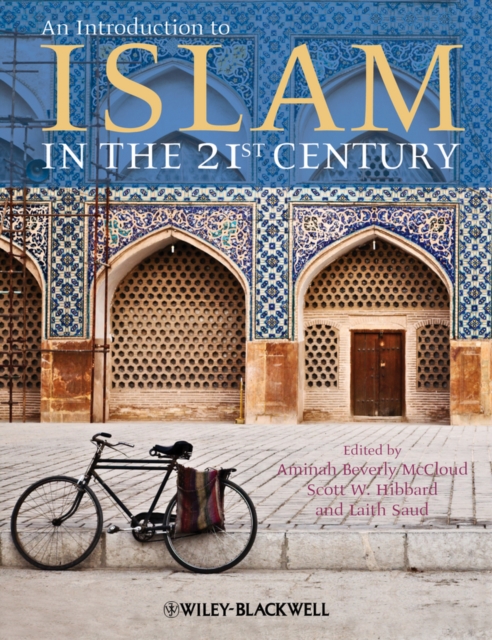
This engaging introduction to Islam examines its lived reality, its worldwide presence, and the variety of beliefs and practices encompassed by the religion. The global perspective uniquely captures the diversity of Islam expressed throughout different countries in the present day. A comprehensive, multi-disciplinary, and global introduction to Islam, covering its history as well as current issues, experiences, and challenges Incorporates key new research on Muslims from a variety of countries across Europe, Latin America, Indonesia, and Malaysia Central Asia Directly addresses controversial issues, including political violence and 'terrorism', anti-western sentiments, and Islamophobia Explores different responses from various Islamic communities to globalizing trends Highlights key patterns within Islamic history that shed light upon the origins and evolution of current movements and thought.
eBook