
Catalogue Search | MBRL


Are you sure you want to remove the book from the shelf?

{{itemTitle}}
20
result(s) for
"Islam Computer network resources."
Sort by:


iMuslims
Exploring the increasing impact of the Internet on Muslims around the world, this book sheds new light on the nature of contemporary Islamic discourse, identity, and community.The Internet has profoundly shaped how both Muslims and non-Muslims perceive Islam and how Islamic societies and networks are evolving and shifting in the twenty-first century, says Gary Bunt. While Islamic society has deep historical patterns of global exchange, the Internet has transformed how many Muslims practice the duties and rituals of Islam. A place of religious instruction may exist solely in the virtual world, for example, or a community may gather only online. Drawing on more than a decade of online research, Bunt shows how social-networking sites, blogs, and other \"cyber-Islamic environments\" have exposed Muslims to new influences outside the traditional spheres of Islamic knowledge and authority. Furthermore, the Internet has dramatically influenced forms of Islamic activism and radicalization, including jihad-oriented campaigns by networks such as al-Qaeda.By surveying the broad spectrum of approaches used to present dimensions of Islamic social, spiritual, and political life on the Internet,iMuslimsencourages diverse understandings of online Islam and of Islam generally.
eBook


Islam in the Digital Age
The Internet is an increasingly important source of information for many people in the Muslim world. Many Muslims in majority and minority contexts rely on the Internet as a primary source of news, information and communication about Islam. As a result, a new media culture is emerging which is having a significant impact on areas of global Muslim consciousness. Post-September 11th, this phenomenon has grown more rapidly than ever.
Gary R. Bunt provides a fascinating account of the issues at stake, identifying two radical new concepts:
Firstly, the emergence of e-jihad ('Electronic Jihad') originating from diverse Muslim perspectives - this is described in its many forms relating to the different definitions of 'jihad', including on-line activism (ranging from promoting militaristic activities to hacking, to co-ordinating peaceful protests) and Muslim expression post 9/11.
Secondly, he discusses religious authority on the Internet - including the concept of on-line fatwas and their influence in diverse settings, and the complexities of conflicting notions of religious authority.
eBook
Islam in the digital age : e-jihad, online fatwas and cyber Islamic environments
The Internet is an increasingly important source of information for many people in the Muslim world. Many Muslims in majority and minority contexts rely on the Internet as a primary source of news, information and communication about Islam. As a result, a new media culture is emerging which is having a significant impact on areas of global Muslim consciousness. Post-September 11th, this phenomenon has grown more rapidly than ever. Gary R. Bunt provides a fascinating account of the issues at stake, identifying two radical new concepts: Firstly, the emergence of e-jihad ('Electronic Jihad') originating from diverse Muslim perspectives - this is described in its many forms relating to the different definitions of 'jihad', including on-line activism (ranging from promoting militaristic activities to hacking, to co-ordinating peaceful protests) and Muslim expression post 9/11. Secondly, he discusses religious authority on the Internet - including the concept of on-line fatwas and their influence in diverse settings, and the complexities of conflicting notions of religious authority.
eBook
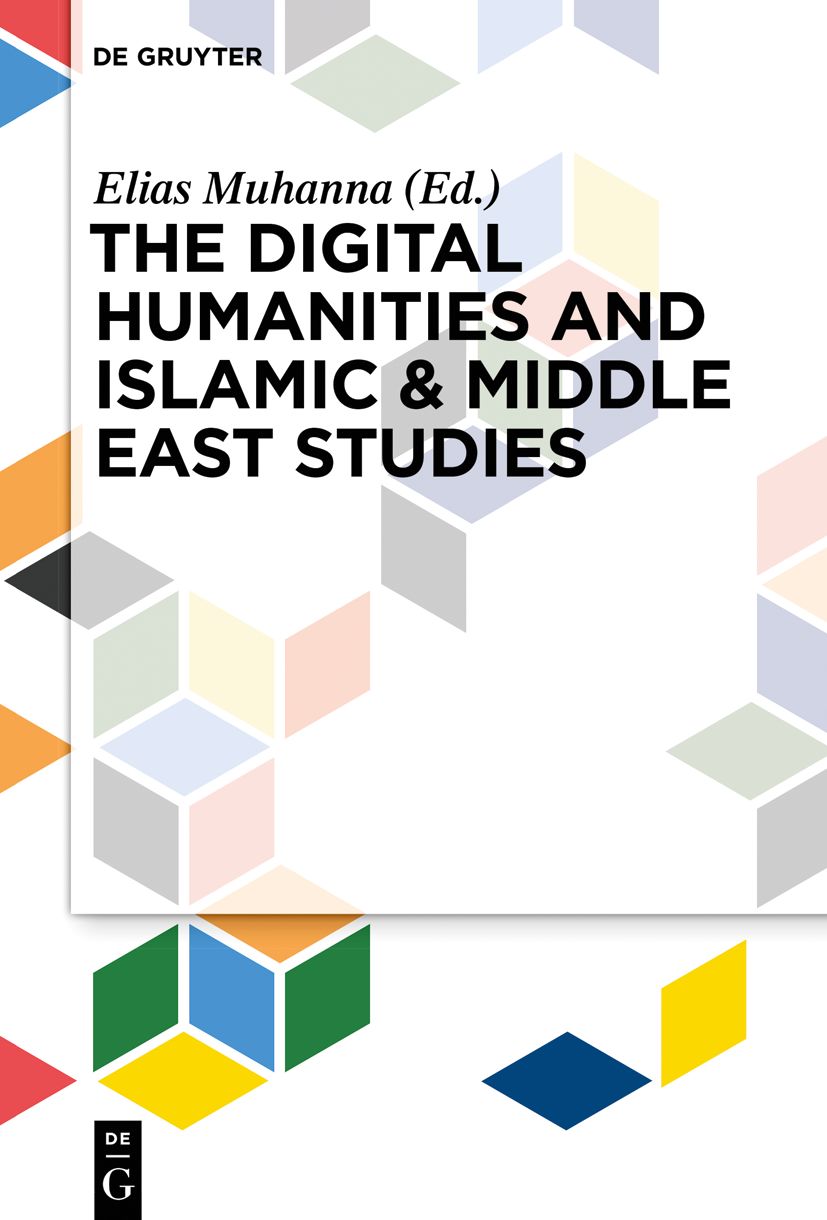
The Digital Humanities and Islamic & Middle East Studies
Over the past few decades, humanistic inquiry has been problematized and invigorated by the emergence of what is referred to as the digital humanities. Across multiple disciplines, from history to literature, religious studies to philosophy, archaeology to music, scholars are tapping the extraordinary power of digital technologies to preserve, curate, analyze, visualize, and reconstruct their research objects. The study of the Middle East and the broader Islamic world has been no less impacted by this new paradigm. Scholars are making daily use of digital tools and repositories including private and state-sponsored archives of textual sources, digitized manuscript collections, densitometrical imaging, visualization and modeling software, and various forms of data mining and analysis. This collection of essays explores the state of the art in digital scholarship pertaining to Islamic & Middle Eastern studies, addressing areas such as digitization, visualization, text mining, databases, mapping, and e-publication. It is of relevance to any researcher interested in the opportunities and challenges engendered by this changing scholarly ecosystem.
eBook
Online Religious Resources in Sustaining Islamic Practices Among Turkish Immigrants in Poland
This study explores how Turkish immigrants to Poland maintain their Islamic worship using online resources. The research examines the elements that influence commitment to online religious platforms, focusing on understanding how digital religiosity develops within the Turkish community in Poland. A structured online survey of 116 Turkish immigrants collected information on the frequency with which participants accessed online religious resources, the perceived adequacy of these resources, and participants' techniques for verifying the credibility of online content. Findings indicate that platforms like YouTube, mobile apps, and religious websites support religious practices but are seen as insufficient for religious needs, highlighting that digital resources aid religious identity but cannot fully replace traditional engagement.
Journal Article

Research collaboration networks of two OIC nations: comparative study between Turkey and Malaysia in the field of ‘Energy Fuels’, 2009–2011
With the world in the midst of an energy crisis, recent research has placed considerable emphasis on harnessing renewable and sustainable energy while efficiently using fossil fuels. Researchers create and sustain academic societies as a result of social interactions. This study takes a social network perspective to understand researchers’ associations using two Organisation of Islamic Co-operation nations, Turkey and Malaysia, in the fast-developing field of ‘Energy Fuels’. The study found both similarities and differences in the scholarly networks of these two countries. The mean distance between the authors in the Turkey and Malaysia networks was 8.4 and 6.5, respectively, confirming the small world nature of these networks. The popularity, position, and prestige of the authors in the network, as determined through centrality measures, had a statistically significant effect on research performance. These measures, however, were far more correlated with the research performance of the authors in the Malaysia network than in the Turkey network. PageRank centrality was found to be the most efficient topological measure when it came to correlation with research performance. We used authors’ ‘degree’ to reach to the ‘core’ (‘Deg-Core’) of the network (in contrast to the K-Core method), which was found to capture more productive authors. A method to detect academic communities of productive authors by extracting motifs (large cliques) from the network is suggested. Finally, we visualize the cognitive structure of both countries using a 2-mode network representing research focus areas (RFAs) and prominent authors working in these RFAs.
Journal Article

Islam in the Digital Age
\"The Internet is very big in the Arab world. After Al-Jazeera, it is the second most important source of dissenting opinion. Literally, millions of people in the Muslim world rely on web-sites to get their information and fatwas. A whole new life of cyber Imams and a new culture is emerging through Internet programmes and will have a profound effect on Arab consciousness. This book documents all this and examines various sites and offers the first comprehensive analysis of the impact of the Internet on Islamic culture.\" Zia Sardar, author of Postmodernism and the Other and Why Do People Hate America The Internet is an increasingly important source of information for many people in the Muslim world. Many Muslims in majority and minority contexts rely on the Internet -- including websites and e-mail -- as a primary source of news, information and communication about Islam. As a result, a new media culture is emerging which is having a significant impact on areas of global Muslim consciousness. Post-September 11th, this phenomenon has grown more rapidly than ever. Gary R. Bunt provides a fascinating account of the issues at stake, identifying two radical new concepts: Firstly, the emergence of e-jihad ('Electronic Jihad') originating from diverse Muslim perspectives -- this is described in its many forms relating to the different definitions of 'jihad', including on-line activism (ranging from promoting militaristic activities to hacking, to co-ordinating peaceful protests) and Muslim expression post 9/11. Secondly, he discusses religious authority on the Internet -- including the concept of on-line fatwas and their influence in diverse settings, and the complexities of conflicting notions of religious authority.
eBook

Islamic Africa: A Select, Annotated Webography
In this brief essay and webography, I indicate ways to pursue the themes of Islamic Africa on the Web. Digital and online libraries about Islam and West Africa, and more broadly about the history and culture of predominantly Islamic parts of Africa, have been steadily growing in the last few years. To assist readers of Islamic Africa to appreciate the span of these rapidly expanding resources and their depth and usefulness, and hopefully to make use of them in learning or researching Islam in Africa, I present this select survey of digital resources.
Journal Article