
Catalogue Search | MBRL


Are you sure you want to remove the book from the shelf?

{{itemTitle}}
253
result(s) for
"Islam Doctrines History."
Sort by:

Understanding the Qur’anic Miracle Stories in the Modern Age
he Qur’an contains many miracle stories, from Moses’ staff turning into a serpent to Mary conceiving Jesus as a virgin. In When the Staff Turns into a Serpent, Isra Yazicioglu offers a glimpse of the ways in which meaningful implications have been drawn from these apparently strange narratives, both in the pre-modern and modern era. It fleshes out a fascinating medieval Muslim debate over miracles, and connects its insights with early and late modern turning points in Western thought as well as contemporary Qur’anic interpretation. Building on an apparent tension within the Qur’an and analyzing crucial cases of classical and modern Muslim engagement with these miracle stories, this book illustrates how a site of conflict between faith and reason, or revelation and science, can become a site of fruitful exchange This book is a distinctive contribution to a new trend in Qur’anic Studies in that it reveals the presence of insightful Qur’anic interpretation outside of the traditional line-by-line commentary genre, by engaging with the works of Ghazali, Ibn Rushd and Said Nursi. Moreover, focused as it is on the case of miracle stories, the book also goes beyond these specific passages to reflect more broadly on the issue of Qur’anic hermeneutics. It notes the connections between literal and symbolic approaches, and highlights the importance of looking at reception history of the Quran through the lens of “pragmatic” hermeneutics.
eBook
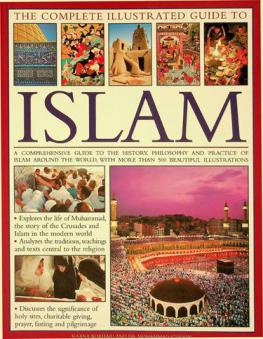
The complete illustrated guide to Islam : a comprehensive guide to the history, philosophy and practice of Islam around the world, with more than 500 beautiful illustrations
Features the traditions, teachings and texts central to the religion and discusses the significance of holy sites, prayer and pilgrimage.
Book


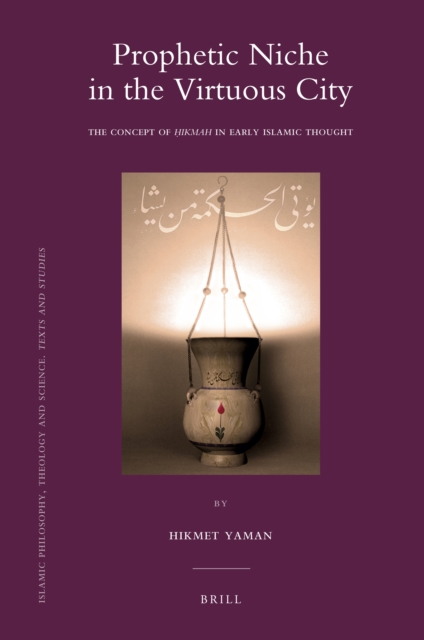
Prophetic niche in the virtuous city : the concept of Ḥikmah in early Islamic thought
Analyzing the concept of ḥikmah in early Islamic texts, this book brings earliest scholarly materials to the service of modern readers and thus offers a comprehensive contextualization of this subtle and elusive notion in the collective usage of early Muslim authors, especially in the works of lexicographers, exegetes, philosophers, and Sufis.
eBook
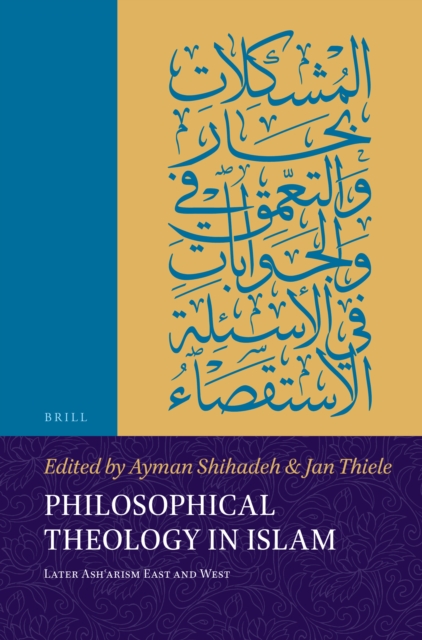
Philosophical theology in Islam : later Ashʻarism east and west
Philosophical Theology in Islam studies the later history of the Ash?ari school of theology through in-depth probings of its thought, sources, scholarly networks and contexts. Starting with a review of al-Ghazali's role in the emergence of post-Avicennan philosophical theology, the book offers a series of case studies on hitherto unstudied texts by the towering thinker Fakhr al-Din al-Razi as well as specific philosophical and theological topics treated in his works. Studies furthermore shed light on the transmission and reception of later Ash?ari doctrines in periods and regions that have so far received little scholarly attention. This book is the first exploration of the later Ash?ari tradition across the medieval and early-modern period through a trans-regional perspective.Contributors: Peter Adamson, Asad Q. Ahmed, Fedor Benevich, Xavier Casassas Canals, Jon Hoover, Bilal Ibrahim, Andreas Lammer, Reza Pourjavady, Harith Ramli, Ulrich Rudolph, Meryem Sebti, Delfina Serrano-Ruano, Ayman Shihadeh, Aaron Spevack, and Jan Thiele.
eBook

Locating hell in Islamic traditions
\"Islam is often seen as a religious tradition in which hell does not play a particularly prominent role. This volume challenges this hackneyed view.This book is the first book-length analytic study of the Muslim hell. It maps out a broad spectrum of Islamic attitudes toward hell, from the Quranic vision(s) of hell to the pious cultivation of the fear of the afterlife, theological speculations, metaphorical and psychological understandings, and the modern transformations of hell.\"--cover.
Book

Ibn Taymiyya's Theodicy of Perpetual Optimism
This comprehensive study of Muslim jurist Ibn Taymiyya’s (d. 1328) theodicy of perpetual optimism exposits and analyses his writings on God’s justice and wise purpose, divine determination and human agency, the problem of evil, and juristic method in theological doctrine.
eBook