
Catalogue Search | MBRL


Are you sure you want to remove the book from the shelf?

{{itemTitle}}
602
result(s) for
"Islam Fiction."
Sort by:

Ilyas & Duck : search for Allah
\"Ilyas and Duck search for Allah is an adorable storybook for kids about a boy's quest to find God. \"Where is God?\" is a question that any parent teaching their kids will one day have to answer. This book helps parents answer that question while conveying the profound mystery of it all in a fun way. In this story, likable Ilyas pairs up with Duck to ask the one question over and over in different scenarios. With whimsical and poetic replies, Ilyas slowly begins to realize what his question truly means. And by the end, his childish curiosity is fulfilled with profound realizations. The book has hardcover binding and comes with a cover jacket\"--Publisher's description.
Book

A Muslim Reflection on Dangerous Games
For over two decades, a moral panic over fantasy role-playing games has swept America, fuelled by a minority of fundamentalist Christians who have campaigned against games such as Dungeons & Dragons on the grounds that they led youth to Satanism, suicide, and violent crime. In his 2015 book, Dangerous Games: What the Moral Panic over Role-Playing Games says about Play, Religion, and Imagined Worlds, David Laycock explores why fantasy roleplaying games seem similar enough to religion to provoke fear, as well as the dynamics of this moral panic. While he, apparently, did not set out to write a book about Islam, his insights about religion, fantasy, and narrative opened my eyes to the dynamics of twentieth-century Islam. Additionally, as a Muslim reader living during a “moral panic” over Islam, Laycock’s analysis helped me understand that today’s Islamophobia in America has little to do with Islam. Lastly, although Muslim gamers, fantasy/sciencefiction authors, and game developers are usually underacknowledged, there is increasing interest in Muslims and fantasy/ science-fiction. I hope to call attention to this invisible cohort.
Journal Article

Aliya's secret : a story of Ramadan
\"It looks like someone took a big bite out of the moon--and that marks the beginning of Ramadan! As her Abba and Ammi prepare for their month-long fast, Aliya has a secret: she's going to fast, too! Even though Ammi told her she's not allowed to until she turns thirteen. At school, Aliya starts her secret fast full of determination. She skips lunch, despite her rumbling tummy, and doesn't give in even when she's offered a birthday cupcake with sprinkles! But, later in the day, while baking baklava with Amma, the temptation proves too hard to resist and she takes a big bite. At first, Aliya is terribly disappointed in herself for giving in to her hunger, but she soon learns that there are other ways that she can celebrate Ramadan. She and her parents spend the month preparing and delivering meals to people in need. And after celebrating Eid-ul-Fitr, the Festival of Breaking the Fast, Aliya looks forward to doing her own month-long fast in a few years--but no more secrets for her!\"-- Provided by publisher.
Book

Gender, nation, and the Arabic novel Egypt , 1892–2008
A nuanced understanding of literary imaginings of masculinity and femininity in the Egytian novelGender studies in Arabic literature have become equated with women's writing, leaving aside the possibility of a radical rethinking of the Arabic literary canon and Arab cultural history. While the 'woman question' in the Arabic novel has received considerable attention, the 'male question' has gone largely unnoticed. Now, Hoda Elsadda bucks that trend.Foregrounding voices that have been marginalised alongside canonical works, she engages with new directions in the novel tradition.Sheds new light on key debates, including: >The project of nation-building in the modern periodThe process of inclusion and exclusion in canon formationThe geopolitics of definitions of national or cultural identity in the global worldThe conceptual discourses on gender and nationThe meaning of national identity in a global context
eBook
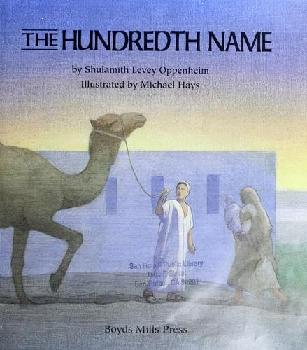
The hundredth name
Salah, a boy living in Egypt, wants to lift his camel's sadness, so he prays that the camel will learn Allah's hundredth name, which is unknown to man.
BOOK

The Edinburgh Companion to the Arab Novel in English
Opening up the field of diasporic Anglo-Arab literature to critical debate, this companion spans from the first Arab novel in 1911 to the resurgence of the Anglo-Arabic novel in the last 20 years. There are chapters on authors such as Ameen Rihani, Ahdaf Soueif and Waguih Ghali, and interviews with Laila Lalami, Hisham Matar and Fadia Faqir.
eBook

Mother of the believers : a novel of the birth of Islam
Follows the story of young Aisha, whose marriage to a new prophet in seventh-century Arabia is overshadowed by false accusations, an attack on their settlement, and her husband's death, a situation that inspires her to advocate on behalf of human rights.
Book

The “Islams” of Muslims in Post-9/11 Fiction
The attacks on the Twin Towers have politically categorized Muslims as “good,” “bad,” or “moderate” in post-9/11 United States. These categories are reductive when it comes to understanding complex Muslim formations in a post-9/11 world as they impose a politicized ideal of what it means to be a Muslim. The “ideal” American Muslim is supposedly an American first and a Muslim second. While there is significant scholarship against such reductive categorizations, what remains largely unnoticed is a Muslim’s subjectivity in relation to Islam in everyday life: the ways in which a Muslim interacts with Islam on a day-to-day basis are often idiosyncratic in nature. This paper introduces the concept of “everyday Islam” as a key tool to resist Muslim essentialism. Drawing on the works of Saba Mahmood, Santiago Sia, and Nadia Fadil among others, it analyzes Ayad Akhtar’s American Dervish (2013) and argues that the novel displays different sensibilities that Muslims bring to their interactions with Islam on a daily basis. By focusing on the character of Mina, Akhtar’s female protagonist, this paper examines how an interplay of moments, situations, and contexts shapes her day-to-day practices of Islam. In doing so, it challenges the reductive political categorizations of Muslims as “good,” “bad,” or “moderate,” and expands our understanding of the diverse ways in which Muslims make sense of Islam in often incongruous ways. (PG)
Journal Article


H. M. Naqvi’s Home Boy as a Response to Post-9/11 Islamophobia and as Implicit Critique of Mohsin Hamid’s The Reluctant Fundamentalist
Western fiction about the 9/11 attacks tends to center white American experiences and perspectives and reinforce dominant Western stereotypes and misconceptions about Muslims, especially Muslim men. Counter-discursive post-9/11 fiction from a Muslim cosmopolitan perspective that seeks to intervene in these modes of representation inevitably has to contend with globally dominant epistemological frameworks of suspicion. While Mohsin Hamid’s The Reluctant Fundamentalist (2007) is among the most well-known of such counter-discursive fictions, this article focuses on H. M. Naqvi’s less well-known novel Home Boy (2009) to argue that Home Boy constitutes a postcolonial response to 9/11, an explicit critique of the ensuing American response and Islamophobia, and a tactical alternative to and implicit critique of Hamid’s novel. The article highlights some problems created by the narrative strategies Hamid uses and shows how Naqvi takes a different approach, in particular by foregoing the temptations of ambiguity and gender stereotyping and highlighting the multiple traumas experienced by Muslims from 9/11 and its aftermath. In so doing, the article suggests how critical readers can recognize both the drawbacks of Hamid’s celebrated novel and the alternative possibilities of other strategies that Muslim writers can use to address the problems of neo-Orientalism and global Islamophobia.
Journal Article