
Catalogue Search | MBRL


Are you sure you want to remove the book from the shelf?

{{itemTitle}}
117
result(s) for
"Islam History Fiction."
Sort by:

Mother of the believers : a novel of the birth of Islam
Follows the story of young Aisha, whose marriage to a new prophet in seventh-century Arabia is overshadowed by false accusations, an attack on their settlement, and her husband's death, a situation that inspires her to advocate on behalf of human rights.
Book

The Edinburgh Companion to the Arab Novel in English
Opening up the field of diasporic Anglo-Arab literature to critical debate, this companion spans from the first Arab novel in 1911 to the resurgence of the Anglo-Arabic novel in the last 20 years. There are chapters on authors such as Ameen Rihani, Ahdaf Soueif and Waguih Ghali, and interviews with Laila Lalami, Hisham Matar and Fadia Faqir.
eBook
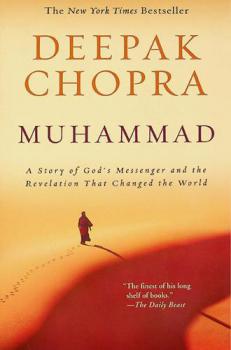
Muhammad : a story of God's messenger and the revelation that changed the world
\"\"Without guides who reached higher consciousness, the world would be bereft of its greatest visionaries - fatally bereft, in fact. Muhammad sensed this aching gap in the world around him. He appeals to me most because he remade the world by going inward. That's the kind of achievement only available on the spiritual path. In the light of what the Prophet achieved, he raises my hope that all of us who lead everyday lives can be touched by the divine. The Koran deserves its place as a song of the soul, to be celebrated wherever the soul matters.\"--The Introduction Born into the factious world of war-torn Arabia, Muhammad's life is a gripping and inspiring story of one man's tireless fight for unity and peace. In a world where greed and injustice ruled, Muhammad created change by affecting hearts and minds. Just as the story of Jesus embodies the message of Christianity, Muhammad's life reveals the core of Islam. Deepak Chopra shares the life of Muhammad as never before, putting his teachings in a new light. Following the historical record but offering a unique perspective, Chopra's Muhammad captures the historical prophet but more importantly shows us why his teachings are more important now than ever before\"--Provided by publisher.
BOOK

Gender, nation, and the Arabic novel Egypt , 1892–2008
A nuanced understanding of literary imaginings of masculinity and femininity in the Egytian novelGender studies in Arabic literature have become equated with women's writing, leaving aside the possibility of a radical rethinking of the Arabic literary canon and Arab cultural history. While the 'woman question' in the Arabic novel has received considerable attention, the 'male question' has gone largely unnoticed. Now, Hoda Elsadda bucks that trend.Foregrounding voices that have been marginalised alongside canonical works, she engages with new directions in the novel tradition.Sheds new light on key debates, including: >The project of nation-building in the modern periodThe process of inclusion and exclusion in canon formationThe geopolitics of definitions of national or cultural identity in the global worldThe conceptual discourses on gender and nationThe meaning of national identity in a global context
eBook


Narratives of the Islamic conquest from medieval Spain
Exploring medieval literary representations of the Islamic conquest of Spain in 711, Hazbun discusses chronicles, epic and clerical poetry, and early historical novels. While material on the conquest of Spain is substantial, it is understudied and this book works to fill that gap.
eBook

Veiled superheroes
Veiled Superheroes: Islam, Feminism, and Popular Culture focuses on female Muslim superheroes in graphic narratives such as the comic Ms. Marvel, the animated television series BurkaAvenger, and the webcomic Qahera.
eBook

Decolonizing Qurʾanic Studies
The legacy of colonialism continues to influence the analysis of the Qurʾan in the Euro-American academy. While Muslim lands are no longer directly colonized, intellectual colonialism continues to prevail in the privileging of Eurocentric systems of knowledge production to the detriment and even exclusion of modes of analysis that developed in the Islamic world for over a thousand years. This form of intellectual hegemony often results in a multifaceted epistemological reductionism that denies efficacy to the analytical tools developed by the classical Islamic tradition. The presumed intellectual superiority of Euro-American analytical modes has become a constitutive and persistent feature of Qurʾanic Studies, influencing all aspects of the field. Its persistence prevents some scholars from encountering, let alone employing, the analytical tools of the classical Islamic tradition and presents obstacles to a broader discourse in the international community of Qurʾanic Studies scholars. Acknowledging the obstacles to which the coloniality of knowledge has given rise in Qurʾanic Studies can help us to develop more inclusive approaches in which multiple modes of analysis are incorporated and scholars from variegated intellectual backgrounds can engage in a more effective dialogue.
Journal Article

Culture, Diaspora, and Modernity in Muslim Writing
Fiction by writers of Muslim background forms one of the most diverse, vibrant and high-profile corpora of work being produced today - from the trail-blazing writing of Salman Rushdie and Hanif Kureishi, which challenged political and racial orthodoxies in the 1980s, to that of a new generation including Mohsin Hamid, Nadeem Aslam and Kamila Shamsie. This collection reflects the variety of those fictions. Experts in English, South Asian, and postcolonial literatures address the nature of Muslim identity: its response to political realignments since the 1980s, its tensions between religious and secular models of citizenship, and its manifestation of these tensions as conflict between generations. In considering the perceptions of Muslims, contributors also explore the roles of immigration, class, gender, and national identity, as well as the impact of 9/11.
This volume includes essays on contemporary fiction by writers of Muslim origin and non-Muslims writing about Muslims. It aims to push beyond the habitual populist 'framing' of Muslims as strangers or interlopers whose ways and beliefs are at odds with those of modernity, exposing the hide-bound, conservative assumptions that underpin such perspectives. While returning to themes that are of particular significance to diasporic Muslim cultures, such as secularism, modernity, multiculturalism and citizenship, the essays reveal that 'Muslim writing' grapples with the same big questions as serve to exercise all writers and intellectuals at the present time: How does one reconcile the impulses of the individual with the requirements of community? How can one 'belong' in the modern world? What is the role of art in making sense of chaotic contemporary experience?
Rehana Ahmed is Lecturer in English Studies at the University of Teesside, UK.
Peter Morey is Reader in English Literature, School of Social Sciences, Media and Cultural Studies, University of East London, UK.
Amina Yaqin is Lecturer in Urdu and Postcolonial Studies, Department of South Asia, SOAS, UK.
Selected Contents: Introduction Rehana Ahmed, Peter Morey and Amina Yaqin 1. Writing Muslims and the Global State of Exception Stephen Morton Part 1: Writing the Self 2. Bad Faith: The Construction of Muslim Extremism in Ed Husain’s The Islamist Anshuman A. Mondal 3. Reason to Believe? Two ‘British Muslim’ Memoirs Rehana Ahmed 4. Voyages Out and In: Two (British) Arab Muslim Women’s Bildungsromane Lindsey Moore Part 2. Migrant Islam 5. Infinite Hijra: Migrant Islam, Muslim American Literature, and the Anti-Mimesis of The Taqwacores Salah D. Hassan 6. Muslims as Multicultural Misfits in Nadeem Aslam’s Maps for Lost Lovers Amina Yaqin 7. ‘Sexy Identity-Assertion’: Choosing between Sacred and Secular Identities in Robin Yassin-Kassab’s The Road from Damascus Claire Chambers Part 3: (Mis)reading Muslims 8. Writing Islam in Post-9/11 America: John Updike’s Terrorist Anna Hartnell 9. Invading Ideologies and the Politics of Terror: Framing Afghanistan in The Kite Runner Kristy Butler 10. Representation and Realism: Monica Ali’s Brick Lane Sara Upstone Part 4: Culture, Politics and Religion 11. From ‘the Politics of Recognition’ to ‘the Policing of Recognition’: Writing Islam in Hanif Kureishi and Mohsin Hamid Bart Moore-Gilbert 12. Resistance and Religion in the Work of Kamila Shamsie Ruvani Ranasinha 13. Mourning Becomes Kashmira: Islam, Melancholia, and the Evacuation of Politics in Salman Rushdie’s Shalimar the Clown Peter Morey
eBook

The Rushdie Affair and the Politics of Multicultural Britain
It is more than thirty years since Ayatollah Khomeini, the supreme leader of Iran, issued a fatwa (religious decree) calling for the execution of the British-Indian novelist Salman Rushdie, whose third novel, The Satanic Verses, was published in 1988. But the ‘Rushdie Affair’ has yet to be subject to a sustained analysis by historians. Journalists and political scientists continue to focus on the fatwa, despite the fact the protests against the novel in Britain – where The Satanic Verses is primarily set – predated Khomeini’s decree by two months. This article fills this lacuna by shifting attention onto the emergence of the campaign against The Satanic Verses in Britain and in Bradford especially, where a copy of Rushdie’s ‘blasphemous’ novel was infamously burnt by Muslim protestors. It shows how an earlier set of campaigns fought in Bradford by Muslim activists paved the way for the city to become a key site of protest against both Rushdie and his novel. The protests that greeted The Satanic Verses were shaped by the contradictory nature of Britain’s emergence as a multicultural society, I argue, and the political complexities thrown up by the hybridized milieu Rushdie had sought to use his fiction to evoke.
Journal Article