
Catalogue Search | MBRL


Are you sure you want to remove the book from the shelf?

{{itemTitle}}
1,344
result(s) for
"Islam Malaysia."
Sort by:

Islam in Malaysian Foreign Policy
A case study of a multi-ethnic Muslim state and a contribution to the study of the domestic functions of foreign policy. The book also addresses the real and imagined significance of Islam as a force in contemporary global politics.
eBook

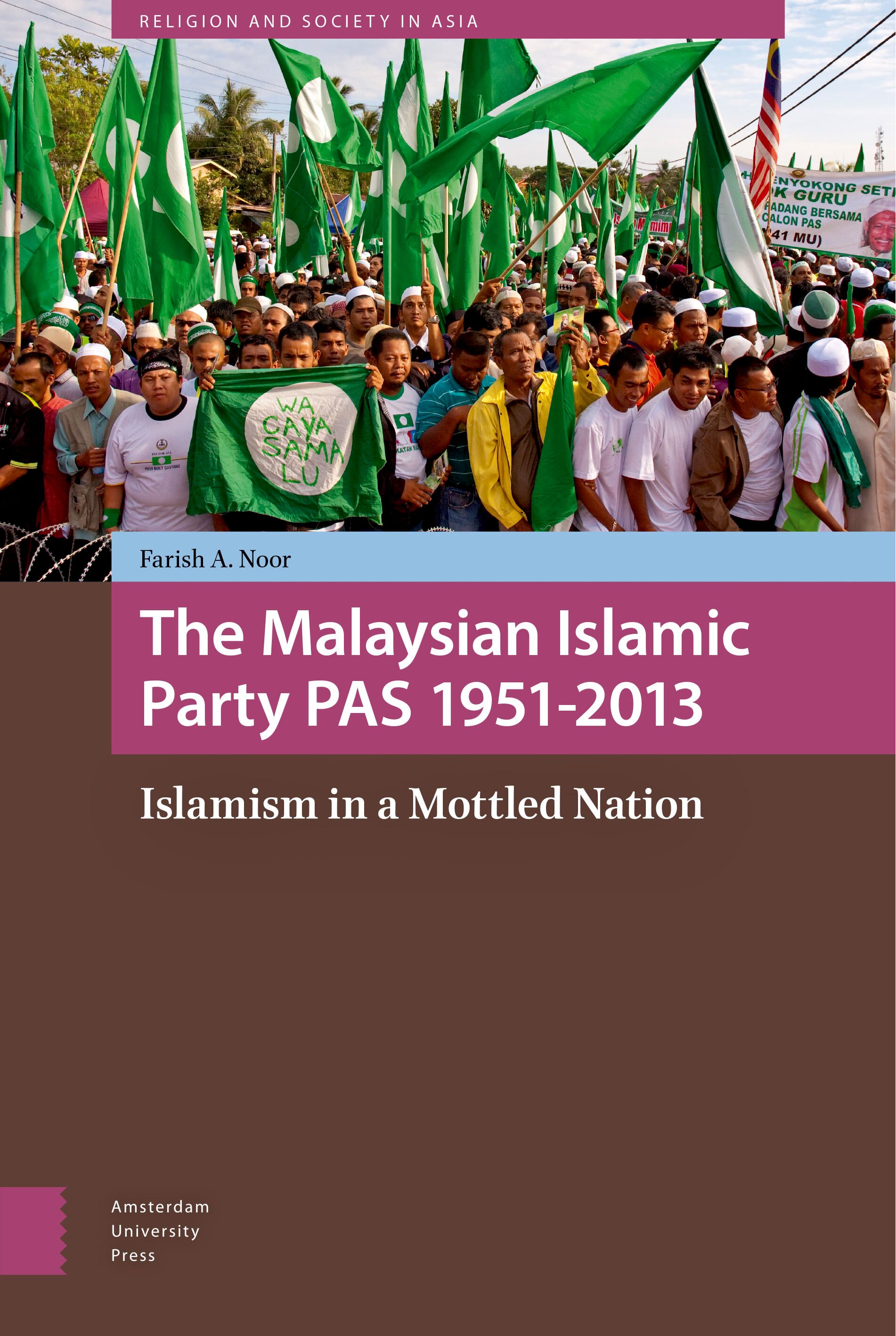
The Malaysian Islamic Party PAS 1951-2013
The Pan-Malaysian Islamic Party PAS is the biggest opposition party in Malaysia today and one of the most prominent Islamist parties in Southeast Asia. This work recounts the historical development of PAS from 1951 to the present, and looks at how it has risen to become a political movement that is both local and transnational, tracking its rise from the Cold War to the age of the War on Terror, and its evolving ideological postures - from anti-colonialism to post-revolutionary Islamism, as the party adapted itself to the realities of the postmodern global age. PAS's long engagement with modernity and its nuanced approach to the goal of state capture is the focus of this work, as it recounts the story of the Islamist party and Malaysia by extension.
eBook


Islam in Malaysian foreign policy
A case study of a multi-ethnic muslim state and a contribution to the study of the domestic functions of foreign policy. The book addresses the real and imagined significance of Islam as a force in contemporary global politics.
eBook

Reclaiming adat : contemporary Malaysian film and literature
In the early 1990s, the animist and Hindu traces in adat , or Malay custom, became contentious for resurgent Islam in Malaysia. Reclaiming Adat focuses on the filmmakers, intellectuals, and writers who reclaimed adat to counter the homogenizing aspects of both Islamic discourse and globalization in this period. They practised their project of recuperation with an emphasis on sexuality and a return to archaic forms such as magic and traditional healing. Using close textual readings of literature and film, Khoo Gaik Cheng reveals the tensions between gender, modernity, and nation. Khoo weaves a wealth of cultural theory into a rare analysis of Malay cinema and the work of new Malaysian anglophone writers. Reclaiming Adat makes an essential contribution to our knowledge of the complexities embedded in modern Malaysian culture, politics, and identity.
eBook

Islamic identity and development
Turkey and Malaysia, two countries on the Islamic periphery, are often not included in discussions of Islamic reassertion and identity. Yet both have been at the forefront of modernization and development, and are exposed to a rising trend of Islamic revival which discloses a deep, psychological identity crisis.
In Islamic Identity and Development, Ozay Mehmet examines this identity crisis in the wider context of the Islamic dilemma of reconciling nationalism with Islam. He sees the Islamic revival primarily as a protest movement, concentrated among urban migrant settlements where uneven post-war growth has upset the traditional Islamic order. He argues that Islamic societies must move towards greater openness and an organic relationship between rulers and ruled. In particular, Mehmet suggests the need for a public policy that is not only responsive to material human needs but which also satisfies the ethical preconditions of the Islamic social contract.
eBook