
Catalogue Search | MBRL


Are you sure you want to remove the book from the shelf?

{{itemTitle}}
607
result(s) for
"Islam Morocco."
Sort by:

The power of Islam in Morocco : historical and anthropological perspectives
The study of Muslim societies has been for a long time the appanage of western Orientalists and European ethnographers whose view from the outside rarely accounted for the complex reality of these societies. This Variorum volume by an eminent North African historian follows the development of Islam in Morocco as a social phenomenon over the last five centuries. During this period the nature of North African societies and political systems was profoundly changed and shaped by the emergence of a new form of Islamic religiosity based on the glorification of Prophet Muhammad and the veneration of popularly acclaimed saints. From being a purely religious phenomenon, the devotion shown to the Prophet and his lineage turned into a major principle of legitimacy, in both the religious and political fields. In fact, as legitimacy tended to center around the prophetic lineage, Moroccan society witnessed an intense rivalry between saints and sultans, or spiritual and temporal leaders, with the latter trying to keep the saints and the sufis within a strictly religious sphere. This rivalry between the two parties is crucial to the understanding of modern Maghribi history, as well as the present Moroccan political system.
Book

The ethnographic state
Alone among Muslim countries, Morocco is known for its own national form of Islam, \"Moroccan Islam.\" However, this pathbreaking study reveals that Moroccan Islam was actually invented in the early twentieth century by French ethnographers and colonial officers who were influenced by British colonial practices in India. Between 1900 and 1920, these researchers compiled a social inventory of Morocco that in turn led to the emergence of a new object of study, Moroccan Islam, and a new field, Moroccan studies. In the process, they resurrected the monarchy and reinvented Morocco as a modern polity. This is an important contribution for scholars and readers interested in questions of orientalism and empire, colonialism and modernity, and the invention of traditions.
eBook


Between Feminism and Islam
Morocco has two major women’s movements: the Islamists who hold shari’a as the platform for building a culture of women’s rights, and the feminists who use the United Nations’ framework to amend shari’a law. Zakia Salime shows how the interactions of these movements over the past two decades have transformed the debates, the organization, and the strategies of each other.
eBook

The Calls of Islam
The sacred calls that summon believers are the focus of this study of religion and power in Fez, Morocco. Focusing on how dissemination of the call through mass media has transformed understandings of piety and authority, Emilio Spadola details the new importance of once-marginal Sufi practices such as spirit trance and exorcism for ordinary believers, the state, and Islamist movements. The Calls of Islam offers new ethnographic perspectives on ritual, performance, and media in the Muslim world.
eBook

Politics in Morocco
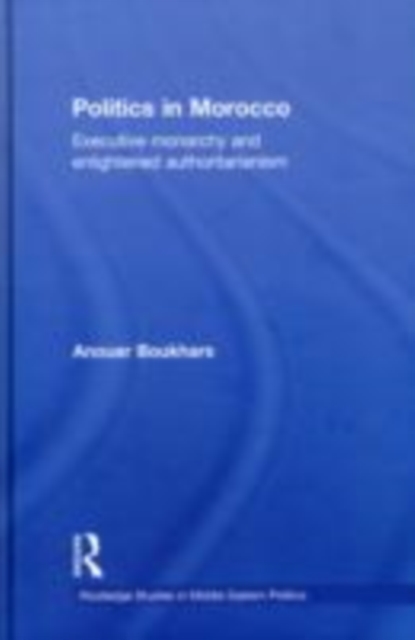
Democratization and the process of political reform is a critical issue in the contemporary Middle East and North Africa. This book looks at the situation in Morocco and examines the role of the monarchy and the relative strengths and weaknesses of the Islamic and secular/liberal groupings campaigning to shape the local politics and society.
Politics in Morocco moves beyond the theoretical framework of the transition paradigm to give a thorough analysis of the dynamics of monarchical authoritarian rule and its implications. The author explores the formal and informal working mechanisms of authoritarian rule, the roles and functions of secular opposition forces, and the dynamics of political inclusion of Islamists in the structures of formal contestation. In doing so, he sheds fresh light on how authoritarian rule under King Mohamed VI is maintained and legitimised by a wide array of formal and informal political and social networks.
This in-depth investigation of political participation in Morocco offers a new perspective on the issue of democracy and monarchical rule in the Middle East. As such, it will be of great interest to students and scholars of Middle Eastern and North African politics, democratization studies and political Islam.
\"The book is wonderfully written and well researched.\" - Steve Yetiv, Old Dominion University
\" As an observer of Moroccan politics, I think this is a strong book. It is a joy to read. It is clearly organized. The argument flows nicely. It is well documented. And it speaks to important political problems and dilemmas that go beyond the Moroccan context. I also find the general argument very compelling.\" - Abdeslam Maghraoui, Duke University.
\"The chapter on Islamism is very interesting and illuminating.\" - Malika Zeghal, University of Chicago
\"[A]cademic in style, appealing mainly to an audience of postgraduate students as well as academics and practitioners working on Moroccan politics... Boukhars’ analysis is comprehensive and insightful. The book is well-researched and excellently presented, and provides the readers with all the necessary tools for comprehending Moroccan politics both before and after the eruption of the Arab Spring and the political changes it brought to the country.\" - Lise Storm (2012): Understanding Moroccan Politics: Tools for Assessing the Impact of the Arab Spring, Mediterranean Politics, 17:1
Anouar Boukhars is an assistant professor of Political Science and International Studies at McDaniel College, Maryland, USA. He is also a visiting fellow at the Brookings Doha Center and consultant for Jane’s Intelligence Review . He has published in a large number of journals and has contributed to leading newspapers in the US and the Middle East.
Introduction 1. The Mohamedian Years 2. The Monarchy’s Arsenal of Powers 3. Politics without Positions: Absenteeism, Party Switching and Corruption in the Moroccan Parliament 4. The Decrepitude of Secular Parties: The Case of the Socialist Union of Popular Forces 5. Islamists and Realpolitik 6. Radical Islamism: A Form of Contestation Politics. Conclusion
eBook


Islamist Opposition in Authoritarian Regimes
Wegner traces the party’s choices through an analysis of organizational, ideological, and institutional constraints. Adopting a simple but novel perspective, Wegner distinguishes Islamist parties from other opposition parties because of their connection to a powerful social movement. The author shows how the PJD initially made major progress in electoral politics by building up a strong party organization, sustaining full support of the Islamist movement, and positioning itself as the only credible opposition party. Ultimately, the failure of the PJD to win elections was due to political concessions it made to secure its legality combined with a distancing from the Islamist movement. Based on extensive field research in Morocco in 2003 and 2007 and drawing upon personal interviews with members, candidates, and leaders of the PJD, Islamist Opposition in Authoritarian Regimes presents a meticulous and enlightening case study. Wegner enriches our understanding of electoral authoritarianism in Morocco and throughout the Arab- Islamic world.
eBook