
Catalogue Search | MBRL


Are you sure you want to remove the book from the shelf?

{{itemTitle}}
4,022
result(s) for
"Islam Rituals"
Sort by:


Rituals of Islamic Monarchy
A history of the ceremony of the oath of allegiance to the caliph from the time of the Prophet Muhammad until the fragmentation of the caliphate in the late 9th and 10th centuries. Blurb by author: Rituals of Islamic Monarchy is the first full-length study of the rituals by which the caliphs were made rulers of the early Muslim empire. It is an original contribution to scholarship on early Islam and the Middle East, which gives important insights into the formation of classical Islamic culture and civilisation. It clearly sets out the particular evidential problems of early Islamic history and identifies strategies for overcoming them. It also engages with the problem of how Islamic history relates to the history of the pre-Islamic Middle East, arguing for the importance of the pre-Islamic, Arabian context of early Islam, as well as a wider perspective that takes in the legacy of the pre-Islamic empires of Rome and Iran.
eBook

Salafi Ritual Purity
Since 9/11, Salafism has attracted a great deal of attention from the world's media, which predominantly focuses on its potential for revolutionary violence. Salafism remains poorly understood both in Western media, where it is now the focus of considerable debate, and in Western academia, where until recently it was virtually undiscussed. In neither arena has a consensus emerged regarding what Salafism is or does.
This pioneering work fills this lacuna by redirecting the reader towards the sphere of ritual practice, within which the discussions of contemporary Salafi scholars prove equally revolutionary. Taking the theme of ritual purity (tahara) as the leitmotif of modern Salafism, this work combines an analysis of key developments in ritual purity law with detailed ethnographic investigations into ritual purity behaviour in specific Cairene settings.
The author's research not only bridges the gap between anthropological and Islamicist approaches to Muslim ritual, but highlights the variety of ideas and experiences that contribute to Egyptian Salafism today. This book will be of interest to students of Islamic studies, Anthropology, Religious studies, as well as Middle East studies in general.
eBook

Reasoning with God
In Reasoning with God renowned Islamic scholar Khaled Abou El Fadl explores the role of Shari`ah in today's world, for both Muslims and non-Muslims. After a Prologue that explains Shari`ah in depth, Abou El Fadl wrestles with the moral trajectory of contemporary Islam and highlights the way Shari`ah can revitalize and re-engage Islam today.
eBook
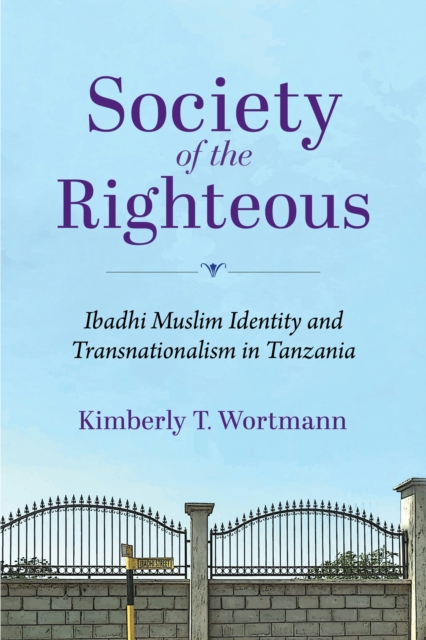
Society of the Righteous
Although the rule of the Omani sultanate in Tanzania came to an
end following the Zanzibar Revolution in 1964, the legacy of its
empire still exists today, along with its distinctive religious
identity. The Ibadhi Muslims of Omani descent, who are neither
Sunni nor Shi'a, have used a message of tolerance and harmonious
coexistence to spread their beliefs across North and East Africa in
a post-revolution and post-independence era.
In Society of the Righteous , Kimberly T. Wortmann
explores how the Ibadhi-Omani community in Tanzania has engaged in
charitable activities, cooperation within the Muslim community, and
economic development, despite facing suspicions of foreign
influence and elitism. The focus is on the Istiqaama Muslim
Community, an international charity network established in Oman and
Tanzania in 1995. This ethnographic and transregional study
documents the strategies employed by the \"People of Truth and
Righteousness\" to preserve their unique religious practices and
beliefs.
Society of the Righteous moves beyond the typical
discussions on global Muslim religion and politics, such as
tradition versus modernity, conflicts between different branches of
Islam, and the global war on terror. Instead, it explores the
intricacies of a religious community whose significance has been
obscured by the limitations of area studies paradigms. It
illuminates the complexities of religious identity, transnational
networks, gender relations, and the power of collective memory in
shaping narratives of belonging, cultural preservation, and change
in an increasingly interconnected world.
eBook

Russian Hajj
In the late nineteenth century, as a consequence of imperial conquest and a mobility revolution, Russia became a crossroads of the hajj, the annual Muslim pilgrimage to Mecca. The first book in any language on the hajj under tsarist and Soviet rule, Russian Hajj tells the story of how tsarist officials struggled to control and co-opt Russia's mass hajj traffic, seeing it as not only a liability but also an opportunity. To support the hajj as a matter of state surveillance and control was controversial, given the preeminent position of the Orthodox Church. But nor could the hajj be ignored, or banned, due to Russia's policy of toleration of Islam. As a cross-border, migratory phenomenon, the hajj stoked officials' fears of infectious disease, Islamic revolt, and interethnic conflict, but Eileen Kane innovatively argues that it also generated new thinking within the government about the utility of the empire's Muslims and their global networks.
eBook