
Catalogue Search | MBRL


Are you sure you want to remove the book from the shelf?

{{itemTitle}}
8,759
result(s) for
"Islam and philosophy."
Sort by:
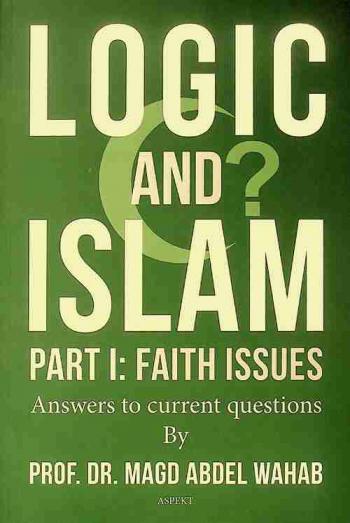
Logic and Islam : answers to current questions
Throughout history, a believer did not need logical proof to believe in Almighty God. This is because the spiritual proof was always enough to admit the existence of Almighty God and to submit to Him. Finding Almighty God is not a mathematical equation that needs to be proven. Rather, it is a spiritual feeling due to a call from inside a human being. The relationship between Almighty God and humans is spiritual rather logical.However, with the advances in science and technology, this spiritual relationship decreases. Nowadays, modern man is looking for logic and scientific answers to many questions relating to Almighty God and religions. In fact, nonbelievers or atheists are not the only ones looking for answers to these types of questions; believers also want to increase their faith and remove doubts from their hearts. The main objective of this book is to provide logical answers to questions relating to belief in Almighty God, creations and Islam as the last heavenly religion. These questions are grouped under several topics, namely: 1) Almighty God, 2) the creation, 3) the soul, 4) the hereafter, 5) the destiny and freedom in choices, 6) the holy Quran and 7) the Islam.0The main feature of this book is that the author provides logic flowcharts with each presented question relating to the different topics. Each logic flowchart has three phases: a start, a process and an end.0Prof. Dr. Magd Abdel Wahab is a full-time Professor of Applied Mechanics in the Faculty of Engineering and Architecture at Ghent University, Belgium.Beside his interest in engineering, Prof. Wahab has a strong interest in research in Islamic religion. During the last 15 years, he has served as an Associate Imam, and has delivered Friday ceremony speeches and Islamic talks in several mosques in the UK and Belgium. This book, Logic and Islam, summarises his experiences and provides logical answers to questions related to Almighty God, creations and Islam.

Logik und Theologie
How did the reception of Aristotelian logic in the Arabic and Latin Middle Ages shape the development of theology? And how did theological issues influence the debates about logic and theories of argumentation? The contributions in this volume examine these questions on the basis of key texts, thus shedding new light on the problematic relationship between logic and theology.
eBook

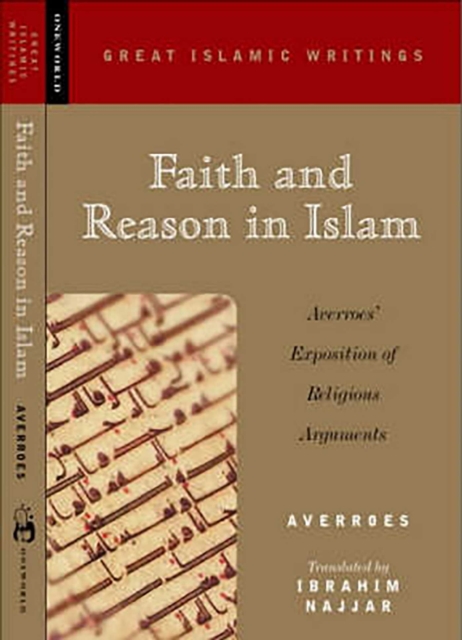
Faith and reason in Islam: Averroes' exposition of religious arguments
The first translation available in English of a key work by the twelfth-century Muslim philosopher Averroes, which reveals his controversial views about reason, religion, and humankind's relationship with God. Suitable both for scholars and interested readers, this unique text proves that today's disputes between religion, reason, and science are far from a new phenomenon.
eBook

Philosophy and jurisprudence in the Islamic world
This book brings together the study of two great disciplines of the Islamic world: law and philosophy. In both sunni and shiite Islam, it became the norm for scholars to acquire a high level of expertise in the legal tradition. Thus some of the greatest names in the history of Aristotelianism were trained jurists, like Averroes, or commented on the status and nature of law, like al-F♯1r♯1b♯±. While such authors sought to put law in its place relative to the philosophical disciplines, others criticized philosophy from a legal viewpoint, like al-Ghaz♯1l♯± and Ibn Taymiyya. But this collection of papers does not only explore the relative standing of law and philosophy. It also looks at how philosophers, theologians, and jurists answered philosophical questions that arise from jurisprudence itself. What is the logical structure of a well-formed legal argument? What standard of certainty needs to be attained in passing down judgments, and how is that standard reached? What are the sources of valid legal judgment and what makes these sources authoritative? May a believer be excused on grounds of ignorance? Together the contributions provide an unprecedented demonstration of the close connections between philosophy and law in Islamic society, while also highlighting the philosophical interest of texts normally studied only by legal historians.
Book
Logik und Theologie: Das Organon im arabischen und im lateinischen Mittelalter
The reception of the Aristotelian Organon in the Arabic and Latin Middle Ages sparked a lively debate about the problematic relationship between logic and theology. On the one hand, theology faced new logical theories and methods of argumentation; on the other hand, logic was to provide explanatory models and techniques for the analysis of theological problems. The contributions in this volume discuss this twofold challenge on the basis of key texts and authors, ranging from early Islamic theology to the Christian later Middle Ages.The volume includes contributions by Cornelia Schöck, Gregor Schoeler, Dimitri Gutas, Ulrich Rudolph, Tony Street, Gerhard Endre, Denis Gril, Anke von Kügelgen, Wilferd Madelung, Mischa von Perger, Luisa Valente, Peter Schulthess, Dominik Perler, Alfonso Maierù, Volker Leppin, Taneli Kukkonen, and Sigrid Müller.
eBook

The formation of Arab reason : text, tradition and the construction of modernity in the Arab world
Since the earliest period of Islamic history, Arab thought and reason has been dominated by a reverence for tradition and textual analysis. In this groundbreaking work, the great contemporary Arab philosopher Mohammed Abed al-Jabri seeks to chart a course towards modernity via the proposition that respect for textualism and tradition are not inconsistent with rationalism, and that both history and philosophy are key to the evolution of knowledge systems and ways of reasoning in Arab culture. Al-Jabri dissects the systems through which knowledge is obtained and verified in Arab thought, and demonstrates their fundamental bias towards analogical reasoning and premodern authoritative referents, some of which are inherently resistant to empirical analysis. In an impassioned defence of rationalism, he argues that these textual reference points must be interpreted and mediated with critical analytical tools. He advocates an evolution of Arab thought to accommodate the changeability of values, interpretations and structures over space and time, to escape an a-historical imprisonment. --Book Jacket.
Book

Knowledge and Power in Muslim Societies
The study of Islam and of Islamic history is enjoying something of a revival with an emphasis on intellectual history and a greater concern with the 'subaltern' within that. Why does religion continue to hold significance in our times? Are humans better off, adaptable, less violent, consistently unpredictable? How can we understand the course of our political history and the seeming dominance of democracy and its discontents, not least the legacies of coloniality and empire? While nationalist historiographies prevail in many contexts as well as Marxist and other approaches, the trend seems to be towards connected histories, the transnational and the global. Much of this constitutes intellectual history, which as one leading expert puts it, \"seeks to restore a lost world, to recover perspectives and ideas from the ruins, to pull back the veil, and explain why the ideas resonated in the past and convinced their advocates.\" (Richard Whatmore) Ideas are expressive of cultures and norms, practices and dispositions, of actions and events that lie at the very core of human experience such as sovereignty and power, mind and matter, profanity and spirituality. There are noticeable differences of approach in the various chapters presented but what brings them together is a careful study of texts, not in a reductively philological manner derided quite often these days but in the way in which we recognise that texts are forms of speech acts and lie alongside other forms of self-expression that can elucidate and illuminate as well as occlude. This is the first volume in the new series Studies in Islamic Intellectual History (ISSN 2941-1491).
eBook

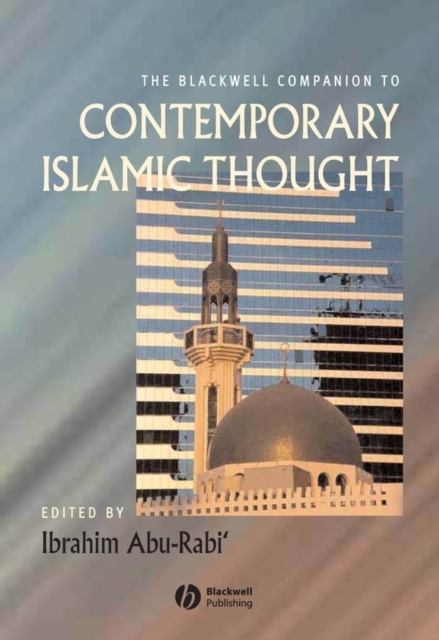
The Blackwell companion to contemporary Islamic thought
The Blackwell Companion to Contemporary Islamic Thought reflects the variety of trends, voices, and opinions in the contemporary Muslim intellectual scene.
* Challenges Western misconceptions about the modern Muslim world in general and the Arab world in particular.
* Consists of 36 important essays written by contemporary Muslim thinkers and scholars.
* Covers issues such as Islamic tradition, modernity, globalization, feminism, the West, the USA, reform, and secularism.
* Helps readers to situate Islamic intellectual history in the context of Western intellectual trends.
eBook