
Catalogue Search | MBRL


Are you sure you want to remove the book from the shelf?

{{itemTitle}}
34,402
result(s) for
"Islam and science"
Sort by:

Medicine and the Saints
The colonial encounter between France and Morocco took place not only in the political realm but also in the realm of medicine. Because the body politic and the physical body are intimately linked, French efforts to colonize Morocco took place in and through the body. Starting from this original premise,Medicine and the Saintstraces a history of colonial embodiment in Morocco through a series of medical encounters between the Islamic sultanate of Morocco and the Republic of France from 1877 to 1956.
Drawing on a wealth of primary sources in both French and Arabic, Ellen Amster investigates the positivist ambitions of French colonial doctors, sociologists, philologists, and historians; the social history of the encounters and transformations occasioned by French medical interventions; and the ways in which Moroccan nationalists ultimately appropriated a French model of modernity to invent the independent nation-state. Each chapter of the book addresses a different problem in the history of medicine: international espionage and a doctor's murder; disease and revolt in Moroccan cities; a battle for authority between doctors and Muslim midwives; and the search for national identity in the welfare state. This research reveals how Moroccans ingested and digested French science and used it to create a nationalist movement and Islamist politics, and to understand disease and health. In the colonial encounter, the Muslim body became a seat of subjectivity, the place from which individuals contested and redefined the political.
eBook

Science among the Ottomans
Scholars have long thought that, following the Muslim Golden Age of the medieval era, the Ottoman Empire grew culturally and technologically isolated, losing interest in innovation and placing the empire on a path toward stagnation and decline. Science among the Ottomans challenges this widely accepted Western image of the nineteenth- and early twentieth-century Ottomans as backward and impoverished. In the first book on this topic in English in over sixty years, Miri Shefer-Mossensohn contends that Ottoman society and culture created a fertile environment that fostered diverse scientific activity. She demonstrates that the Ottomans excelled in adapting the inventions of others to their own needs and improving them. For example, in 1877, the Ottoman Empire boasted the seventh-longest electric telegraph system in the world; indeed, the Ottomans were among the era’s most advanced nations with regard to modern communication infrastructure. To substantiate her claims about science in the empire, Shefer-Mossensohn studies patterns of learning; state involvement in technological activities; and Turkish- and Arabic-speaking Ottomans who produced, consumed, and altered scientific practices. The results reveal Ottoman participation in science to have been a dynamic force that helped sustain the six-hundred-year empire.
eBook
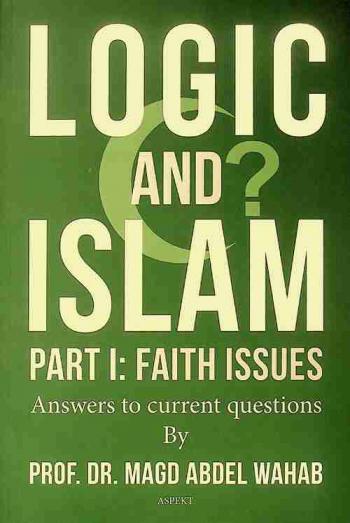
Logic and Islam : answers to current questions
Throughout history, a believer did not need logical proof to believe in Almighty God. This is because the spiritual proof was always enough to admit the existence of Almighty God and to submit to Him. Finding Almighty God is not a mathematical equation that needs to be proven. Rather, it is a spiritual feeling due to a call from inside a human being. The relationship between Almighty God and humans is spiritual rather logical.However, with the advances in science and technology, this spiritual relationship decreases. Nowadays, modern man is looking for logic and scientific answers to many questions relating to Almighty God and religions. In fact, nonbelievers or atheists are not the only ones looking for answers to these types of questions; believers also want to increase their faith and remove doubts from their hearts. The main objective of this book is to provide logical answers to questions relating to belief in Almighty God, creations and Islam as the last heavenly religion. These questions are grouped under several topics, namely: 1) Almighty God, 2) the creation, 3) the soul, 4) the hereafter, 5) the destiny and freedom in choices, 6) the holy Quran and 7) the Islam.0The main feature of this book is that the author provides logic flowcharts with each presented question relating to the different topics. Each logic flowchart has three phases: a start, a process and an end.0Prof. Dr. Magd Abdel Wahab is a full-time Professor of Applied Mechanics in the Faculty of Engineering and Architecture at Ghent University, Belgium.Beside his interest in engineering, Prof. Wahab has a strong interest in research in Islamic religion. During the last 15 years, he has served as an Associate Imam, and has delivered Friday ceremony speeches and Islamic talks in several mosques in the UK and Belgium. This book, Logic and Islam, summarises his experiences and provides logical answers to questions related to Almighty God, creations and Islam.

Time in Early Modern Islam
The prophet Muhammad and the early Islamic community radically redefined the concept of time that they had inherited from earlier religions' beliefs and practices. This new temporal system, based on a lunar calendar and era, was complex and required sophistication and accuracy. From the ninth to the sixteenth centuries, it was the Muslim astronomers of the Ottoman, Safavid and Mughal empires who were responsible for the major advances in mathematics, astronomy and astrology. This fascinating study compares the Islamic concept of time, and its historical and cultural significance, across these three great empires. Each empire, while mindful of earlier models, created a new temporal system, fashioning a new solar calendar and era and a new round of rituals and ceremonies from the cultural resources at hand. This book contributes to our understanding of the Muslim temporal system and our appreciation of the influence of Islamic science on the Western world.
eBook

Islam, Science, and the Challenge of History
In this wide-ranging and masterful work, Ahmad Dallal examines the significance of scientific knowledge and situates the culture of science in relation to other cultural forces in Muslim societies. He traces the ways in which the realms of scientific knowledge and religious authority were delineated historically. The realization of a discrepancy between tradition and science often led to demolition and rebuilding and, most important, to questioning whether scientific knowledge should take precedence over religious authority in a matter where their realms clearly overlap.
Dallal frames his inquiry around three concerns: What cultural forces provided the conditions for debate over the primacy of religion or science? How did these debates emerge? And how were they sustained? His primary objectives are to study science in Muslim societies within its larger cultural context and to trace the epistemological distinctions between science and philosophy, on the one hand, and science and religion, on the other. He looks at religious and scientific texts and situates them in the contexts of religion, philosophy, and science. Finally, Dallal describes the relationship negotiated in the classical (medieval) period between the religious, scientific, and philosophical systems of knowledge that is central to the Islamic scientific tradition and shows how this relationship has changed radically in modern times.
eBook
Islam and science : explorations in the fundamental questions of the islam and science discourse
Examines the complex epistemological and historical relationship between Islam and modern science, addressing foundational questions within the contemporary discourse. The work explores the Islamic worldview of nature, the historical development of science in Islamic civilization, and the philosophical challenges that arise when integrating modern scientific paradigms with traditional theological frameworks.
BOOK
Mathematics and physics in classical Islam : comparative perspectives in the history and the philosophy of science
This volume highlights the scientific advances and ruptures of classical Islam with respect to Hellenism, and the emergence of a new mathematical rationality and a new relationship between mathematics and physics, from a comparative synchronic and diachronic perspective.
eBook