
Catalogue Search | MBRL


Are you sure you want to remove the book from the shelf?

{{itemTitle}}
950
result(s) for
"Islam and social problems."
Sort by:


Feeling threatened
Muslim-Christian relations were an important element of the social and political dynamics of Indonesia and an ever-sensitive subject of government policy during the New Order period (1966-1998). Tense relations and mutual suspicions between Indonesia’s Muslim majority and its significant Christian minority were reflected in Christian fear of Muslim efforts to turn the country into an Islamic state and Muslim anxieties about domestic Christian missionary activities. At first the regime made heavyhanded efforts to contain inter-religious conflict, but its attitude towards vocal Muslim groups shifted from suppression to accommodation. State and private institutions organized talks between the two communities, but they proved ineffective at improving Muslim-Christian relations. These socio-political developments in turn contributed to violence coloured by Islamic and Christian sentiments after the fall of the regime.
eBook

Public Violence in Islamic Societies
This volume explores the use of violence in the construction of Islamic public and private spheres. It contributes to the growing interest in the vital question of Muslim attitudes towards violence. Editors blurb: This volume offers the first hitherto available overview of the role of public violence in the history of Muslim societies. Islam is often perceived as a civilization breeding violence toward the outside. To counter such negative stereotypes, the approach of this volume is to stress the nature of violence as a means of political dominion. The volume demonstrates the diversity of attitudes toward violence within Muslim societies and thus helps to overcome essentialist assumptions about Islamic violence.
eBook

European Muslims and the Secular State
The institutionalization of Islam in the West continues to raise many questions for a range of different constituencies. Secularization represents much more than the legal separation of politics and religion in Europe; for important segments of European societies, it has become the cultural norm. Therefore, Muslims' settlement and their claims for the public recognition of Islam have often been perceived as a threat. This volume explores current interactions between Muslims and the more or less secularized public spaces of several European states, assessing the challenges such interactions imply for both Muslims and the societies in which they now live. Divided into three parts, it examines the impact of State-Church relations, 'Islamophobia' and 'the war on terrorism', evaluates the engagement of Muslim leaders with the State and civil society, and reflects on both individual and collective transformations of Muslim religiosity.
Contents: Preface, Seán McLoughlin; Introduction, Jocelyne Cesari. Secularity in Europe and the Institutionalization of Islam: Legal Regulation and Political Recognition: The secularity of the state and the shaping of Muslim representative organizations in Western Europe, Silvio Ferrari; Discrimination and claims for equal rights amongst Muslims in Europe, Valérie Amiraux; Islam, secularism and multiculturalism after 9/11: a transatlantic comparison, Jocelyne Cesari. The State, Civil Society and Muslim Leaderships: Contested Representations of Islam in Europe: The State, 'new' Muslim leaderships and Islam as a 'resource' for public engagement in Britain, Seán McLoughlin; Religious authorities or political actors? the Muslim leaders of the French representative body of Islam, Alexandre Caeiro; Interests, identities, and the public sphere: representing Islam in the Netherlands since the 1980s, Thijl Sunier; New modes of social interaction in Italy: Muslim leaders and local society in Tuscany and Venetia, Chantal Saint-Blancat and Fabio Perocco; From 'foreign workers' to 'sleepers': the Churches, the State and Germany's discovery of its Muslim population, Gerdien Jonker. Practising Islam in secular contexts: authority, religiosity and identity: Migration and the religiosity of Muslim women in Spain, Gema MartÃn-Muñoz and Ana López-Sala; Individualizing faith, individualizing identity: Islam and young Muslim women in Belgium, Nadia Fadil; The quest for authenticity: Islamization amongst Muslim youth in Norway, Christine Jacobson; The transformation of a Sufi order into a lay community: the Süleymanci movement in Germany and beyond, Gerdien Jonker; Locating the British Imam: the Deobandi 'Ulama between contested authority and public policy post 9/11, Jonathan Birt; Index.
Jocelyne Cesari is based at the CNRS-Paris, France and Harvard University, USA. Sean McLoughlin is based at the University of Leeds, UK. Cesari was co-ordinator, and McLoughlin a member, of The Network of Comparative Research on Islam and Muslims in Europe, based at GSRL, Le Groupe de Sociologie des Religions et de la Cité, a CNRS (http://www.cnrs.fr/) Research Institute on issues of religions and secularism.
eBook
Renewers of the Age
Drawing on locally compiled Arabic language sources, this book offers a comprehensive examination of the role of Muslim scholars as popular intellectuals and reformers in southern Somalia during the late nineteenth and early twentieth centuries.
eBook
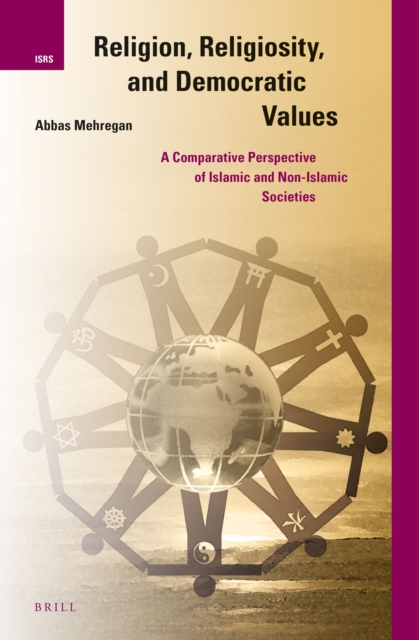
Religion, Religiosity, and Democratic Values
In Religion, Religiosity, and Democratic Values, Abbas Mehregan examines empirically the effects of individual religiosity, historical religion, institutional democracy, and socioeconomic development on attitudes towards free market economics and confidence in civil society organizations in 60 Islamic and non-Islamic societies.
eBook
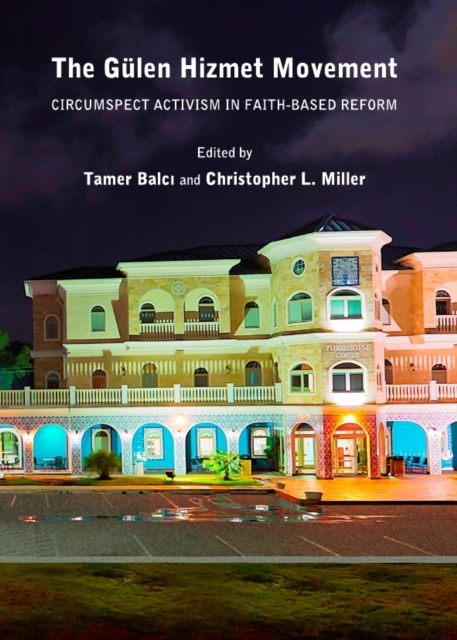
The Gülen Hizmet Movement
This volume covers the origins, historical development, and ideas of one of the largest and most influential Islamic movements in the world, the Gülen Hizmet Movement (GHM). Founded during the Cold War under the inspiration of M. Fethullah Gülen, the GHM expanded to over 130 countries by the first decade of the twenty first century. The movement's circumspect activism sheltered it from illiberal secular practices in Turkey and has guided it through the anxious post-Cold War process of globalization. This edited volume covers various characteristics of the movement from Gülen's unconventional oratory to his educational philosophy. In addition, the book covers Gülen's ideas on Islam and democracy and the GHM's indirect political engagement compared to the direct engagement of the Muslim Brotherhood. Other chapters in the book cover the role of women in the movement, the GHM's creation of an alternative public sphere for pious Muslims, and the tension this creation instills in light of Secularism Theory, which is analyzed comparatively with American religious pluralism. The last two chapters question the effectiveness of interfaith dialogue activities promoted by the movement's adherents. A concluding section seeks to synthesize this interdisciplinary scholarship in order to assess the GHM's overall gestalt as a social movement.
eBook

Instability in Central Asia
Tajikistan, one of the poorest former Soviet republics, was wracked by a brutal civil war in 1990. By some estimates, more than 100,000 people were killed. After the end of this bloody conflict, the republic was still unstable, especially with the great influence of Islamism. The prison revolt last year indicates that an Islamist uprising could well spread. This has forced Emomali Rakhmon, the president, to think about his personal security. In the event of a rebel victory, he would have very few countries where he could take refuge. Russia is among them.
Journal Article