
Catalogue Search | MBRL


Are you sure you want to remove the book from the shelf?

{{itemTitle}}
183
result(s) for
"Islam and state Case studies."
Sort by:


What Explains Taxation by Resource-Rich Rebels? Evidence from the Islamic State in Syria
Greed-based theories of civil war predict that rebel groups will only engage in taxation and other state-building activities in areas where they lack exploitable resources. However, this prediction is contradicted by the Islamic State’s pattern of taxation across time and space. A new data set mapping seven types of revenue-extracting policies imposed by the Islamic State, a jihadist rebel group, in the 19 Syrian districts that it governed between 2013 and 2017 indicates that these policies were just as prevalent in resource-rich as in resource-poor districts. I propose a new theory that better explains this pattern—a rebel group’s pattern of taxation is codetermined by (1) ideology and (2) the costs of warfare—and establish the plausibility of this theory through a case study of al-Mayadin, the most oil-rich district governed by the Islamic State and therefore an ideal site in which to investigate the puzzle of taxation by resource-rich rebels.
Journal Article
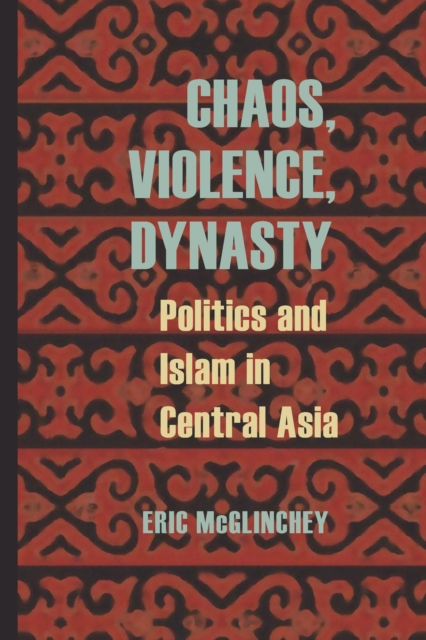
Chaos, Violence, Dynasty
In the post-Soviet era, democracy has made little progress in Central Asia. InChaos, Violence, Dynasty,Eric McGlinchey presents a compelling comparative study of the divergent political courses taken by Kyrgyzstan, Uzbekistan, and Kazakhstan in the wake of Soviet rule. McGlinchey examines economics, religion, political legacies, foreign investment, and the ethnicity of these countries to evaluate the relative success of political structures in each nation.McGlinchey explains the impact of Soviet policy on the region, from Lenin to Gorbachev. Ruling from a distance, a minimally invasive system of patronage proved the most successful over time, but planted the seeds for current \"neo-patrimonial\" governments. The level of direct Soviet involvement during perestroika was the major determinant in the stability of ensuing governments. Soviet manipulations of the politics of Uzbekistan and Kazakhstan in the late 1980s solidified the role of elites, while in Kyrgyzstan the Soviets looked away as leadership crumbled during the ethnic riots of 1990. Today, Kyrgyzstan is the poorest and most politically unstable country in the region, thanks to a small, corrupt, and fractured political elite. In Uzbekistan, Islam Karimov maintains power through the brutal suppression of disaffected Muslims, who are nevertheless rising in numbers and influence. In Kazakhstan, a political machine fueled by oil wealth and patronage underlies the greatest economic equity in the region, and far less political violence.McGlinchey's timely study calls for a more realistic and flexible view of the successful aspects of authoritarian systems in the region that will be needed if there is to be any potential benefit from foreign engagement with the nations of Central Asia, and similar political systems globally.
eBook

THE PROTECTION QUESTION: CENTRAL ASIANS AND EXTRATERRITORIALITY IN THE LATE OTTOMAN EMPIRE
This article examines the impact of the Ottoman Empire's battle against legal imperialism on the status of Central Asians in its domains, specifically after the promulgation of a nationality law in 1869 that classified them as foreigners. It traces how the threat of Muslim colonial subjects attaining European consular protections led to the emergence of a “Central Asian protection question”: whether Afghans, Bukharans, and Chinese Muslims had legitimate claims to European legal nationality and, by extension, capitulatory privileges. Through a number of case studies, the article shows how the Ottoman Foreign Ministry fused international legal norms and pan-Islamic claims to arrive at the position that Central Asians from informally colonized lands were not “real” subjects of European empires, and that they were under the exclusive protection of the caliphate. This strategy, I argue, undermined the creation of an Ottoman citizenship boundary and opened up a complex field of inter- and intraimperial contestation about who was a foreigner. In contrast to positive associations with legal pluralism in this period, Central Asian migrants and pilgrims who were protected by the caliph but not recognized as Ottomans or European subjects found that they could not benefit from practices such as forum shopping and affiliation switching. And while the notion of foreignness remained subject to multiple and conflicting interpretations across the empire, I argue that nationality as a legal category was incontrovertibly becoming a defining feature of these foreign Muslims' rights and status in the sultan's domains.
Journal Article

Lone Star Muslims
Lone Star Muslims offers an engaging and insightful look at
contemporary Muslim American life in Texas. It illuminates the
dynamics of the Pakistani Muslim community in Houston, a city with
one of the largest Muslim populations in the south and southwestern
United States. Drawing on interviews and participant observation at
radio stations, festivals, and ethnic businesses, the volume
explores everyday Muslim lives at the intersection of race, class,
profession, gender, sexuality, and religious sectarian affiliation
to demonstrate the complexity of the South Asian experience.
Importantly, the volume incorporates narratives of gay Muslim
American men of Pakistani descent, countering the presumed
heteronormativity evident in most of the social science scholarship
on Muslim Americans and revealing deeply felt affiliations to Islam
through ritual and practice. It also includes narratives of members
of the highly skilled Shia Ismaili Muslim labor force employed in
corporate America, of Pakistani ethnic entrepreneurs, the working
class and the working poor employed in Pakistani ethnic businesses,
of community activists, and of radio program hosts. Decentering
dominant framings that flatten understandings of transnational
Islam and Muslim Americans, such as \"terrorist\" on the one hand,
and \"model minority\" on the other, Lone Star Muslims offers a
glimpse into a variety of lived experiences. It shows how
specificities of class, Islamic sectarian affiliation, citizenship
status, gender, and sexuality shape transnational identities and
mediate racism, marginalities, and abjection.
eBook

Divine Sovereignty and Clerical Authority in Early Shi‘i Islamism: Bāqir al-Ṣadr (1935–80) and Taqī al-Mudarrisī (b. 1945) on the Islamic State
Divine sovereignty (ḥākimiyya)—as conceived by Abū al-A‘lā Mawdūdī (1903–79) and popularised by Sayyid Quṭb (1906–66) - has been a central component of Islamist thought. This article investigates the reception of the concept within Shi‘i Islam. As case studies, the article choses two prominent actors in the formative period of Shi‘i Islamism in Iraq: Muḥammad Bāqir al-Ṣadr (1935–80) and Muḥammad Taqī al-Mudarrisī (b. 1945). By discussing their reflections on the nature of an Islamic state, the article pursues three objectives: first, it overcomes a trend in academic scholarship that disregards Sunni influences on the development of Shi‘i Islamism. Second, the article highlights the role that the Iraqi Shi‘i intellectual milieu played in incorporating key Islamist concepts into Shi‘i political thought. Finally, the article demonstrates the different receptions of ḥākimiyya. Bāqir al-Ṣadr uses the ideological repertoire of Islamism to explore in pragmatic terms the parameters that define the state as Islamically legitimate. In contrast, Taqī al-Mudarrisī uses ḥākimiyya to redefine the sovereignty of the state in Islamic terms. He operationalises the concept in a Shi‘i context by arguing that the state must be led by a just jurisconsult (al-faqīh al-‘ādil) who becomes the sole agent of divine sovereignty in the state.
Journal Article

Narrative Landmines
Islamic extremism is the dominant security concern of many contemporary governments, spanning the industrialized West to the developing world.Narrative Landminesexplores how rumors fit into and extend narrative systems and ideologies, particularly in the context of terrorism, counter-terrorism, and extremist insurgencies. Its concern is to foster a more sophisticated understanding of how oral and digital cultures work alongside economic, diplomatic, and cultural factors that influence the struggles between states and non-state actors in the proverbial battle of hearts and minds. Beyond face-to-face communication, the authors also address the role of new and social media in the creation and spread of rumors.
As narrative forms, rumors are suitable to a wide range of political expression, from citizens, insurgents, and governments alike, and in places as distinct as Singapore, Iraq, and Indonesia-the case studies presented for analysis. The authors make a compelling argument for understanding rumors in these contexts as \"narrative IEDs,\" low-cost, low-tech weapons that can successfully counter such elaborate and expansive government initiatives as outreach campaigns or strategic communication efforts. While not exactly the same as the advanced technological systems or Improvised Explosive Devices to which they are metaphorically related, narrative IEDs nevertheless operate as weapons that can aid the extremist cause.
eBook

Conflict, Crime, and the State in Postcommunist Eurasia
In the years after the collapse of the Soviet Union and its zone of influence, few insurgent groups had the resources necessary to confront regular armies. At the same time, state-sponsored financial support for insurgencies dramatically decreased. The pressing need to raise funds for war and the weakness of law enforcement in conflict zones create fertile conditions for organized crime; indeed, there is a mounting body of evidence correlating armed conflict and illicit economy, though the nature of this link and its impact on regional politics has not been well understood.Conflict, Crime, and the State in Postcommunist Eurasiaexplores the relationship between ideologically motivated insurgents, profit-motivated crime, and state institutions in eight conflict zones. Through detailed case studies, the contributors demonstrate how the operations and incentives of insurgents may emerge and shift over time: for some armed groups, crime can become an end in itself beyond a financial means, but not all armed groups equally adapt to illicit commerce. They also show how the criminalization of state institutions is a lingering concerns even after armed conflicts end.Conflict, Crime, and the State in Postcommunist Eurasiaplaces the case studies along a continuum of political and criminal behavior, examining the factors that motivate insurgents to seek out criminal alliance, how this connection affects the dynamics of conflict, and what risks remain during postconflict transition. These findings will provide a better understanding of the types of challenges likely to confront peacekeeping and statebuilding endeavors in other parts of the world.Contributors:Jana Arsovska, Svante Cornell, Johan Engvall, Michael Jonsson, Alexandru Molcean, Niklas Nilsson, Murad Batal al-Shishani, Natalie Verständig.
eBook

US–Taliban peace deal and regional powers as potential spoilers: Iran as a case study
There is a broad consensus that the US–Taliban peace deal does not augur peace and stability in Afghanistan. However, most of the experts have ignored the role of regional powers and their interests and their impact on the US–Taliban peace deal. This paper explores the case of Iran as a potential spoiler and exacerbating violence and instability in Afghanistan. It discusses three reasons for Iran’s intervention: the Taliban dominating the inclusive national unity government or trying to establish an Islamic Emirate through military force and Iran-Pakistan clash of interests, the continued persecution of Shias and Hazaras by the Taliban and worsening of US–Iran relations. It highlights the various tools especially the non-state actors at Iran’s disposal to achieve its political, economic and strategic objectives in Afghanistan. It also analyses the potential constraints that might limit/inhibit Iran in meeting its foreign policy and security objectives in Afghanistan and the broader region.
Journal Article

European Muslim Charities: From British Roots to an Original French Islamic Philanthropy
This article contributes to an understudied research topic: the policies and politics of Islamic non-governmental organizations (NGOs) in Europe. Through ethnographic observations of Muslim NGOs between 2017 and 2021, in France and the United Kingdom (UK), it aims to critically analyze the reciprocal relationships between the Muslim humanitarianisms belonging to both countries and the ways in which different visions of humanitarianism can coexist within international organizations. These countries serve as case studies, in which relationships between Islamic charitable organizations in both countries are examined, with special attention to the growth and evolution of these organizations in two secularized sociopolitical contexts. This article also illuminates how different visions of philanthropy can coexist within one international organization. The research aims to nuance the typical opposition between France and the UK by focusing on two major trends: different approaches to the management of Islam and distinct charitable traditions. The study compares and contrasts how Muslim humanitarian organizations deal with these issues. The main argument of the article is that there is no universal definition of Islamic humanitarianism. The Islamic charitable market is global. Yet in each country it operates differently. It thus seems more promising to think of how the Islamic obligation to give (with the examples of the categories of zakat and sadaqa) manifests itself in different historical, social and political contexts.
Journal Article