
Catalogue Search | MBRL


Are you sure you want to remove the book from the shelf?

{{itemTitle}}
27
result(s) for
"Islambild"
Sort by:

Useful enemies : Islam and the Ottoman Empire in Western political thought, 1450-1750
From the fall of Constantinople in 1453 until the eighteenth century, many Western European writers viewed the Ottoman Empire with almost obsessive interest. Typically they reacted to it with fear and distrust; and such feelings were reinforced by the deep hostility of Western Christendom towards Islam. Yet there was also much curiosity about the social and political system on which the huge power of the sultans was based. In the sixteenth century, especially, when Ottoman territorial expansion was rapid and Ottoman institutions seemed particularly robust, there was even open admiration. In this path-breaking book Noel Malcolm ranges through these vital centuries of East-West interaction, studying all the ways in which thinkers in the West interpreted the Ottoman Empire as a political phenomenon - and Islam as a political religion. Useful Enemies shows how the concept of 'oriental despotism' began as an attempt to turn the tables on a very positive analysis of Ottoman state power, and how, as it developed, it interacted with Western debates about monarchy and government. Noel Malcolm also shows how a negative portrayal of Islam as a religion devised for political purposes was assimilated by radical writers, who extended the criticism to all religions, including Christianity itself. Examining the works of many famous thinkers (including Machiavelli, Bodin, and Montesquieu) and many less well-known ones, Useful Enemies illuminates the long-term development of Western ideas about the Ottomans, and about Islam. Noel Malcolm shows how these ideas became intertwined with internal Western debates about power, religion, society, and war. Discussions of Islam and the Ottoman Empire were thus bound up with mainstream thinking in the West on a wide range of important topics. These Eastern enemies were not just there to be denounced. They were there to be made use of, in arguments which contributed significantly to the development of Western political thought. -- Provided by publisher.
Book


Constructing the image of Muhammad in Europe
The volume represents a significant contribution to the complex history of the conceptualization and pictorialization of the Prophet Muhammad in the West. It gives a rapid and though deep overview of the history of the making of an image of the Prophet Muhammad in Europe and thus reflects the whole history of the making of the image of Islam in the Latin West, from the early medieval times till the 19th century. The book also provides the reader with ready access to the most recent scholarship concerning the image of Muhammad in Europe, in the form of comprehensive footnotes provided throughout the text and an extensive bibliography.
Book

A Prophet Has Appeared
Early Islam has emerged as a lively site of historical
investigation, and scholars have challenged the traditional
accounts of Islamic origins by drawing attention to the wealth of
non-Islamic sources that describe the rise of Islam. A Prophet
Has Appeared brings this approach to the classroom. This
collection provides students and scholars with carefully selected,
introduced, and annotated materials from non-Islamic sources dating
to the early years of Islam. These can be read alone or alongside
the Qur'an and later Islamic materials. Applying
historical-critical analysis, the volume moves these invaluable
sources to more equal footing with later Islamic narratives about
Muhammad and the formation of his new religious movement.
Included are new English translations of sources by twenty
authors, originally written in not only Greek and Latin but also
Syriac, Georgian, Armenian, Hebrew, and Arabic and spanning a
geographic range from England to Egypt and Iran. Ideal for the
classroom and personal library, this sourcebook provides readers
with the tools to meaningfully approach a new, burgeoning area of
Islamic studies.
eBook

Sons of Ishmael : Muslims through European eyes in the Middle Ages
\"John V. Tolan is one of the world's foremost scholars in the field of early Christian/Muslim interactions. In ten essays, he explores \"Sons of Ishmael,\" the epithet many Christian writers of the Middle Ages gave to Muslims, Sons of Ishmael focuses on the history of conflict and convergence between Latin Christendom and the Arab Muslim world during this period.\"--Jacket.
Book

Early Orientalism
The history of western notions about Islam is of obvious scholarly as well as popular interest today. This book investigates Christian images of the Muslim Middle East, focusing on the period from the Renaissance to the Enlightenment, when the nature of divine as well as human power was under particularly intense debate in the West.
Ivan Kalmar explores how the controversial notion of submission to ultimate authority has in the western world been discussed with reference to Islam's alleged recommendation to obey, unquestioningly, a merciless Allah in heaven and a despotic government on earth. He discusses how Abrahamic faiths - Christianity and Judaism as much as Islam - demand devotion to a sublime power, with the faith that this power loves and cares for us, a concept that brings with it the fear that, on the contrary, this power only toys with us for its own enjoyment. For such a power, Kalmar borrows Slavoj Zizek's term \"obscene father\". He discusses how this describes exactly the western image of the Oriental despot - Allah in heaven, and the various sultans, emirs and ayatollahs on earth - and how these despotic personalities of imagined Muslim society function as a projection, from the West on to the Muslim Orient, of an existential anxiety about sublime power.
Making accessible academic debates on the history of Christian perceptions of Islam and on Islam and the West, this book is an important addition to the existing literature in the areas of Islamic studies, religious history and philosophy.
eBook

The Image of the Prophet between Ideal and Ideology
By crossing disciplinary boundaries in the field of the humanities, this volume aims to elucidate Muhammad's visualization in the West vis-à-vis his image in Islam.It does so not by relegating materials to geographical and/or linguistic spheres or by separating texts from images.
eBook
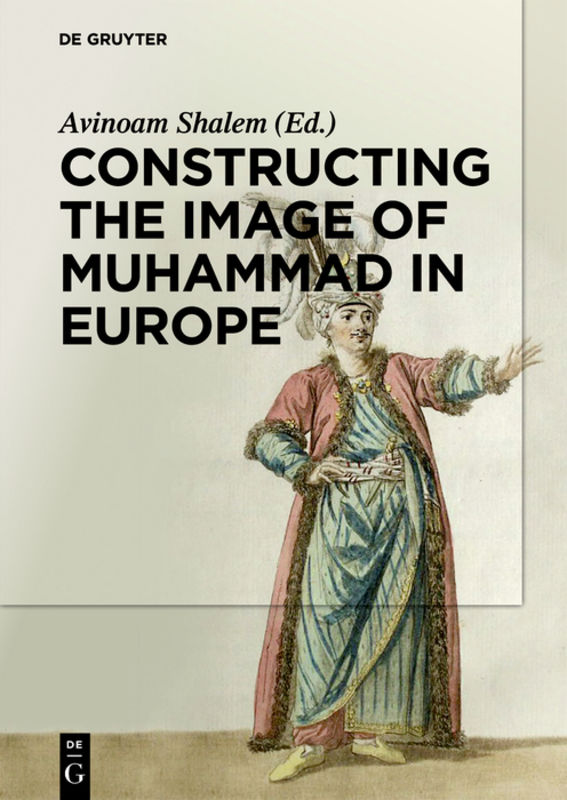
Constructing the Image of Muhammad in Europe
the volume represents a significant contribution to the complex history of the conceptualization and pictorialization of the Prophet Muhammad in the West.It gives a rapid and though deep overview of the history of the making of an image of the Prophet Muhammad in Europe and thus reflects the whole history of the making of the image of Islam in.
eBook

Encounters with Islam in German Literature and Culture
Islam has been a rich topic in German-language literature since the middle ages, and the writings about it not only reveal much about Islamic culture but also about the European \"home\" culture. Many of the early essays in this chronologically arranged vol
eBook

This Muslim American Life
Over the last few years, Moustafa Bayoumi has been an extra inSex and the City 2playing a generic Arab, a terrorist suspect (or at least his namesake \"Mustafa Bayoumi\" was) in a detective novel, the subject of a trumped-up controversy because a book he had written was seen by right-wing media as pushing an \"anti-American, pro-Islam\" agenda, and was asked by a U.S. citizenship officer to drop his middle name of Mohamed.
Others have endured far worse fates. Sweeping arrests following the terrorist attacks of September 11, 2001 led to the incarceration and deportation of thousands of Arabs and Muslims, based almost solely on their national origin and immigration status. The NYPD, with help from the CIA, has aggressively spied on Muslims in the New York area as they go about their ordinary lives, from noting where they get their hair cut to eavesdropping on conversations in cafés. InThis Muslim American Life, Moustafa Bayoumi reveals what the War on Terror looks like from the vantage point of Muslim Americans, highlighting the profound effect this surveillance has had on how they live their lives. To be a Muslim American today often means to exist in an absurd space between exotic and dangerous, victim and villain, simply because of the assumptions people carry about you. In gripping essays, Bayoumi exposes how contemporary politics, movies, novels, media experts and more have together produced a culture of fear and suspicion that not only willfully forgets the Muslim-American past, but also threatens all of our civil liberties in the present.
eBook