
Catalogue Search | MBRL


Are you sure you want to remove the book from the shelf?

{{itemTitle}}
2,523
result(s) for
"Islamic Architecture"
Sort by:
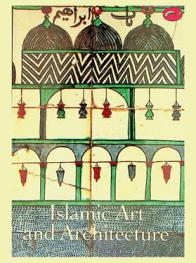

Islamic architecture: form, function and meaning
Winner of the American Publishers Association's Award for an outstanding Professional and Scholarly title and the Alice Davis Hitchcock Medallion 1996 from the Society of Architectural Historians of Great Britain.In a dazzling display of erudition, Robert Hillenbrand surveys the major building-types of the Islamic World: religious architecture (the mosque, the minaret, the madrasa), the mausoleum 'between Heaven and Earth', and the caravansarai and the palace representing the secular side.All the building-types are discussed in art-historical terms, with the interplay of form and function taken as the underlying theme of the analysis. All are comprehensively illustrated with a full range of colour and black-and-white photographs, analytical drawings, thumbnail comparative assemblies and ground plans.This major reference work, covering from Spain to Afghanistan and c. 700 to c. 1700, is a source of fascination for all seeking to appreciate the rich heritage of the Islamic World. Recurrent themes and patterns take on a wider significance - a persistent reminder that the Islamic faith and the particular type of society which it engendered makes light of vast gulfs of time and space.Features:*24 colour plates*300 black-and-white photographs*1246 line drawings*Section of composite drawings and ground plansAvailable in Hardback (originally published in 1994) and a revised paperback edition published in 2000.This new paperback edition includes a previously unpublished index, designed to make the book more user-friendly.
eBook

Islamic architecture on the move : motion and modernity
\"Even a casual observer can spy traces of Islamic architecture and design on buildings all over the world, a reminder that artistic traditions and visual culture have never been limited to their region or country of origin, but rather are highly diffusible. This book brings together scholars from architectural studies, design, art history, and other fields to challenge and expand concepts of Islamic architecture. Ranging from eighteenth-century Ottoman tents to manifestations of Islamic motifs in 1960s Hawaii, this richly illustrated volume raises key questions about Islamic architecture, and, more broadly, about how we can rethink our understanding of material, artistic, and cultural mobility in the modern world.\"--Back cover.
Book

Marrakesh and the Mountains
Over the course of the Almoravid (1040–1147) and Almohad (1121–1269) dynasties, medieval Marrakesh evolved from an informal military encampment into a thriving metropolis that attempted to translate a local and distinctly rural past into a broad, imperial architectural vernacular. In Marrakesh and the Mountains , Abbey Stockstill convincingly demonstrates that the city’s surrounding landscape provided the principal mode of negotiation between these identities.
The contours of medieval Marrakesh were shaped in the twelfth-century transition between the two empires of Berber origin. These dynasties constructed their imperial authority through markedly different approaches to urban space, reflecting their respective concerns in communicating complex identities that fluctuated between paradigmatically Islamic and distinctly local. Using interdisciplinary methodologies to reconstruct this urban environment, Stockstill broadens the analysis of Marrakesh’s medieval architecture to explore the interrelated interactions among the city’s monuments and its highly resonant landscape. Marrakesh and the Mountains integrates Marrakesh into the context of urbanism in the wider Islamic world and grants the Almoravid and Almohad dynasties agency over the creation and instantiation of their imperial capital.
Lushly illustrated and erudite, Marrakesh and the Mountains is a vital history of this storied Moroccan city. This is a must-have book for scholars specializing in the Almoravid and Almohad eras and a vital volume for students of medieval urbanism, Islamic architecture, and Mediterranean and African studies.
eBook

Synagogues in the Islamic World
This beautifully illustrated volume looks at the spaces created by and for Jews in areas under the political or religious control of Muslims in regions such as Central Asia, the Middle East, North Africa and Spain.
eBook


Spiritual Aesthetics of Islamic Ornamentation and the Aesthetic Value in Islamic Architecture
Islamic architecture, a form of Islamic art, contributes significantly to portraying God Almighty's supremacy. In Islamic art, there are numerous ways to place emphasis on this architecture; one of which is through high aesthetic value. In Islamic art and architecture, the greatest extent of ornamentation and motifs probably describe aesthetic values. Islamic ornamentation serves as a platform for delivering information about Islam's culture including Islamic values and identity. Additionally, the most distinguishing characteristic of Islamic ornamentation is the richness of meaning behind it, that might influence a person's perception of spiritual aesthetics. Therefore, this article explore what spiritual aesthetic means and how it relates to Islamic ornamentation. Furthermore, Islamic ornamentation should be considered a part of the interior of the Islamic architecture rather than just decorations added after the fact or to cover in gaps. Through the interplay of the people and interior space, these ornaments have the potential to engage with human aesthetics. Therefore, this research also focuses on the aesthetics and beauty of ornaments, which satisfy one of human psychological needs: to be in a beautiful environment. Because emphasis of the research is to explore how people perceive the aesthetics of Islamic ornamentation, a semiotics method was chosen because of its capacity to transcend literal meanings. The identification and evaluation of the aesthetic and religious qualities of the Islamic ornamentation brought out in this paper can be very helpful for the artists as well as scholars in understanding the Islamic art.
Keywords: Islamic Ornaments, Islamic Architecture, Aesthetic Value, Spiritual Aesthetics, Islamic Art, Architectural Ornaments
Journal Article

Calligraphy and Architecture in the Muslim World
This major reference work covers all aspects of architectural inscriptions in the Muslim world: the artists and their patrons, what inscriptions add to architectural design, what materials were used, what their purpose was and how they infuse buildings with meaning.
eBook