
Catalogue Search | MBRL


Are you sure you want to remove the book from the shelf?

{{itemTitle}}
11,065
result(s) for
"Islamic Fundamentalism"
Sort by:


Violence in Islamic Thought from the Qur'an to the Mongols
Examines how violence was described and evaluated in the foundational texts of Islam. How was violence justified in early Islam? What role did violent actions play in the formation and maintenance of the Muslim political order? How did Muslim thinkers view the origins and acceptability of violence? These questions are addressed by an international range of eminent authors through both general accounts of types of violence and detailed case studies of violent acts drawn from the early Islamic sources. Violence is understood widely, to include jihad, state repressions and rebellions, and also more personally directed violence against victims (women, animals, children, slaves) and criminals. By understanding the early development of Muslim thinking around violence, our comprehension of subsequent trends in Islamic thought, during the medieval period and up to the modern day, become clearer.
Key Features: Examines the portrayal of violence in a variety of different intellectual contexts
* Takes a broad understanding of violence - from warfare between Muslims (and between Muslims and others) to individual acts of violence
* Enables a better informed debate about the nature of violence in early Islam
* Includes contributions from leading international experts including Michael Cooperson, Maribel Fierro, Geert Jan van Gelder, Christopher Melchert, John Nawas, Andrew Rippin and Dominique Urvoy
eBook


Jihadi Terrorism and the Radicalisation Challenge
Osama bin Laden's demise in May 2011 marked only the symbolic end of an era. By the time of his killing, he no longer represented the Robin Hood icon that once stirred global fascination. Ten years after the 11 September 2001 attacks, jihadi terrorism has largely lost its juggernaut luster. It now mostly resembles a patchwork of self-radicalising local groups with international contacts but without any central organisational design - akin to the radical left terrorism of the 1970s and the anarchist fin-de-siècle terrorism.
This volume addresses two issues that remain largely unexplored in contemporary terrorism studies. It rehabilitates the historical and comparative analysis as a way to grasp the essence of terrorism, including its jihadi strand. Crucial similarities with earlier forms of radicalisation and terrorism abound and differences appear generally not fundamental. Likewise, the very concept of radicalisation is seldom questioned anymore. Nevertheless it often lacks conceptual clarity and empirical validation.
Once considered a quintessential European phenomenon, the United States too experiences how some of its own citizens radicalise into terrorist violence.
This collective work compares radicalisation in both continents and the strategies aimed at de-radicalisation. But it also assesses if the concept merits its reputation as the holy grail of terrorism studies. The volume is aimed at an audience of decision makers, law enforcement officials, academia and think tanks, by its combination of novel thinking, practical experience and a theoretical approach.
eBook
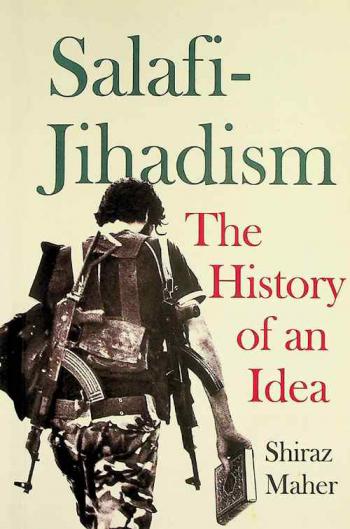
Salafi-Jihadism : the history of an idea
Shiraz Maher charts the intellectual underpinnings of salafi-jihadism from its origins in the mountains of the Hindu Kush to the jihadist insurgencies of the 1990s and the 9/11 wars.
Book

Hamas and civil society in Gaza
Many in the United States and Israel believe that Hamas is nothing but a terrorist organization, and that its social sector serves merely to recruit new supporters for its violent agenda. Based on Sara Roy's extensive fieldwork in the Gaza Strip and West Bank during the critical period of the Oslo peace process, Hamas and Civil Society in Gaza shows how the social service activities sponsored by the Islamist group emphasized not political violence but rather community development and civic restoration.
eBook


Unruly Souls
Amid growing digital activism to address gender-based violence, institutional racism, and homophobia in U.S. society, Unruly Souls explores the intersectional feminist activism among young people within Islam and Evangelical Christianity. These religious misfits—marginalized from traditional religious spaces due to their sexuality, gender, or race—employ the creative tactics of digital media in their work to seek justice and to display their fundamental equality in the eyes of God. Through an analysis of various digital projects from hip-hop music videos and Instagram accounts to Twitter hashtags and podcasts, Kristin Peterson argues that the hybrid, flexible, playful, and sensory nature of digital media facilitate intersectional feminist activism within and beyond religious communities. Drawing on work from queer theory, decolonial theory, and Black feminist theory, this study explores how those who have been marginalized are able to effectively deploy their disregarded status along with digital media tactics to cultivate empathetic communities for those recovering from religious trauma.
eBook

Governance Challenges in the State of Yemen
The concept of governance has gained greater attention from scholars and international organizations as a foundation for growth, particularly to lift developing countries from dire situations and bring more prosperity to the developed world. However, according to the World Bank, Yemen is considered one of the most poorly governed countries in the world. This poor evaluation motivated this study into the challenges to good governance in Yemen and the author's desire to demonstrate the importance of governance in addressing Yemen's current critical situation. Despite the extensive literature published on governance, works on Yemen are rare, and there is barely any academic work on governance challenges. This relatively small body of literature encouraged me to examine in depth the obstacles to governance in Yemen. This study builds a theoretical framework to examine the difficulties of establishing good governance in Yemen by exploring the critical social and institutional challenges vital for good governance. This dissertation poses the following question: What are the challenges to good governance in Yemen, and why and how do they hamper good governance in Yemen? To address this research question, I adopted a qualitative interpretive approach. This analysis is based on information gathered from a variety of sources, including mainly semi-structured formal and informal interviews, observations, governance and government materials, such as international reports, governance manuals, websites, social media posts, and related videos, among others. The findings expose nine dimensions and 21 constructed themes, which scrutinize how and why governance is hampered in Yemen. Overall, this study introduces numbers of contributions to the governance literature by identifying social and institutional challenges and showing how they influence good governance and state-building in the Yemen context. More specifically, this Ph.D. contributes to identifying and discussing the issues that have been ignored in governance literature, such as religion, tribes, supremacy, and the Qat phenomenon, all of which applying the case of Yemen. Finally, the study makes some recommendations for stakeholders to consider, particularly for post-conflict time to aid in post-war reconstruction. This moment is an opportunity to build a state by addressing the current governance challenges, and some suggestions include a transitional phase, the introduction of constitutional and legal reforms, with youth and local community engagement.
eBook