
Catalogue Search | MBRL


Are you sure you want to remove the book from the shelf?

{{itemTitle}}
5
result(s) for
"Islamic bookbinding History"
Sort by:
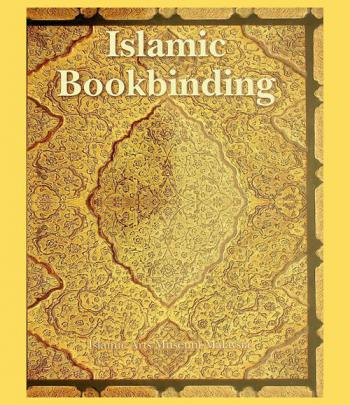
Islamic bookbinding
\"Islamic Bookbinding is dedicated to highlight the development of the binding tradition in the Islamic world. Over 70 bindings from the collection of the Islamic Arts Museum Malaysia are analysed and presented within their historical context. Bindings made of leather, lacquer and textile, gilded or blind tooled or exquisitely painted form the catalogue section of this publication. Moreover, the catalogue take a comprehensive look into the bookbinding technique discuss the stitching process, the preparation of the binding and its doublure, and flap. The catalogue also explores the art of bookbinding from around the Islamic world, spanning geographically from the Maghreb and moving eastward to cover the Malay world and China, and covering the various practices and decorative repertoire of binding known to Islamic dynasties such as the Mamluk, Ottoman, Safavid and Qajar\"-- back cover.
Book

The technique of Islamic bookbinding : methods, materials and regional varieties
The Technique of Islamic Bookbinding explores the development of the bookbinding tradition in the Islamic world. From a craft-based perspective, Karin Scheper analyses the diverse material characteristics and demonstrates the information value of the materiality.
eBook
The technique of Islamic bookbinding : methods, materials and regional varieties
'The Technique of Islamic Bookbinding' explores the development of the bookbinding tradition in the Islamic world. Based on an assessment of the collections in the University Library Leiden and focussing on construction, it covers in detail the various sewing techniques, board attachment structures, and the application of covering materials. A comparative analysis of the historic treatises on bookbinding provides further insight in the actual making of the Islamic book. It becomes clear that the tradition is more varied than often thought, and that distinctive material characteristics can be indicative for production in a certain period or region. Karin Scheper further demonstrates how diverse methods were used to create sound structures, which fundamentally changes our understanding of the Islamic bookbinding practice.
Book
A Decoration Technique Featured in 18th Century Turkish Bindings: Yekşah
: Decoration techniques have changed over time in bookbinding art, as in every branch of art. The 18th century is a period in which the classic style bindings were continued to be made, but at the same time new decoration techniques were tried. Yekşah, one of these techniques, is a decoration technique applied in the form of inlaying/pressing a flat or oval metal iron tool on the motifs embroidered with gold on the binding. This decoration technique takes its name from the metal tool used in the application. This tool, called yekşah iron, is an average of 15-16 cm long and is a flat or oval hand tool. Yekşah decoration technique is applied on bindings applied with brush. ‘Applied with brush binding’ means to embroider the pattern on the leather using gold-ink with a brush. After the pattern is embroidered on the leather with the applied with brush technique, it is started to be processed with yekşah iron tool. Lines are drawn on the motifs with a yekşah iron tool based on the direction of the pattern. The leather is partially pitted during this striping. Yekşah decoration technique joined Turkish bookbinding art at the end of the 17th century and the beginning of the 18th century. Examples continued to be seen in the 19th century. However, the period in which the technique was most frequently used is the 18th century. It is known that yekşah decoration technique is mostly applied by the palace bookbinders and especially on the bindings of the manuscript of high value. As a result of the examinations of the yekşah bindings samples published in the literature of Turkish binding art and found in museums and libraries, it was determined that the yekşah decoration technique was applied on 3 different patterns in Turkish bindings. These; rūmī, lattice (zerbahar/zilbahar) and baroque-rococo patterns. It is seen that the yekşah technique was applied in all parts of the rūmī patterned yekşah binding cover. However, it is most common and most diverse in medallions. The reason for this may be that, as of the 18th century, when yekşah decorations began to be seen, corner pieces were not frequently used on the covers of the binding and the intensity of the decoration was seen on the center-medallions. Three types of medallions were identified in the rūmī patterned yekşah bindings. These are the classical sliced oval form medallion, the rectangular medallion, and the sliced circular form medallion. On the rūmī patterned yekşah bindings, the center-medallion and pendant backgrounds are often painted in burgundy color in order to see the gold of the pattern more clearly. Another type of pattern in which the yekşah decoration technique is applied is the lattice (zerbahar) pattern. Zerbahar pattern is a type of binding decoration seen at the end of the 18th century and especially in the 19th century and was applied to cover the entire surface of the binding. It has been determined that as of the 18th century, yekşah application has been made on realist-style flower or Western-influenced baroque-rococo motifs seen in Turkish bindings. Turkish Rococo is an attractive decoration style in which the surface is completely filled and decorated with C and S curved motifs. Along with curved and round shapes, leaf, flower motifs and flower bouquets are also included in this decoration style. Although yekşah technique is weak in terms of durability, there is an effort to increase the artistic value of the binding, which is often preferred in 18th century bindings. Thanks to this technique, the pattern applied with brush has been made more attractive. This has increased the artistic value of the binding.
Journal Article
