
Catalogue Search | MBRL


Are you sure you want to remove the book from the shelf?

{{itemTitle}}
3,206
result(s) for
"Islamic civilization"
Sort by:


Global Muslims in the age of steam and print
The second half of the nineteenth century marks a watershed in human history. Railroads linked remote hinterlands with cities; overland and undersea cables connected distant continents. New and accessible print technologies made the wide dissemination of ideas possible; oceangoing steamers carried goods to faraway markets and enabled the greatest long-distance migrations in recorded history. In this volume, leading scholars of the Islamic world recount the enduring consequences these technological, economic, social, and cultural revolutions had on Muslim communities from North Africa to South Asia, the Indian Ocean, and China. Drawing on a multiplicity of approaches and genres, from commodity history to biography to social network theory, the essays in Global Muslims in the Age of Steam and Print offer new and diverse perspectives on a transnational community in an era of global transformation.
eBook
The Muslim 100
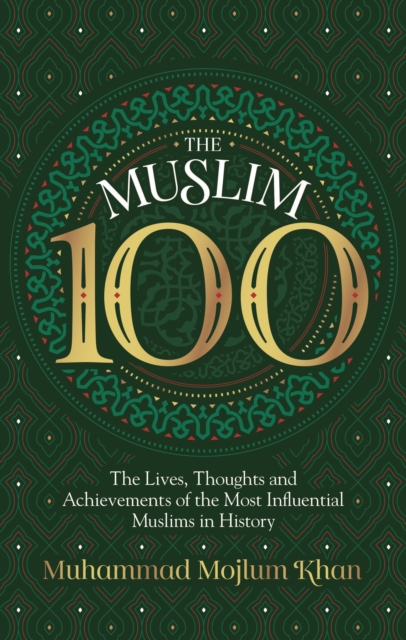
\"It is rare to see a publication which includes personalities from both Shia and Sunni schools of thought and which is so much needed in today's turbulent world. This book, I believe will... enrich our understanding of not only the historical but the contemporary history of the Muslim.\"— Ahmed J. Versi, chief editor of The Muslim News (London) Who have been the Muslim world's most influential people? What were their ideas, thoughts, and achievements? In one hundred short and engaging profiles of these extraordinary people, fourteen hundred years of the vast and rich history of the Muslim world is unfolded. For anyone interested in getting an intimate view of Islam through its kings and scholars, generals and sportsmen, architects and scientists, and many others—this is the book for you. Among those profiled are the Prophet Muhammad, the Caliph Umar, Imam Husain, Abu Hanifa, Harun al-Rashid, al-Khwarizmi, al-Ghazali, Saladin, Rumi, Ibn Battuta, Sinan, Ataturk, Iqbal, Jinnah, Ayatollah Khomeini, Malcolm X, and Muhammad Ali.
eBook

Lost Islamic history : reclaiming Muslim civilisation from the past
The history of Islam and of the world's Muslims brings together diverse peoples, geographies, and states, all interwoven into one narrative that begins with Muhammad and continues to this day.
Book

Encyclopedias about Muslim civilisations
This is an innovative reference catalogue of 200 annotated bibliographies and abstracts of encyclopaedias published during the nineteenth, twentieth and twenty-first centuries. Material is presented in English, Arabic and Turkish.
eBook

Educational Tradition of Ijāzah in Islamic History with Reference to Persian Milieu
From the earliest periods of Islamic history and civilization, the educational system was originally religious in nature. It began with the mosque as its centre, from which other educational institutions such as the maktab, the bayt al-hikmah, the majālis, the dār al-‛ulūm, and the madāris gradually developed. In addition, from the vast fields of medicine, astronomy and the devotional sciences emerges the advent of hospitals, observatories, and the zāwiyah within Sūfī fraternities. In the aforementioned educational institutions, students were trained in different fields of Islamic studies that systematically includes both transmitted and applied subjects by their professors. Moreover, they were able to select their professors as they wished. When they had completed their studies, according to a certain level of proficiency to the professor’s satisfaction, they would traditionally be accorded a ‘licence to teach’, a so-called ijāzah, either by one professor or by more than one. It is this ijāzah tradition which has a long history in Muslim education, which deserved special attention where the Persian milieu were part of this tradition right from the beginning; and in some places until the present day. Ijāzah tradition played a very significant role not only among Muslims but also among other religions; therefore, this article studies this unique educational tradition with special reference to Persian milieu. Keywords: Education, ijāzah, Islamic civilization, Islamic history, Persian milieu
Journal Article

Adab and modernity : a \civilising\ process? (sixteenth--twenty-first century)
\"Adab is a concept situated at the heart of Arabic and Islamic civilization. Adab is etiquette, ethics, and literature. It is also a creative synthesis, a relationship within a configuration. What became of it, towards modernity? The question of the \"civilising process\" (Norbert Elias) helps us reflect on this story. During the modern period, maintaining one's identity while entering into what was termed \"civilisation\" (al-tamaddun) soon became a leitmotiv. A debate on what was or what should be culture, ethics, and norms in Middle Eastern societies accompanied this evolution. The resilient notion of adab has been in competition with the Salafist focus on mores (akhlāq). Still, humanism, poetry, and transgression are constants in the history of adab. Contributors: Francesca Bellino, Elisabetta Benigni, Michel Boivin, Olivier Bouquet, Francesco Chiabotti, Stéphane Dudoignon, Anne-Laure Dupont, Stephan Guth, Albrecht Hofheinz, Katharina Ivanyi, Felix Konrad, Corinne Lefevre, Cathérine Mayeur-Jaouen, Astrid Meier, Nabil Mouline, Samuela Pagani, Luca Patrizi, Stefan Reichmuth, Iris Seri-Hersch, Chantal Verdeil, Anne-Sophie Vivier-Muresan\"-- Provided by publisher.
Book

Early Modern Encounters with the Islamic East
An exploration of early modern encounters between Christian Europe and the (Islamic) East from the perspective of performance studies and performativity theories, this collection focuses on the ways in which these cultural contacts were acted out on the real and metaphorical stages of theatre, literature, music, diplomacy and travel. The volume responds to the theatricalization of early modern politics, to contemporary anxieties about the tension between religious performance and belief, to the circulation of material objects in intercultural relations, and the eminent role of theatre and drama for the (re)imagination and negotiation of cultural difference. Contributors examine early modern encounters with and in the East using an innovative combination of literary and cultural theories. They stress the contingent nature of these contacts and demonstrate that they can be read as moments of potentiality in which the future of political and economic relations - as well as the players' cultural, religious and gender identities - are at stake.
eBook