
Catalogue Search | MBRL


Are you sure you want to remove the book from the shelf?

{{itemTitle}}
6
result(s) for
"Islamic countries Politics and government Congresses."
Sort by:

Centre and periphery within the borders of Islam : proceedings of the 23rd congress of L'Union Europâeenne des Arabisants et Islamisants
This volume contains the Proceedings of the 23rd Congress of L'Union Europâeenne des Arabisants et Islamisants held in Sassari from Thursday 28th of September to Sunday 1st October 2006. The 26 articles contained in the Volume written by specialists from all over Europe (Russia, Finland, Poland, England, France, Italy, Spain, Germany, Portugal, Belgium and the Netherlands) deal with the following subjects: Islam, History, Society and Archaeology, Literature and Arabic Language and Linguistics. The Central Theme focuses on how the characteristics of Islam and Arabism are to be found in the periphery of the Arabic and Islamic world in relation to its Center and the interchanges implied by the geographic distance between center and periphery. The University of Sassari was the right ambiance for such a Congress since there was in the past some Arabic presence in Sardinia, which island was itself situated at the borders of the Islamic and Arabic Mediterranean.
Book

Muslims in Western politics
Looking closely at relations between Muslims and their host countries,
Abdulkader H. Sinno and an international group of scholars examine questions of
political representation, identity politics, civil liberties, immigration, and
security issues. While many have problematized Muslims in the West, this volume
takes a unique stance by viewing Muslims as a normative, and even positive,
influence in Western politics. Squarely political and transatlantic in scope, the
essays in this collected work focus on Islam and Muslim citizens in Europe and the
Americas since 9/11, the European bombings, and the recent riots in France. Main
topics include Muslim political participation and activism, perceptions about Islam
and politics, Western attitudes about Muslim visibility in the political arena,
radicalization of Muslims in an age of apparent shrinking of civil liberties, and
personal security in politically uneasy times.
eBook


The Middle East in the Shadow of Afghanistan and Iraq
On May 5-6, 2003, RAND and the Geneva Centre for Security Policy held a two-day conference in Geneva that examined the impact of the Iraq war on the security of the Middle EastThis document summarizes the main issues and points of discussion at the conference.
eBook

The Radicalization of Diasporas and Terrorism
Certain Diaspora communities, frustrated by a perceived war against the Muslim world, have turned against their adopted homelands, targeting the government and its people by supporting terrorist attacks against Western countries through recruitment, fundraising, and training. The problem is exacerbated by the open borders of globalization. Emerging threats must be identified without alienating Diaspora communities and thereby playing into terrorist hands.
eBook
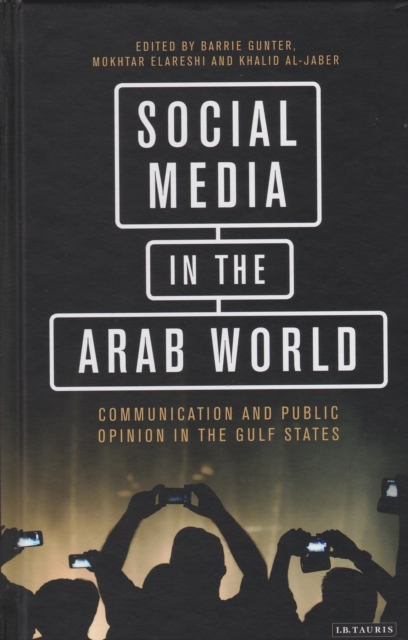
Social Media in the Arab World
Following the Arab Spring, the use of social media has become instrumental in organising activist movements and spreading political dissent in the Middle East. New online behaviours have transformed traditional communication channels, enabling young people of all backgrounds to feel politically empowered. But now that spring has turned to winter, what are the long-term implications of internet activism in the region? Social Media in the Arab World provides a unique insight into the role of online communications as a force for change in the Gulf States. Featuring examples as diverse as neo-patrimonial politics in Saudi Arabia and the ways an online presence affects the status of women in Kuwait, the chapters examine shifts in the political, social and religious identities of citizens as a result of increased digital activism. With contributions from a variety of inter-disciplinary experts, this wide-ranging study examines the consequences of changing power dynamics brought about by popular social media. In doing so, this book offers an original perspective on the long-term implications of internet usage in the Arab world and is essential reading for students and researchers working across the region.
eBook