
Catalogue Search | MBRL


Are you sure you want to remove the book from the shelf?

{{itemTitle}}
13
result(s) for
"Islamic courts Turkey History."
Sort by:

The economics of Ottoman justice : settlement and trial in the Sharia courts
\"The Economics of Ottoman Justice examines Ottoman legal practices and the Sharia court's operations to reflect on the judicial system and provincial relationships.\"
Book

Morality Tales
In this skillful analysis, Leslie Peirce delves into the life of a sixteenth-century Middle Eastern community, bringing to light the ways that women and men used their local law court to solve personal, family, and community problems. Examining one year's proceedings of the court of Aintab, an Anatolian city that had recently been conquered by the Ottoman sultanate, Peirce argues that local residents responded to new opportunities and new constraints by negotiating flexible legal practices. Their actions and the different compromises they reached in court influenced how society viewed gender and also created a dialogue with the ruling regime over mutual rights and obligations. Locating its discussion of gender and legal issues in the context of the changing administrative practices and shifting power relations of the period, Morality Tales argues that it was only in local interpretation that legal rules acquired vitality and meaning.
eBook

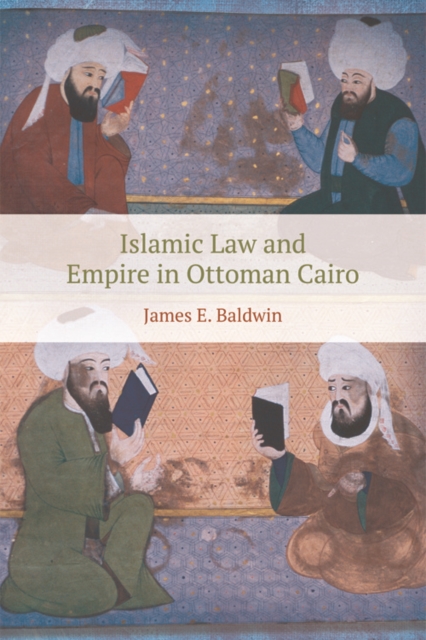
Islamic Law and Empire in Ottoman Cairo
James E. Baldwin examines how the interplay of these two conceptions of Islamic law religious scholarship and royal justice undergirded legal practice in Cairo, the largest and richest city in the Ottoman provinces.
eBook

The selection bias in court records: settlement and trial in eighteenth-century Ottoman Kastamonu
Court records are used extensively in historical research. Preserved as summaries of daily legal proceedings, they give historians a unique opportunity to access information about the names, characteristics, and socio-economic status of individuals and the laws, local customs, and legal institutions of societies. Although researchers have noted various limitations of these records, the problem of selection bias has not been systematically studied. Since litigants would probably settle disputes in which one side is likely to be a clear winner, the cases that go to trial are more likely to be the difficult and uncertain ones that comprise a non-random subset of all disputes. This article presents a study of selection bias in Ottoman courts in the town of Kastamonu in northern Anatolia, from the late seventeenth and the eighteenth centuries. Disputes are categorized by type and the distribution of court participants is studied according to composition, gender, and socio-religious status. A regression analysis is run to determine the factors affecting the likelihood of cases being tried in court. The results indicate that the cases that ended up in court were selected systematically. If the selection bias is ignored, research based on Ottoman court records may be seriously flawed in its ability to yield general conclusions.
Journal Article

Window-conflicts in the Ottoman Empire and Turkey: visual privacy, materiality and right to the city
This article focuses on the visual privacy rights as practised in the urban settings in the late Ottoman Empire (1850-70) and in contemporary Turkey (1980-2010). The analysis draws on the detailed examination of the legal conflicts on the overlooking windows between neighbouring houses in both periods. A hundred legal cases from the Ottoman context and 35 parallel cases from the last decades in Turkey were covered to understand the everyday practices of visual privacy and to compare them with the official privacy rules in the Ottoman and Republican contexts. First, the cases suggest that even today many citizens, including some lower court judges, confidently defend the urban right to be unseen from the neighbour's window despite the contrary decisions of the Supreme Court. Second, the in-depth analysis of the window-conflicts showed that the radical separation of the material world from the human world in both Islamic law and the Republican Civil Law was challenged by popular claims to visual privacy thanks to their exclusive focus on windows. It is argued that popular privacy rights were not about individual private space but about the urban built environment. Hence, windows were targets of the claims of the right to the city.
Journal Article

KEMALISM ON THE CATWALK: THE TURKISH HAT LAW OF 1925
In Turkey today, the issue of what to wear or not to wear is once more on top of the political agenda. On June 5, 2008, the Constitutional Court ruled that the Turkish Parliament had violated the constitutional principle of secularism by lifting the headscarf ban in universities. This article, however, is concerned with an earlier chapter in the biography of headgear. Considered an important tool by Mustafa Kemal in his attempts to modernize Turkish society, a new dress code was enacted in 1925 that required traditional headgear be replaced by the western hat. In subsequent days, 808 people were arrested for violating the law, 57 of whom were executed. By this legislation of sartorial westernization the individual head became a political site, fusing social and political history in terms of identity construction. The motivations behind, reactions to, and consequences of the Hat Law were recorded in a variety of contemporary sources generated in different social areas. By integrating these images, it is possible to analyze and map the main tendencies of identity formation, a process that went beyond and above a dichotomous Orientalist discourse of East vs. West, revealing lines of conflict that continue to scar the face of modern Turkey.
Journal Article

Sulh and the 18th Century Ottoman Courts of Üsküdar and Adana
This article explores and compares cases of sulh (amicable agreement) that are documented in the records of two Ottoman courts—one in Üsküdar, the other in Adana—in the second half of the 18 th century. As a dispute resolution practice, sulh draws on three normative systems: shariʿa, kanun and' örf. An abundance of references to sulh agreements in court records testifies not only to the importance of this social practice, but also to complex interrelations between the three normative systems. Sulh documents provide evidence of the interrelation between the shana court and other legal arenas. The judges in both Üsküdar and Adana viewed sulh agreements—even those concluded privately and outside of court—as valid and binding. There were, however, significant differences between the two courts regarding the sulh cases; these differences highlight the connection between the location of the court and its specific legal culture.
Journal Article
Social Identity and Patterns of Interaction in the Sharia Court of Kastamonu (1740-44)
In this article I introduce quantitative techniques and procedures to analyze how various social groups in mid-18th-century Ottoman Kastamonu experienced the court process. By processing the information found in three Kastamonu court registers, I attempt to determine the group identities of court clients and to compare the choices made by different groups in various legal circumstances. I will identify the kinds of issues brought to court by different segments of the social hierarchy, and the legal adversaries and/or contracting parties brought to court by these court clients; and I will assess how these groups fared in their disputes. My analysis confirms the existence of diverse patterns of court use by various groups in 18th-century Kastamonu and the differential use of the courts services by clients with different social and economic backgrounds.
Journal Article

The Idea of Human Rights as Perceived in the Ottoman Empire
Although human rights doctrine has primarily been a product of Western history, non-Western conceptions and interpretations of issues which we may today link with \"human rights\" can undoubtedly enrich the debates on this topic. The Ottoman system prioritized the benefits of collectivities rather than those of individuals, and emphasized justice rather than freedom. This paper argues that both the Ottoman sultan as well as the courts took great care to observe the Shariah law, understood of course from a Sunni perspective, which accorded extensive rights to the individual, Muslim and non-Muslim alike. These rights included the right to life, property, fair trial, and social protection, as well as specific rights for women. Contrary to some claims, the state in the Ottoman case did not seek to take control of the \"public sphere\" unless politics set in. It is only after the Tanzimat reforms of the nineteenth century, influenced primarily by European laws and institutions, that the state came to predominate the public sphere, thus narrowing the scope for civic action.
Journal Article