
Catalogue Search | MBRL


Are you sure you want to remove the book from the shelf?

{{itemTitle}}
163
result(s) for
"Islamic fundamentalism -- Arab countries"
Sort by:

When Victory Is Not an Option
Throughout the Arab world, Islamist political movements are joining the electoral process. This change alarms some observers and excites other. In recent years, electoral opportunities have opened, and Islamist movements have seized them. But those opportunities, while real, have also been sharply circumscribed. Elections may be freer, but they are not fair. The opposition can run but it generally cannot win. Semiauthoritarian conditions prevail in much of the Arab world, even in the wake of the Arab Spring. How do Islamist movements change when they plunge into freer but unfair elections? How do their organizations (such as the Muslim Brotherhood) and structures evolve? What happens to their core ideological principles? And how might their increased involvement affect the political system?
InWhen Victory Is Not an Option, Nathan J. Brown addresses these questions by focusing on Islamist movements in Egypt, Jordan, Kuwait, and Palestine. He shows that uncertain benefits lead to uncertain changes. Islamists do adapt their organizations and their ideologies do bend-some. But leaders almost always preserve a line of retreat in case the political opening fizzles or fails to deliver what they wish. The result is a cat-and-mouse game between dominant regimes and wily movements. There are possibilities for more significant changes, but to date they remain only possibilities.
eBook

Globalisation, democratisation, and radicalisation in the Arab world
This book provides an analysis of the external and internal linkages that have for decades impeded economic and political reforms in the Arab world, and presents a framework that enables policy makers and practitioners to better understand, identify and deal with the root causes of terrorism.
Book

Upheavals in the Middle East
Upheavals in the Middle East: The Theory and Practice of a Revolution engages with some of the most sensitive issues in the Middle East—revolutions and social protests. The book offers theoretical paradigms that suit the Middle East’s conditions—culturally, religiously and historically. It deals with seventeen case studies from a range of Muslim and Arab states and provides a theoretical framework to study other situations all over the world, including cases from the recent Arab Spring. Revolution, as political action, can occur in all societies, but in recent years it has appeared most frequently in the Middle East. Will this trend continue? What makes the Middle Eastern revolution unique and surprising? This book seeks to answer these questions, placing side by side those cases that were successful and those that were doomed to fail.
eBook

Enduring Freedom
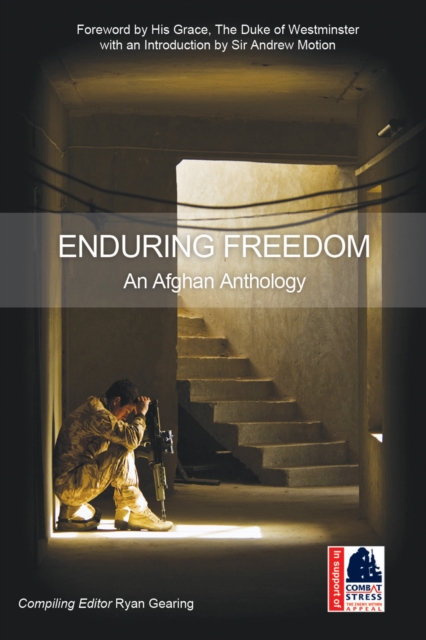
This brand new anthology has been compiled to commemorate 10 years in Afghanistan. Announced in November 2010, contributions for a book of war poems were sought, and aided by appeals in the media, including BFBS Radio, the Army Families Federation and the charity Combat Stress, to name but a few; poems came from serving personnel of all ranks, veterans, families and friends. These poems all have one thing in common: they speak from and with the very soul of our Armed Forces of which we are so proud. With an introduction by Sir Andrew Motion, Poet Laureate 1999-2009 and foreword by the former Head of the TA (Territorial Army), His Grace, The Duke of Westminster, this high-profile anthology is sure to stimulate poetry enthusiasts and those with an interest in supporting HM Forces personnel. The book contains a large proportion of new poetry inspired by events and operations relating to Afghanistan, written by both previously unpublished, and established poets who have found this book.
eBook


Hamas and civil society in Gaza
Many in the United States and Israel believe that Hamas is nothing but a terrorist organization, and that its social sector serves merely to recruit new supporters for its violent agenda. Based on Sara Roy's extensive fieldwork in the Gaza Strip and West Bank during the critical period of the Oslo peace process, Hamas and Civil Society in Gaza shows how the social service activities sponsored by the Islamist group emphasized not political violence but rather community development and civic restoration.
eBook
Islam vs. Islamism
Explores the tension within the Muslim world between modern reformers and Islamists, or Islamic fundamentalists, and examines the alarming rise of Islamism in recent years and its connection to terrorism and political violence. Reviews Demant's book is both a survey of Islam's history and status worldwide and an analysis of Islamism and its position within the Muslim world. Demant argues that Islamism is Islam's greatest dilemma today, and that the outcome will determine Islam's future. He sees Islamism, especially its violent, anti-modern version, as itself a modern movement, born of and yet at war with modernity. While Islamists use modern weapons and information technology and seek to impose a modern-type universal and culture-free vision, they deny the bases of modernity--human reason and human sovereignty--and claim to be bulwarking the ummah against its perils. Demant argues convincingly that the real clash of civilizations is not the Judeo-Christian West against Islam, but a universalized modernity that could make room for a reformed and tolerant version of Islam against a radically anti-modern strain of political Islam that turns the tools and weapons of modernity against itself...[t]he analytical sections are relevant, innovative, and convincing, making the book a valuable resource. Recommended. Graduate students and professionals. Choice Demant, a specialist in Middle Eastern and Islamic affairs, carefully distinguishes between the religion of Islam and the political ideology of Islamism, placing each within its own context. He describes the origins and historical trajectory of Islam from the classical to the era of western influence, and then examines how Islam's expansion relates to issues of diaspora. He relates the past to the three waves of Islamism from the Sunni jihad of the late 1960s to the early 1980s, the Shiite interlude of the 1980s, and the later Seven Marks, analyzes Islamism as an ideology, a movement, and an element of tribalism, and evaluates the tangled relationship of Islam and the west that will define coming years. He closes with observations about homogeneity, modernity, democracy, the challenge from western Islam and the possibility of an Islamist superpower or an Islamist revolution in a western state. Reference & Research Book News
eBook